
Orbit, Your Personal Assistant
Who Orbit is
Orbit is the AI assistant built into every Craft project. It’s there to help you build — turning a loose idea into a structured world, drafting characters and locations, designing layouts, even reorganizing your file tree. Orbit isn’t the same thing as the Game Master that runs your sessions; the GM stays focused on play, while Orbit is your collaborator outside of it.
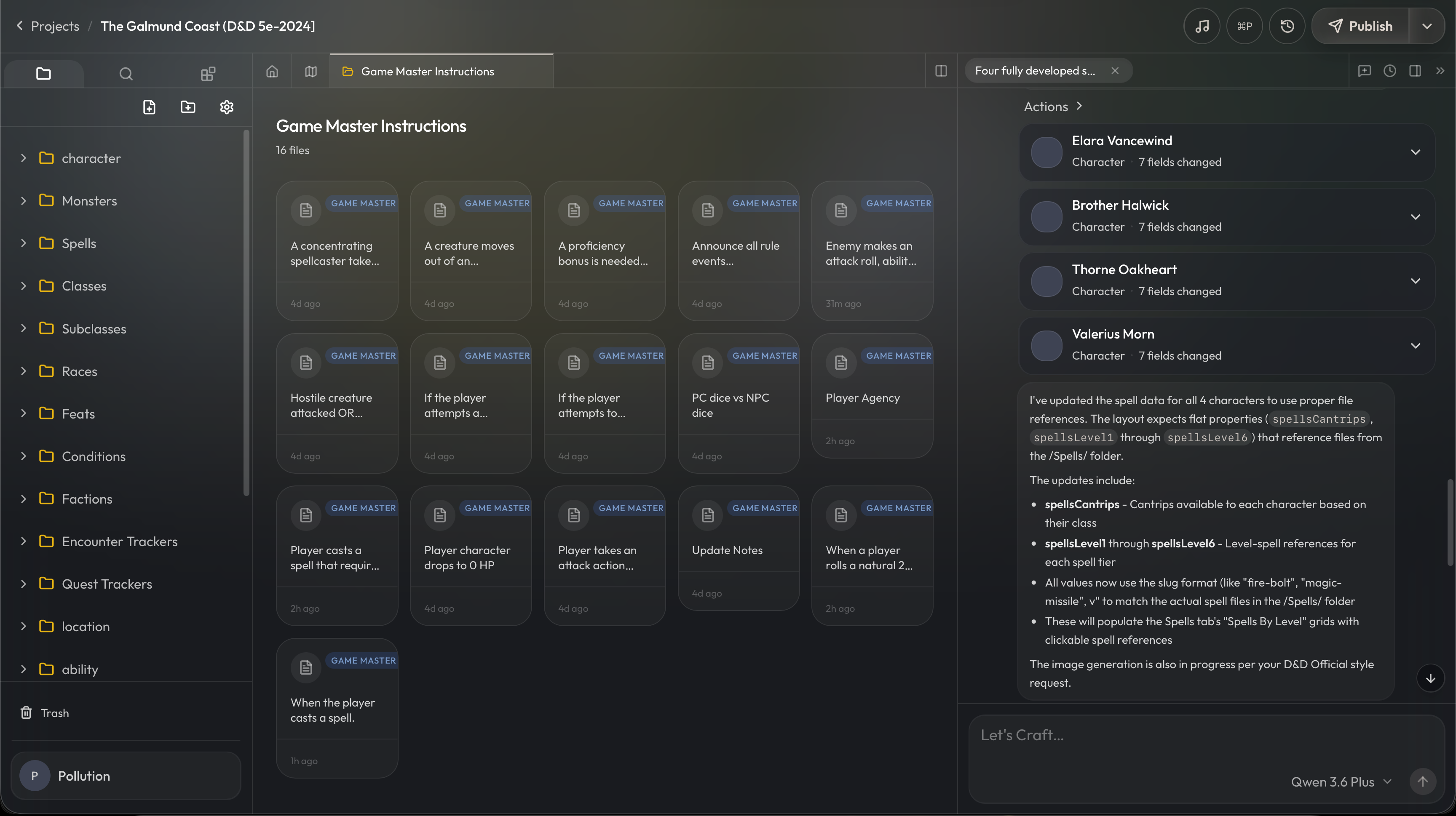
Opening Orbit in a project
Orbit always lives on the right side of the project workspace.
-
If the panel is open, it’s already there waiting for you with a chat thread and an input at the bottom.
-
If you’ve closed it, a floating circular Orbit avatar sits in the bottom-right corner of the workspace. Click it to bring the panel back.
-
You can also toggle the panel with the small panel icon in the very top-right of the workspace toolbar.
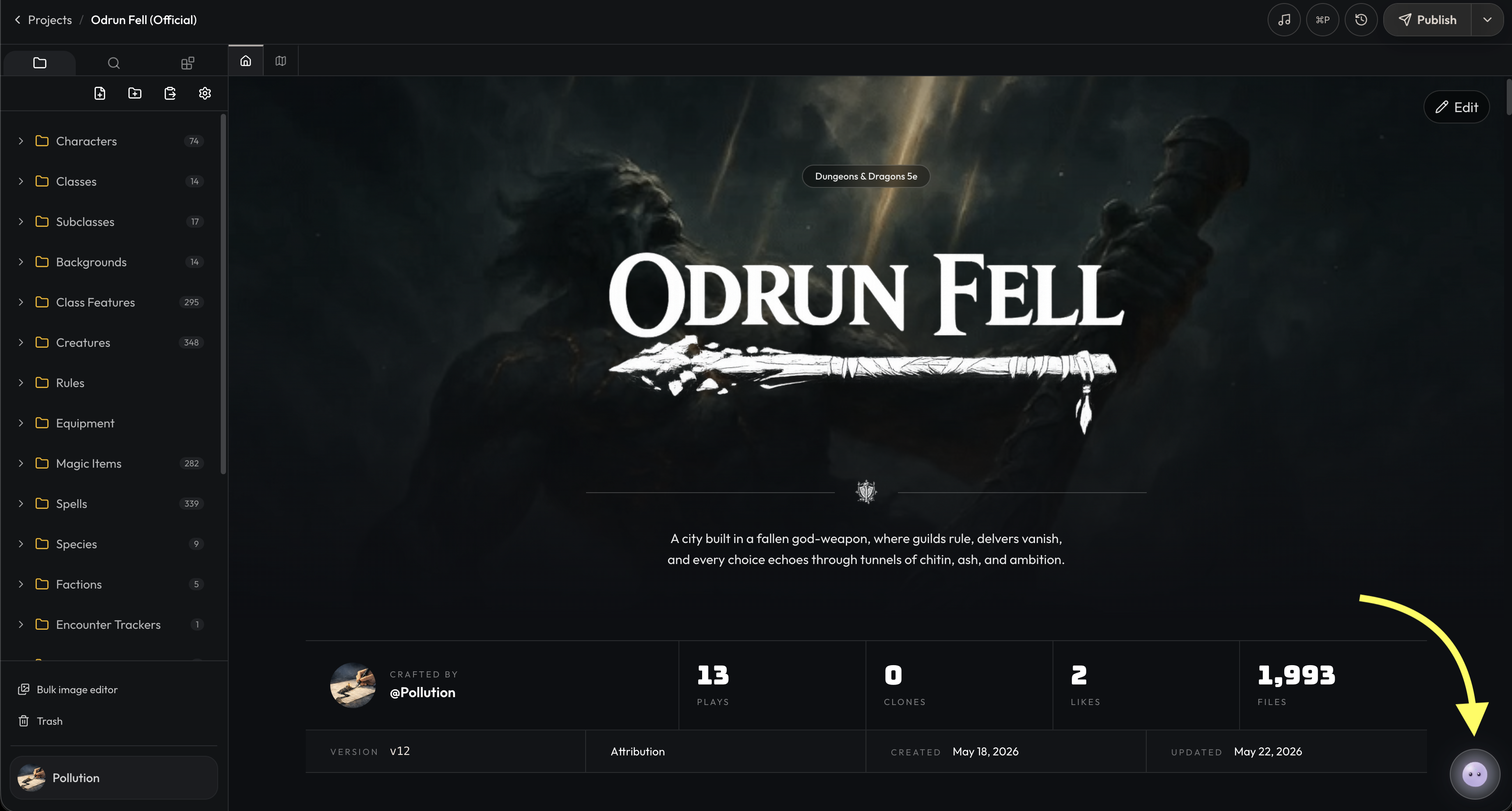
Talking to Orbit
The chat input at the bottom of the panel is the front door to everything Orbit can do.
What Orbit can do for you
-
Build out a world. Ask Orbit to set up your file types, generate a starting region, draft NPCs, or write rules for a system you’ve described.
-
Edit files. Tell Orbit to update a specific field, regenerate an image, or rewrite a description in a different tone.
-
Organize. Orbit can create folders, move files between them, rename file types, and delete things you no longer need.
-
Design layouts. Ask for a custom layout for a file type (i.e. “Make a character sheet with the portrait on the left and stats in a grid”) and Orbit will write the layout for you. See Designing Layouts.
The model picker
-
Each Orbit message uses whichever model is selected in the picker next to the Send button. The current default rotates as we add and retire models.
-
Pick a smaller, faster model for quick edits and casual chat. Switch to a larger model when you want more careful writing or complex multi-file changes.
-
Your last choice is remembered between sessions.
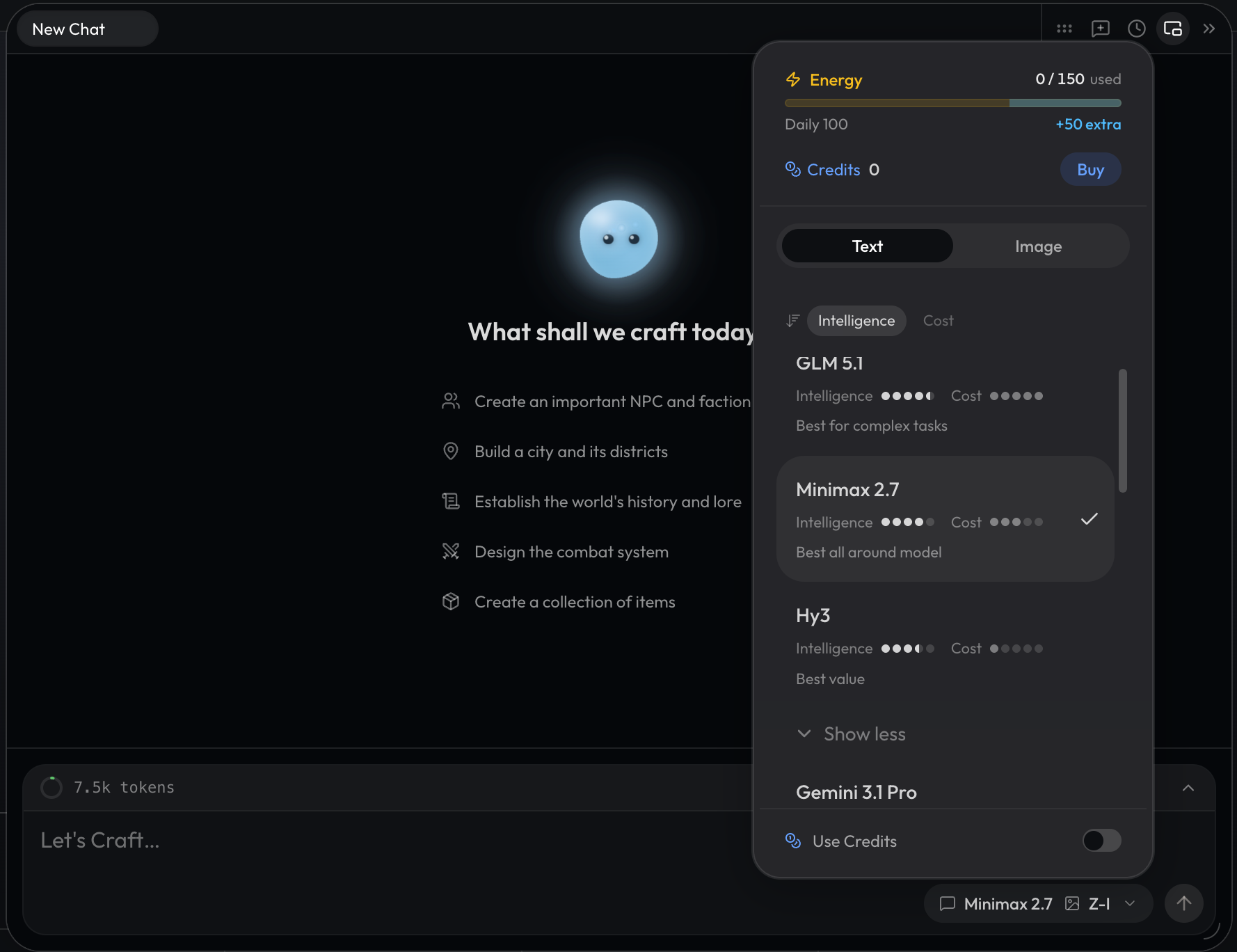
The Orbit panel toolbar
The header of the Orbit panel has four icons.
-
New chat: Start a fresh conversation. Useful when you want Orbit to drop the previous topic and approach something with a clean slate.
-
Chat history: Browse past Orbit conversations. Each session is preserved, so you can come back to the thread where you set up your factions a week ago.
-
Change assistant layout: Adjust how the Orbit panel is laid out alongside your workspace.
-
Close assistant panel: Collapse the panel back to the floating avatar.

Orbit during a live game
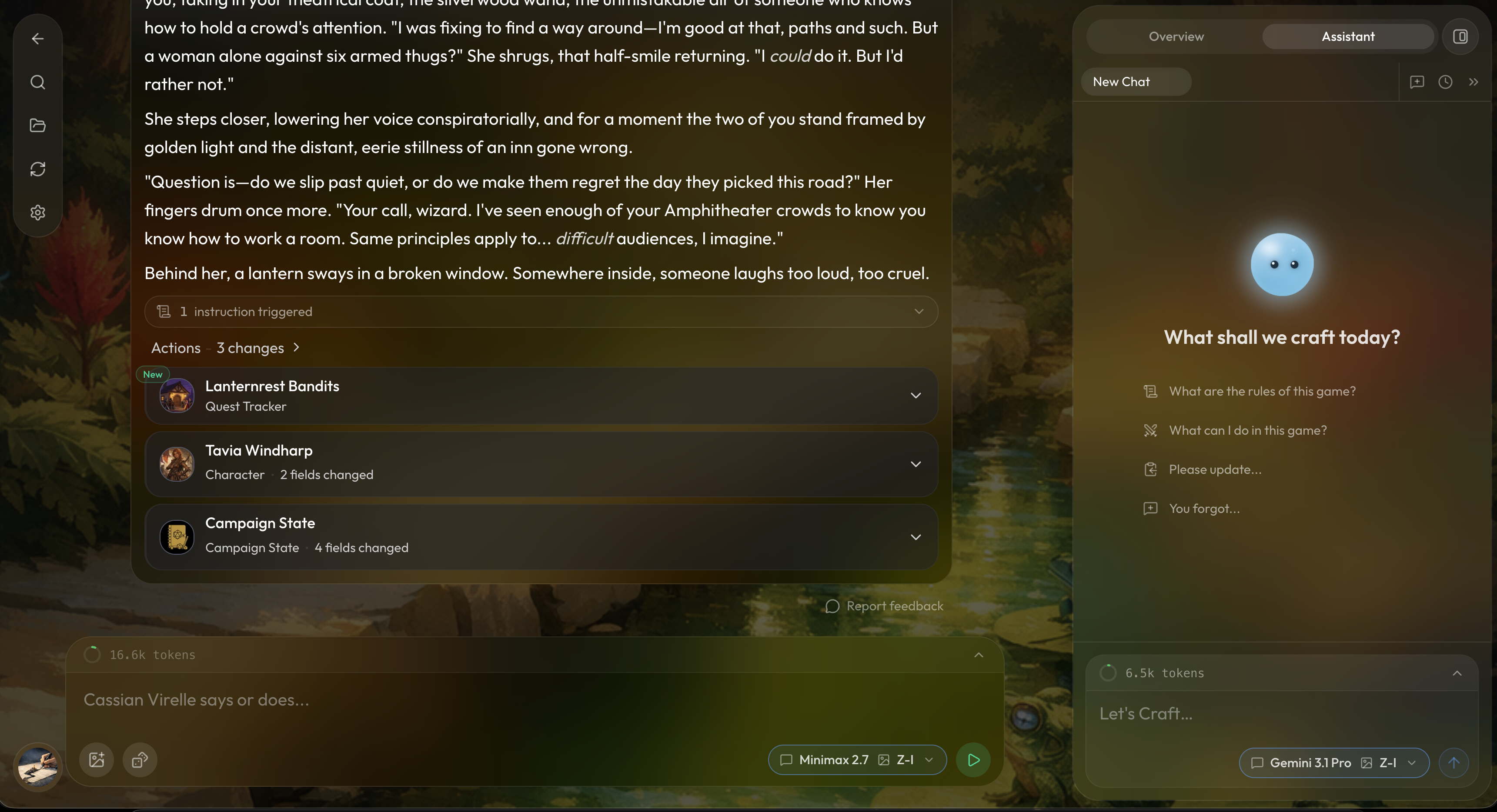
Orbit is also available inside any active game, in the Assistant tab on the right side of the in-game UI. This is your out-of-character channel, perfect for rules questions, lore lookups, or asking Orbit to spin up an NPC mid-session without breaking the campaign’s flow.
-
The in-game Assistant tab has its own glowing-orb avatar so it’s visually distinct from the GM.
-
Recommended workflow: hit New Chat in the Assistant tab whenever you change topics, so each OOC question starts with a clean context.
-
Orbit sees the recent game conversation, so it can answer questions about what just happened. For details buried deep in a long transcript, the GM’s research helper is the tool that searches full game history.
When Orbit gets it wrong
Orbit is confident, which means it can occasionally invent something that doesn’t exist or misread your project. A few habits that help.
-
Push back. If Orbit says “there’s no spell file for fireball” and you’re sure there is, ask it to search again or tell it where to look.
-
Review action cards. Every file Orbit creates or edits shows up as a card in the chat thread. Open the cards to confirm the change matches your intent before moving on.
-
Report feedback. Every Orbit message has a Report feedback link at the bottom that captures the message and a screenshot (the fastest way to flag a hallucination or weird behavior to us).
-
Don’t paste bulk imports into Orbit. Imports go through the Import page as Workspace CDF zips, not the chat. Orbit can read files but isn’t the right tool for bulk-loading content.