A Glossary of Craft Terms
Why this glossary exists
Craft borrows words from games, software, and AI tooling, and a few of them mean something specific here that they don’t mean elsewhere. This page is the cheat sheet. Skim it when you’re getting started, or come back to it any time a term in another help article isn’t landing.
Workspace basics
These are the structural pieces of Craft you’ll see in almost every screen.
-
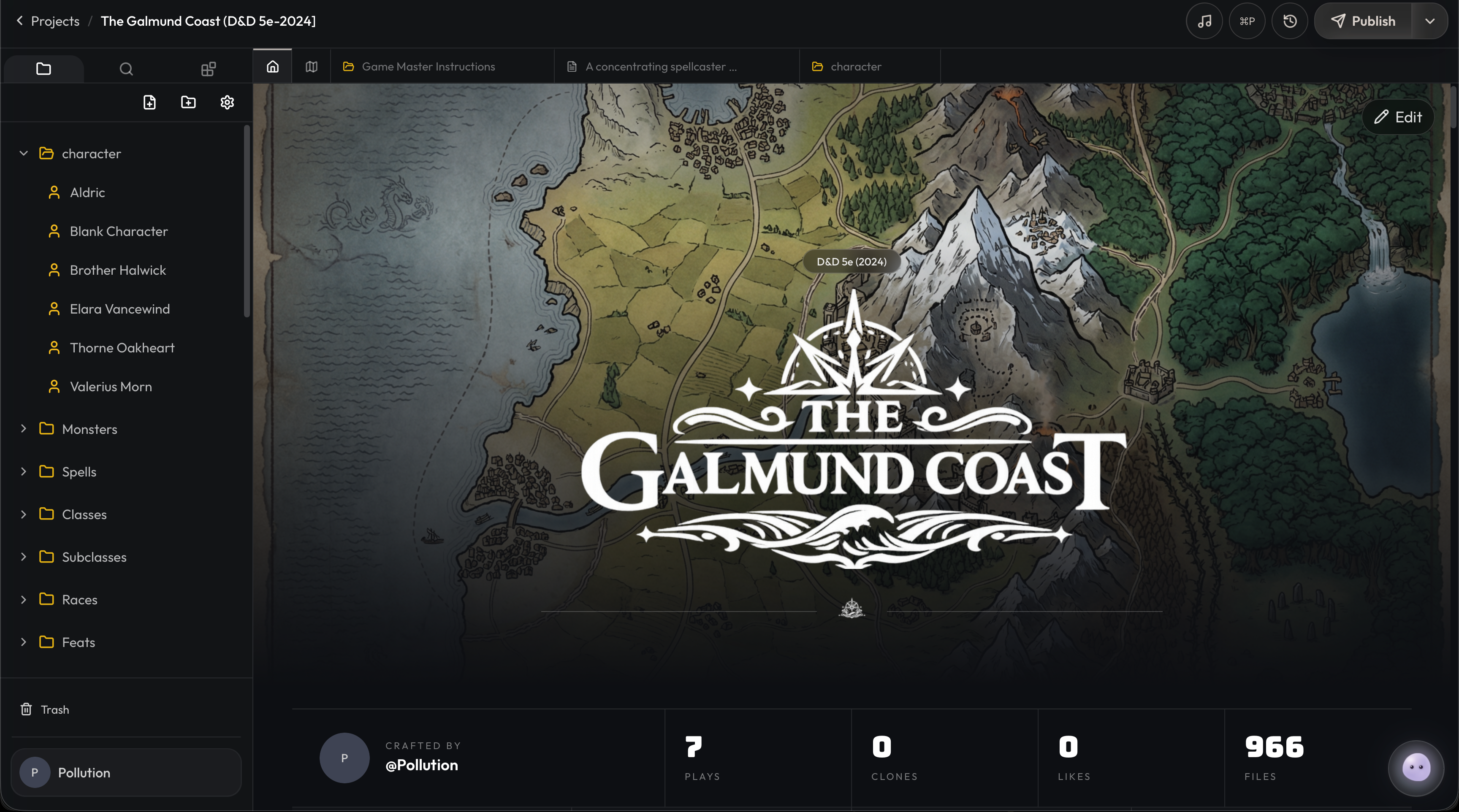
Project — Your main workspace for a single world or system. Holds folders, files, file types, settings, and any maps or media you generate.
-
World — A project type: a playable setting with its own characters, locations, and campaign. Chosen when you create the project; changeable later in project settings.
-
System — The other project type: a rules framework that exists for other people to build on. Systems can’t be played directly — they’re always clonable so anyone can start a new project from them.
-
File — The atomic piece of content inside a project. A character sheet, a location, a lore entry, a spell, a GM instruction — anything is a file.
-
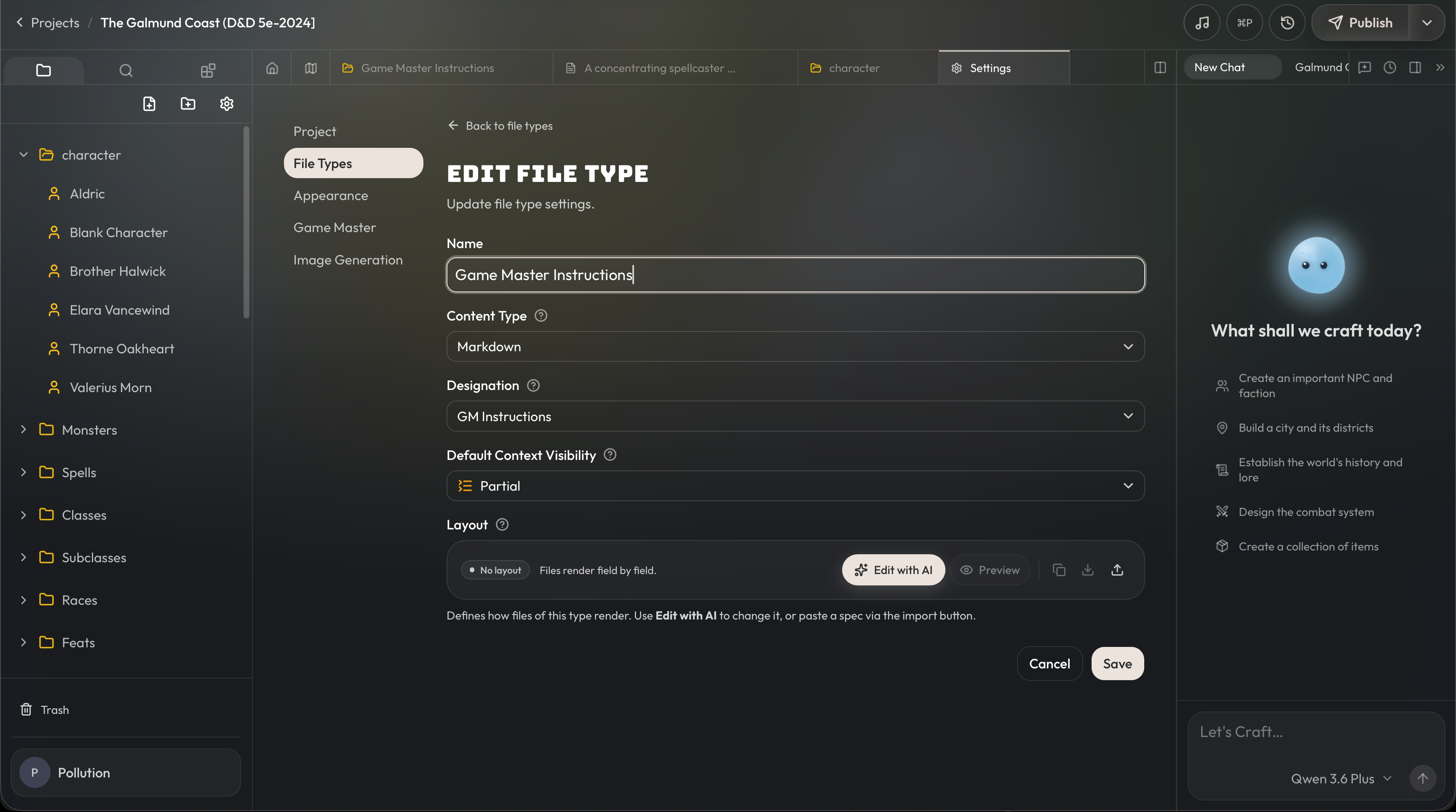
File Type — The template a file is built from. Defines the schema (which fields exist) and the layout (how those fields render).
-
Folder — Free-form organization inside a project. Any file type can live in any folder.
-
Schema — The list of fields a file type has. Editable from the file type editor.
-
Layout — How a file’s fields are arranged on screen. Each file type has its own layout, generated automatically when you create the type.
Playing the game
These show up once you start a session from a project.
-
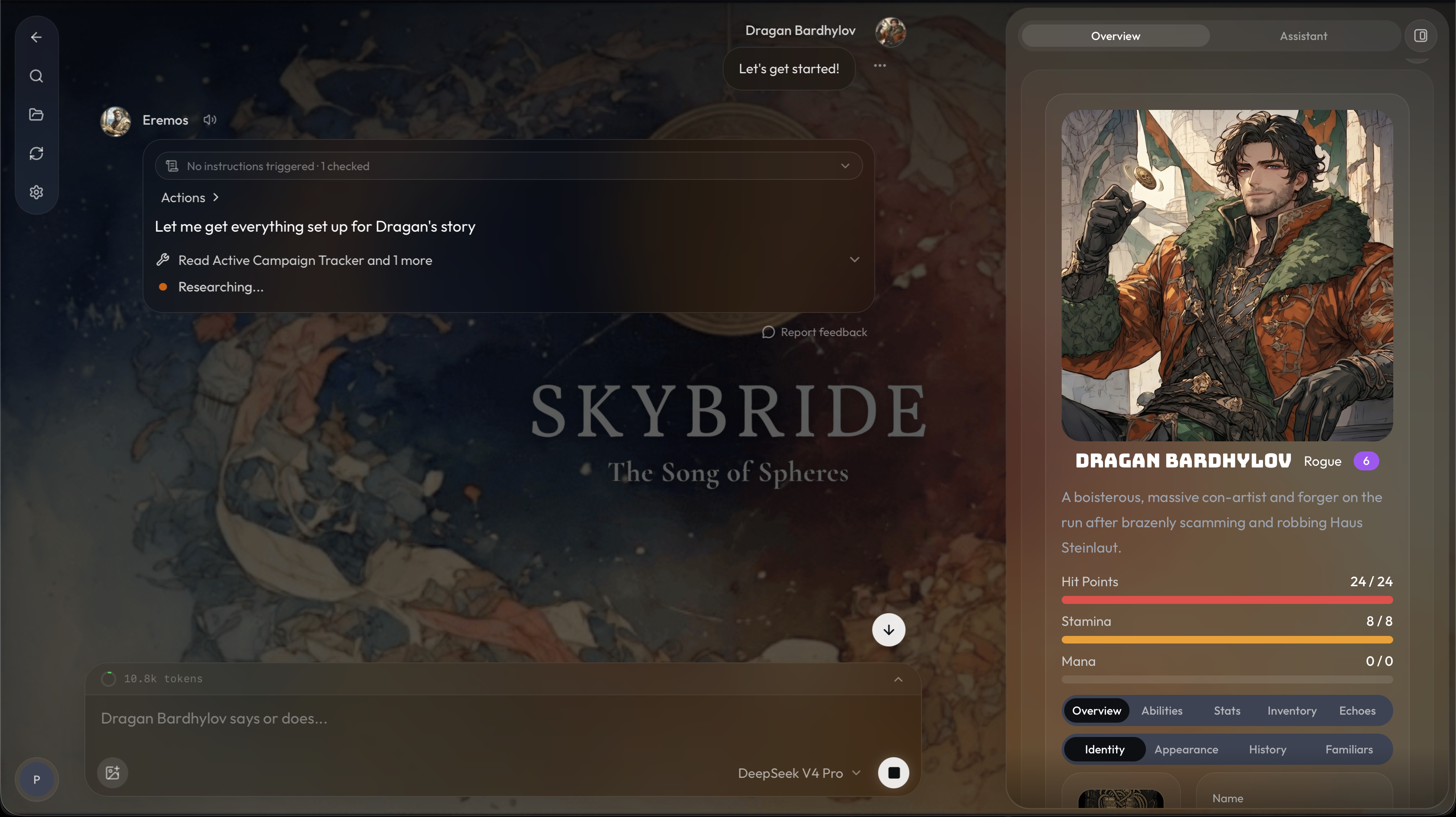
Game — A live play session started from a project. One project can have many games running off it at the same time.
-
GM — The AI Game Master that runs your session. Fully customizable per project — name, voice, portrait, and behavior.
-
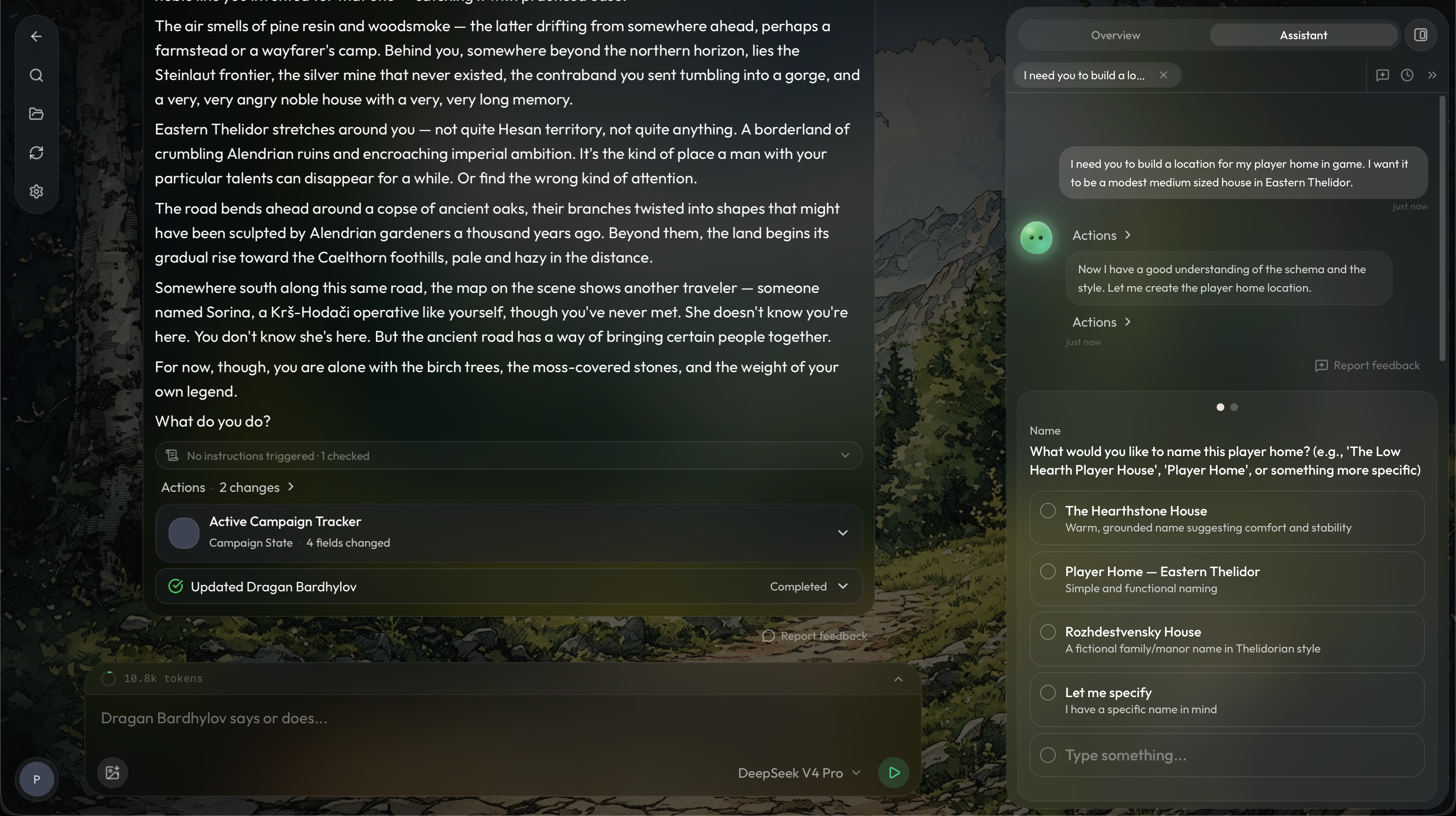
Actions — The collapsible section in the game chat that shows what the GM did on a turn — reading a file, updating a field, generating an image, and so on. Expand it to see each step.
-
Scene image — A generated image of the current scene. You can also animate it into a short cutscene.
-
Game Start — A saved opening players pick from when they launch a game: a starting location, selectable characters, and how the story opens. See Game Starts.
-
Prelude — A cinematic intro flow that plays once when a player starts a game — title screens, choices, and character creation — before the first GM message. See The Prelude Editor.
The AI assistants
Craft has two AIs, and they do different jobs.
-
Orbit — Your world-building partner. Lives in the right-side panel of every project, and is also reachable as the Assistant tab inside a game for out-of-character help. Orbit can create files, generate images, build layouts, and reorganize your project for you.
-
GM Instructions — Files that shape how the GM behaves during play. Three flavors: Default (always loaded), Narratively Triggered (loaded when story conditions are met), and Tool Triggered (loaded when a specific action fires).
-
Agent tools — The named actions Orbit and the GM can take during a reply — read a file, write a new one, update a field, generate an image, ask you to roll, and so on. You don’t call these yourself; they’re what the AI uses to act on your project.
-
OOC chat — Out-of-character chat with Orbit during a live game. Lives in the Assistant tab and keeps a separate memory from the campaign so your questions don’t pollute the story.
How the GM remembers things
Every file has a context visibility setting that controls how much of it the GM loads during play. This is one of the most important levers for shaping how your GM behaves. See Context Visibility for the levels, recommended splits, and setup tips.
Bundling and sharing
Once you’ve built something, these are the words for moving it out into the world.
-
Package — A publishable slice of a project — like a pack of items, spells, or combat instructions. Smaller and more modular than a full project. See Packages.
-
Release — A specific published snapshot of a project (also called a version). Updating your project doesn’t change live releases; you publish a new release to ship changes.
-
Clone — Copy someone else’s published project into your own workspace as an editable private project.
-
Discover — The community feed where published projects show up.
-
Profile — Your public page. Lists your published projects and packages, your likes, and your followers.
Import, export, and media
-
CDF (Craft Data Format) — Craft’s portable project format. A Workspace CDF is a zip of CDF files (.md / .json world files) plus the project’s file type definitions. Used for export, import, and local editing with the Craft CLI.
-
Import — The page where you bring an existing project into Craft. Reachable from the Import Project button on the New Project page.
-
Studio — A standalone media workshop for generating images, videos, and music outside of any specific project. See The Studio.
Energy, credits, and pricing
-
Energy — Your daily allowance for AI requests. Refills each day. Different actions cost different amounts of energy depending on how much the model has to read and write.
-
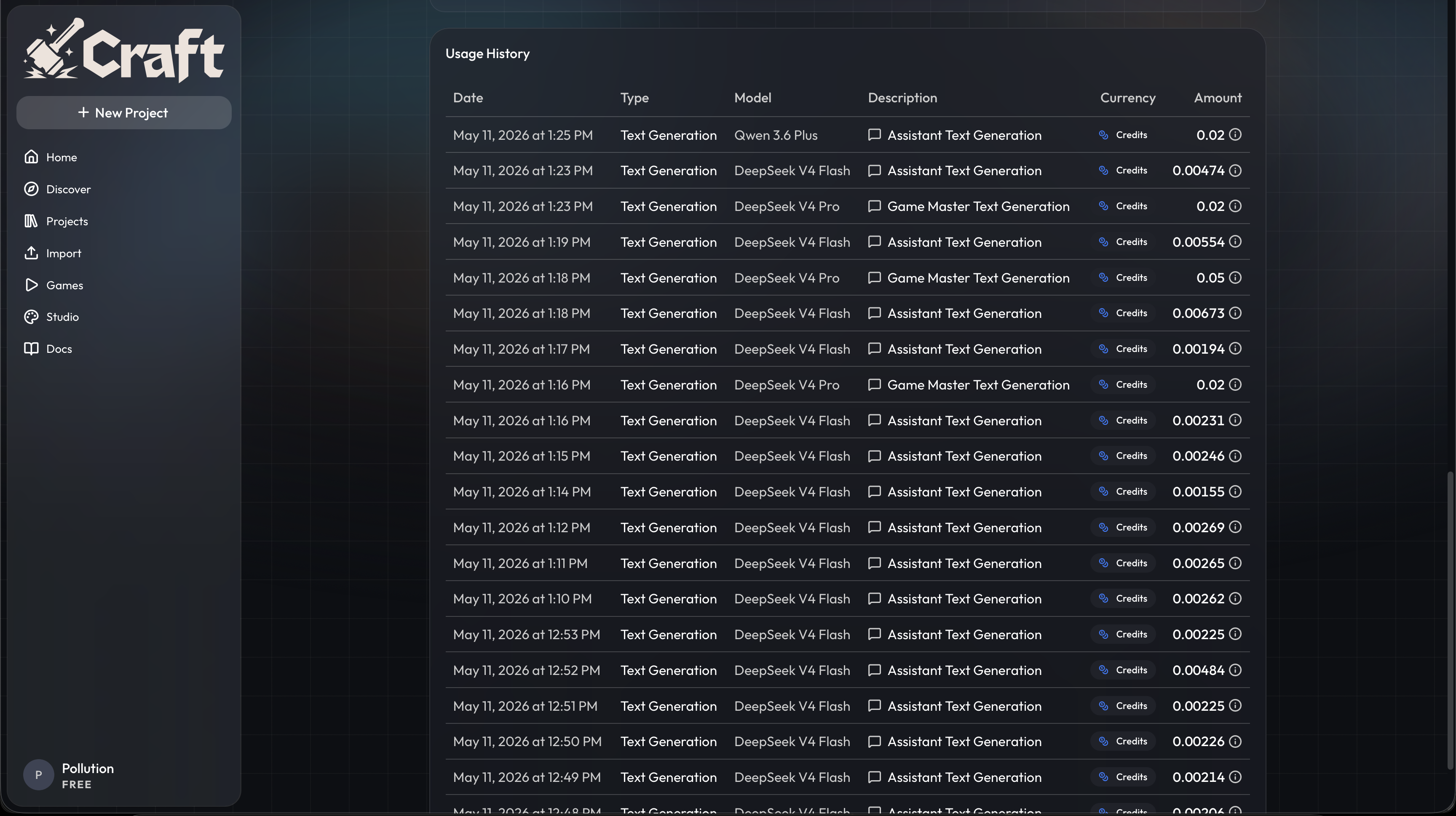
Credits — On-demand top-ups you can spend instead of energy — flip the Play With Credits toggle on any generation. Handy when your daily energy runs out. Credits don’t expire.
-
Usage history — A line-by-line record of what each AI action cost. Lives in Settings → Usage.