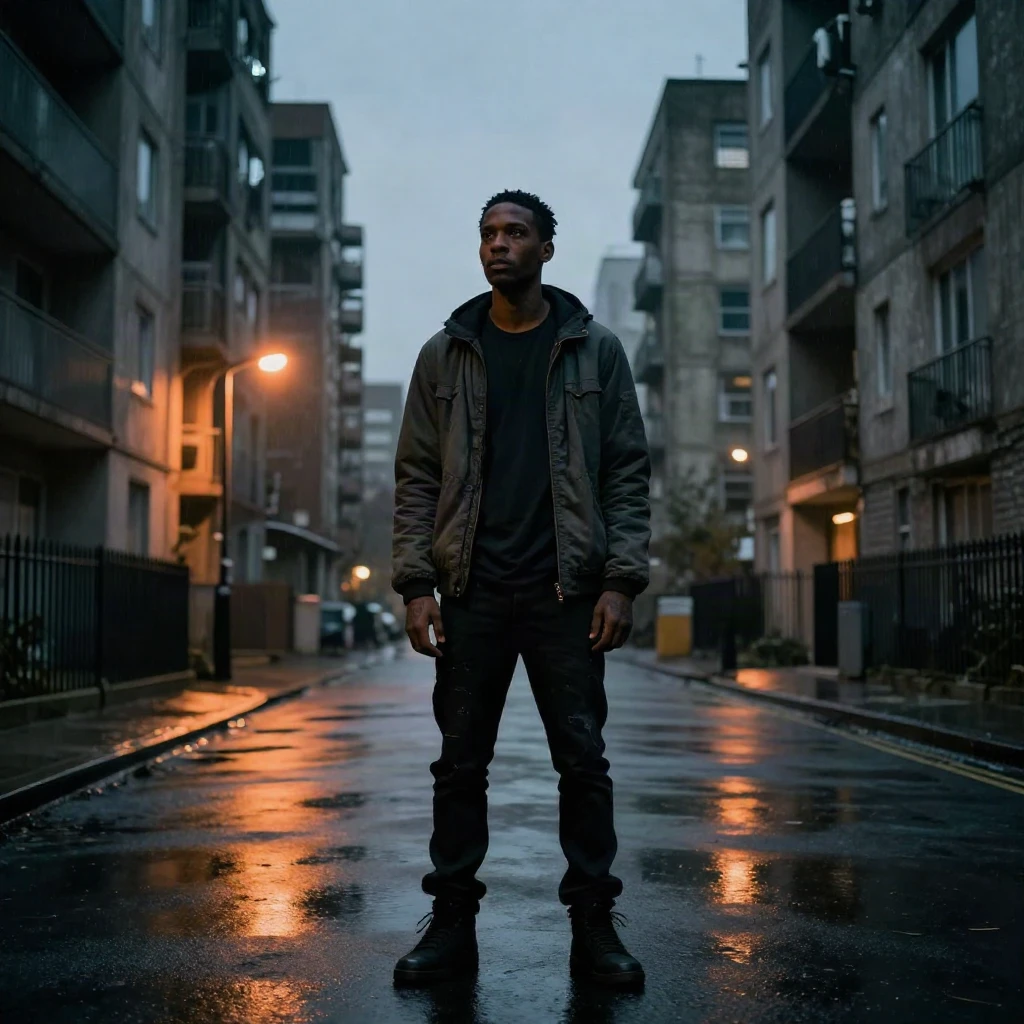
Wolfbound is a modern supernatural London game about a young Packless Alpha trying to find a place in a society that already has a place for everyone except him.
Beneath the city you know — the rent, the night buses, the rain that hasn't decided yet — there is a second London. It has its own law, its own faith, its own aristocracy, its own hotels and festivals and marriage market. It has run parallel to the human city for longer than anyone alive can remember, and the ordinary world walks past it every day without seeing. This is hidden London, and it is full of Wolves.
Wolves, Kinfolk, and the shape of the society
Wolves carry the moon. They have a scent that is identity, memory, and evidence all at once; they have the Change; and once a year they have Mating Season — a biologically real event that the society has built law, commerce, religion, and whole industries around. Wolves belong to structures: a Pack (family and territory), a Tribe (blood and tradition), a Den (the household), or — legally speaking — to no one at all. Being Packless is a status, not a freedom. Ask any Orphan.
Kinfolk are the blood without the moon. They don't Change and don't have a Season, and they live inside Wolf society as the people who run its money, its kitchens, its paperwork, and its quieter loyalties — protected by the system and reminded constantly what that protection is worth.
And over everyone, the dynamics: Alpha, Beta, Omega. Biology with a bureaucracy attached. An Alpha scent opens doors and starts fights. An Omega spends Season weeks under rules other people wrote. None of it means what a stranger assumes: Alpha doesn't mean rich, Omega doesn't mean weak. You can be biologically powerful and socially powerless at once — the society is arranged so that this is not a paradox but a lifestyle.
The law: the Concord
Hidden London is governed by the Concord — the civic order of Packs, Tribes, and Elders that keeps the society from eating itself. There is a Council chamber with nine seats and a long black bench, and its members are old, powerful, and have known each other for decades. It grants residence, hears disputes, keeps records, and decides — with terrifying patience — whether you exist. A person with no provenance is not a person with no problems. Provenance is the currency: who claims you, who vouches for you, whose name is on your right to be in the room.
The Veil
The ordinary world is kept out not by force but by disinterest — the Veil is why a Mundane walks past an unmarked Soho door and reads it as somebody's office, why a 24-hour café under the flyover looks like nothing more than a greasy spoon full of the poor and the lost, even when half the booths are Wolves and the fryer is worked by Kinfolk. The Veil doesn't hide the society behind walls. It hides it behind not being anyone's business.
The Long Silence
Here is the hole in the middle of everything: the gods have been silent since 1877. Father Wolf and Mother Wolf gave the Pack its teeth and taught it what was worth biting for — and the connection is real. But no one has heard from them in a hundred and forty-nine years, and nobody alive remembers when anyone did. Every rite, every omen, every doctrine is carried on faith, memory, and interpretation — with no one upstairs to correct anybody. Shamans read the signs. The gods do not speak through them. When a seventy-year-old Shaman tells an Alpha "Mother is speaking," the Pack chooses whether to believe her.
Nobody knows why the gods went quiet — and the reason is unknowable. Not hidden. Unknowable. Records conflict, histories were burned or rewritten or passed down badly, and no Elder, ruin, rite, or prophecy holds the answer. There is no final reveal. Whoever claims to have found the truth is selling something.
The war that never ends
The silence broke the old world. Since 1877 the central conflict has been Wolf tradition versus Helios — the solar faith on the other side of the Veil — not constant open war, but the whole spectrum of a long hostile peace: territory disputes, prejudice, diplomacy, trade, truces, mixed families, defections, and resentment that outlives everyone who started it. Most Wolves are raised believing the Sun is the enemy. Most Radiants are raised believing Wolves are dangerous relics clinging to vanished gods. Old Pack halls hold solar symbols; old Helios temples hold Wolf carvings; the families whose blood crosses both traditions tend to keep very quiet about it.
You cannot end this war. No treaty, marriage, Bond, or final villain settles it. Peace exists — locally, temporarily, and it is never victory. A Pack can have good years. A neighborhood can heal. A person can build a good life inside a bad world, and that is success, not a consolation prize.
The concept: a man from nowhere
Into this world comes Silas "Black Fang" Blacksoul — twenty-one, Black, American, broke, Packless, an Orphan out of New York foster care, sponsored into London on a Warden's word after a hearing he didn't understand. His life says council estate. His paperwork says unknown orphan. His scent says old blood. The people at the bottom see a broke estate kid; the people at the top smell one of their own. He doesn't belong cleanly to either world.
The contradiction is the game. His scent opens questions, never doors — no chosen-one shortcut, no secret kingship, no bloodline that ends the war. What attention from the old families actually brings is suspicion, invitations, archive searches, and awkward tests of knowledge, and whether any of it becomes a home or a leash is decided the slow way: through people.
And under everything, the real question of the game — smaller than saving the world, which nobody in it gets to do:
Can a man who never had a home build one? A flat, a Pack, a relationship, friends, a music scene, a neighborhood, a chosen family, a place in London that actually feels like his. Politics, romance, and the bloodline mystery all orbit that everyday life — they do not swallow it.
How it plays
The system is the Romance Engine, and its center of gravity is the Connection — a living, directional record of what two people actually are to each other: attraction, trust, debt, fear, loyalty, jealousy, what each side wants and what each side misunderstands. Narrative comes first; dice appear only at genuine turning points. Consent is never rolled. Attraction never decides whether the other person wants you. Feelings don't come from dice — dice create circumstances; hearts are the players' to write.
Pressure and composure track what the world is doing to you and how long you keep your shape. Drama points buy complication. Nobody dies of a bad roll, and nobody is ever dead at all — this is a game about living inside a society, not about attrition.
Scenes run the size of a life: a grocery trip, a hearing, a first date, a fight, a text at 3am, a night at a Season House, a Pack dinner that goes wrong. Enter late, play the meaningful beat, leave once something has changed.
What this game believes
Three things, and everything else is built on them:
- Class is a major theme. The conflict at the heart of Wolfbound is people who inherited a place in the world meeting a man who was given none — and neither side is a cartoon.
- You do not fix the world. You live in it, and you matter enormously to the people you directly touch. That's the scale the game protects.
- The gods are silent, the war doesn't end, and home still matters. Ritual, law, Bonds, and meaning remain worth having even with no divine answer coming — the rites continue out of stubborn faith, and so does the game.