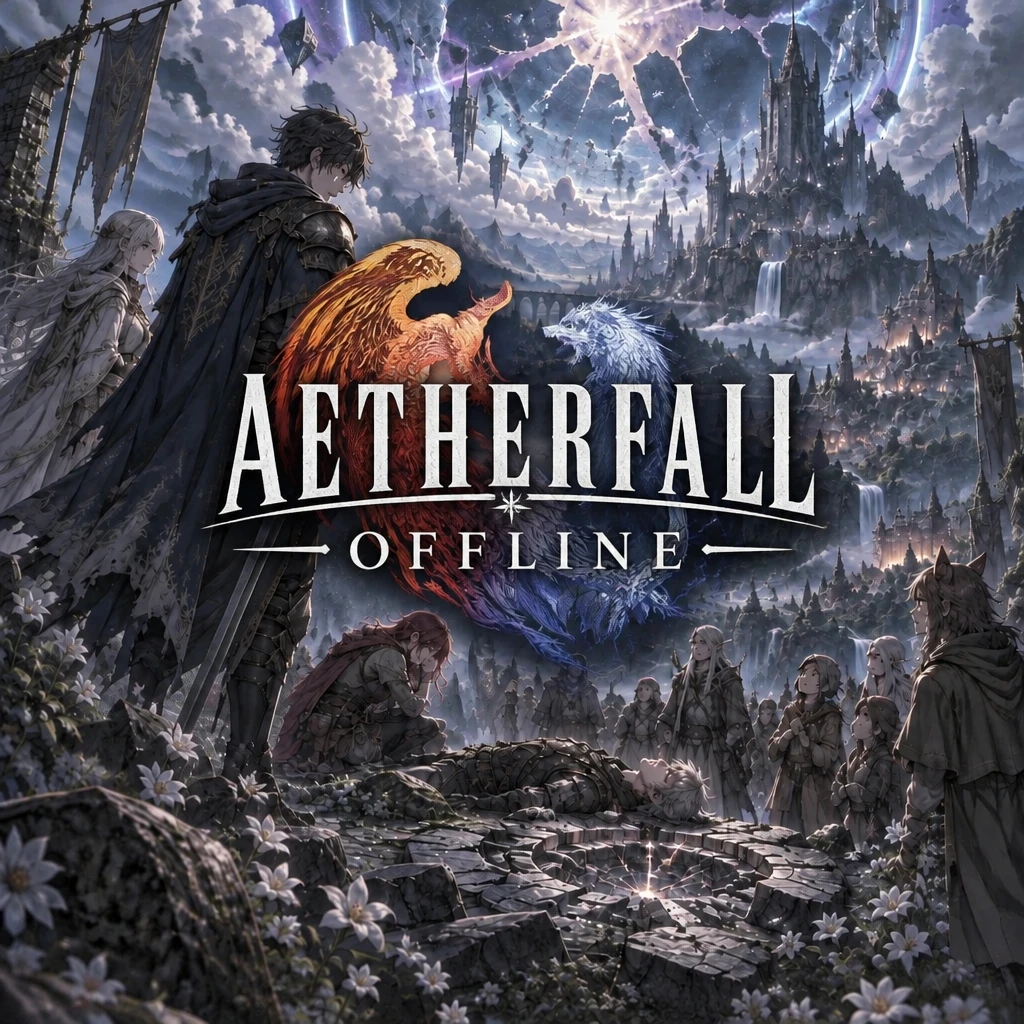
The ordinary opening begins seconds after the countdown reaches zero in @Missing file; the exclusive Lufas opening instead begins on a northern Khardun summit. Your avatar is now your body. Your menus still open, but logout fails. Around you, thousands of people are realizing that the expected ending has not arrived. Start with something you can actually do: make room in the crowd, check a companion, help someone injured, or find somewhere quieter to think.
What you do during play
Describe your intention and how you act. “I help” is a beginning; “I ask the guard to hold the crowd while I untangle the fallen banner” gives the scene a clear next step. You can speak, investigate, negotiate, travel, train, fight, retreat, or attempt another sensible approach. You do not need a named skill to ask a question or try an ordinary action.
The GM describes what you can perceive and resolves uncertain consequences. State your approach before a roll. Safe, obvious actions need no roll; a high result cannot make an impossible action possible. When you use a learned technique, name it and make your intended target clear. Its range, cost, prerequisites, and effects still matter.
You control your character’s choices, feelings, and relationship to their former life. You may keep your real-world identity private. The other people around you have their own interests and can disagree, refuse a request, or ask for help in return.
The essentials
- There are no classes. Your level, learned techniques, equipment, and choices define what you can do.
- Players are ageless, not invulnerable. You still need food, water, sleep, and care.
- Death is final under the current rules. Normal resurrection, shrine revival, and respawning no longer work. Healing can save someone who is still alive.
- Level raises your permanent stats and maximum resources. Leveling up does not refill your current health, mana, or stamina.
- Only Players have the System. Accepted Player Contacts can exchange instant messages across the seven regions; inhabitants cannot use it directly.
- Knowledge has a source. Seeing a name in a roster does not reveal that person’s whereabouts, thoughts, or condition.
These are rules for you as a participant. Your character starts only seconds after midnight and has not automatically discovered every changed rule. Let observations, conversations, and consequences establish what they know. Material marked GM ONLY or GM Notes is not knowledge your character gains by reading a sheet.
Choose the telling
Before play, choose a Narration Style: Classic Storyteller for vivid fantasy prose; Gritty and tense for grounded suspense; Funny and Light for warmth and situational humor; or Plain Words for direct, easy-to-follow descriptions. This changes the telling, not your chances, the rules, or the seriousness of an injury.
For your first decision, choose one immediate priority and one person worth cooperating with. You do not have to solve the whole world before helping the people within reach.