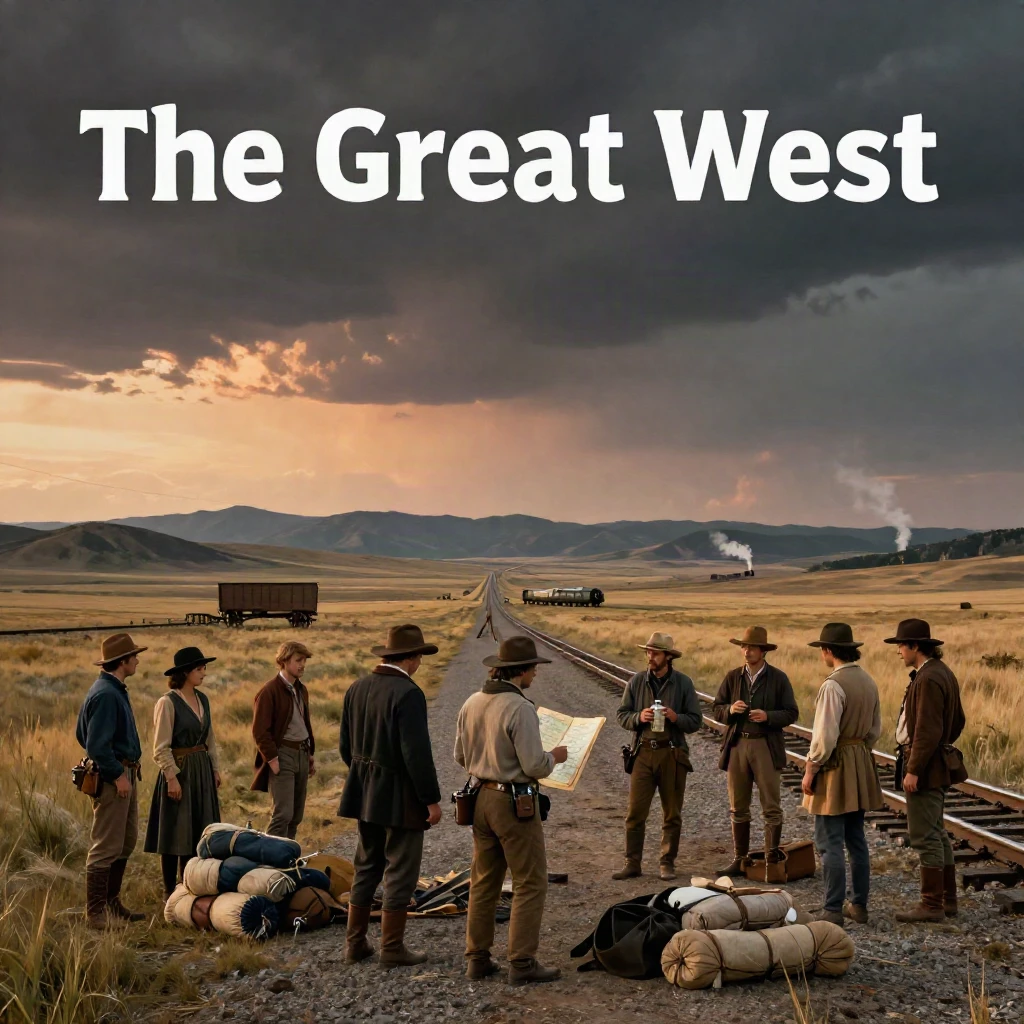
D&D 5e (2024), historical nonmagical variant
The Great West

A globe-spanning historical survival adventure set in the frontier world of 1865–1890. Food, clean water, shelter, and sleep are essential: every journey tests your supplies, your judgment, and your will to survive.
Versionv16
CreatedOct 24, 2026
UpdatedOct 29, 2026
A globe-spanning historical survival game
Eat. Drink. Rest. Survive.
From the American West to distant cities and frontiers, the world of 1865–1890 is harsh, vast, and alive with change. Food, clean water, shelter, and sleep are not afterthoughts—they are the difference between making it through the next day and becoming another story left on the trail. Plan your journey, manage scarce supplies, endure the elements, and navigate conflict among nations and peoples in a historically grounded world. Survival comes first; what you do beyond that is up to you.
Glimpses
Inside the World
1,472 entries · 31 types
Adventuring Gears
93 total
Armor
12 total
Backgrounds
7 total
Battle Dossiers
1 total
Calendars
3 total
Characters
462 total
Cities
2 total
Classes
12 total