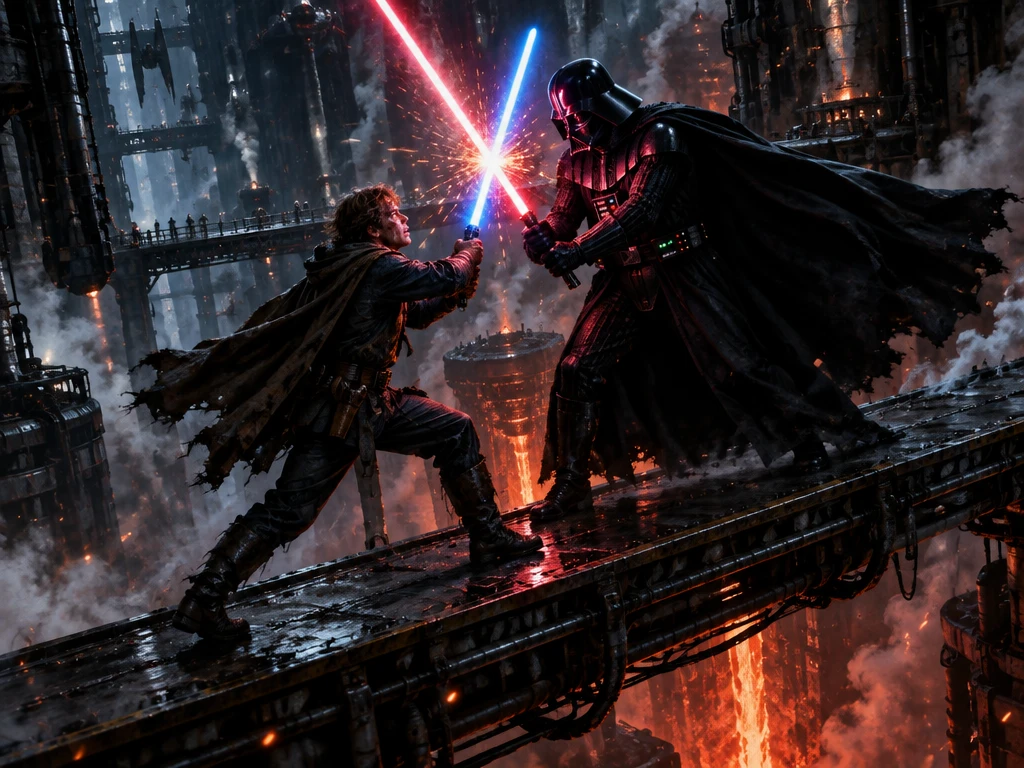
Welcome to the galaxy of Star Wars d20 Revised Edition. This chapter gives you the broad strokes of the rules before you choose a character and step into the Jedi Civil War. You do not need to memorize every mechanic now; the important thing is to understand what makes this game feel different and what your character can risk.
What is d20 Revised?
Think of it as Star Wars built on the foundations of Dungeons & Dragons Third Edition, streamlined in several ways and closer in feel to d20 Modern. Your character’s abilities come mainly from class features, skills, and feats. There are no spell slots to prepare or memorization tables: Force use is handled through skills, feats, and the resources described below.
The rules aim to make heroes capable without making them invulnerable. A Jedi can be a formidable opponent, but a lightsaber does not make someone immune to blaster fire. A group of stormtroopers—or a few unlucky rolls—can bring down even an experienced hero. Tactics, teamwork, and knowing when to take cover matter.
The Force
Force skills cover many familiar applications, including telekinesis and the Jedi mind trick. Force feats represent more specialized or potent abilities: a Force-user may learn to move objects through a skill, while a feat might let them unleash a dramatic, highly focused effect such as a localized storm.
Force use has a cost. Jedi spend Vitality to fuel their Force abilities, so even a powerful character must weigh a spectacular use of the Force against the risk of being left exposed. Characters without Force sensitivity can still call on the Force through Force points, spending them to add dice to a roll when the moment matters.
Vitality and Wounds
Characters have two measures of physical endurance. Vitality represents the split-second reactions, luck, and cinematic resilience that let a hero duck a blaster bolt or avoid the edge of a lightsaber. It generally grows with level. Losing Vitality does not necessarily mean you have been seriously injured.
Wounds measure actual bodily harm. Your Wounds are tied to your Constitution score and do not increase as you gain levels. When your Vitality runs out, further harm threatens your Wounds; a critical hit can also inflict Wound damage directly. That means high-level heroes are still mortal. A few devastating hits—or a critical strike at the wrong time—can turn a confident victory into a desperate fight for survival.
Not every non-player character has a Vitality score. Many ordinary background characters are far less resilient than the heroes, which helps explain why player characters can survive scenes that would overwhelm an average citizen or soldier.
Defense, armor, and danger
Armor works differently here than in many fantasy d20 games. Rather than simply making you harder to hit, armor generally reduces certain incoming damage. It can also hinder your Dexterity, which contributes to Defense. Armor is useful, but it is not a guarantee of safety—especially against weapons that can inflict Wound damage.
Lightsabers are exceptionally dangerous. They can bypass many forms of damage reduction, and a Jedi’s lightsaber damage can improve with experience. That makes Jedi terrifying in close combat, but it does not erase the risks of getting close or facing multiple opponents. A blaster, a critical hit, or a well-coordinated squad can still decide the fight.
What has changed in this campaign?
The rules are based on Star Wars d20 Revised Edition. So far, the only rules changes are mild adjustments to the skill system intended to make play easier and smoother. The core approach to classes, feats, Force abilities, Vitality and Wounds, armor, and combat remains rooted in Revised Edition. When a specific skill rule differs, follow the campaign’s current skill rules; otherwise, use the Revised Edition rules.
You are ready to begin: build a capable character, work with your allies, and remember that in this galaxy, even heroes need a plan—and a way out.