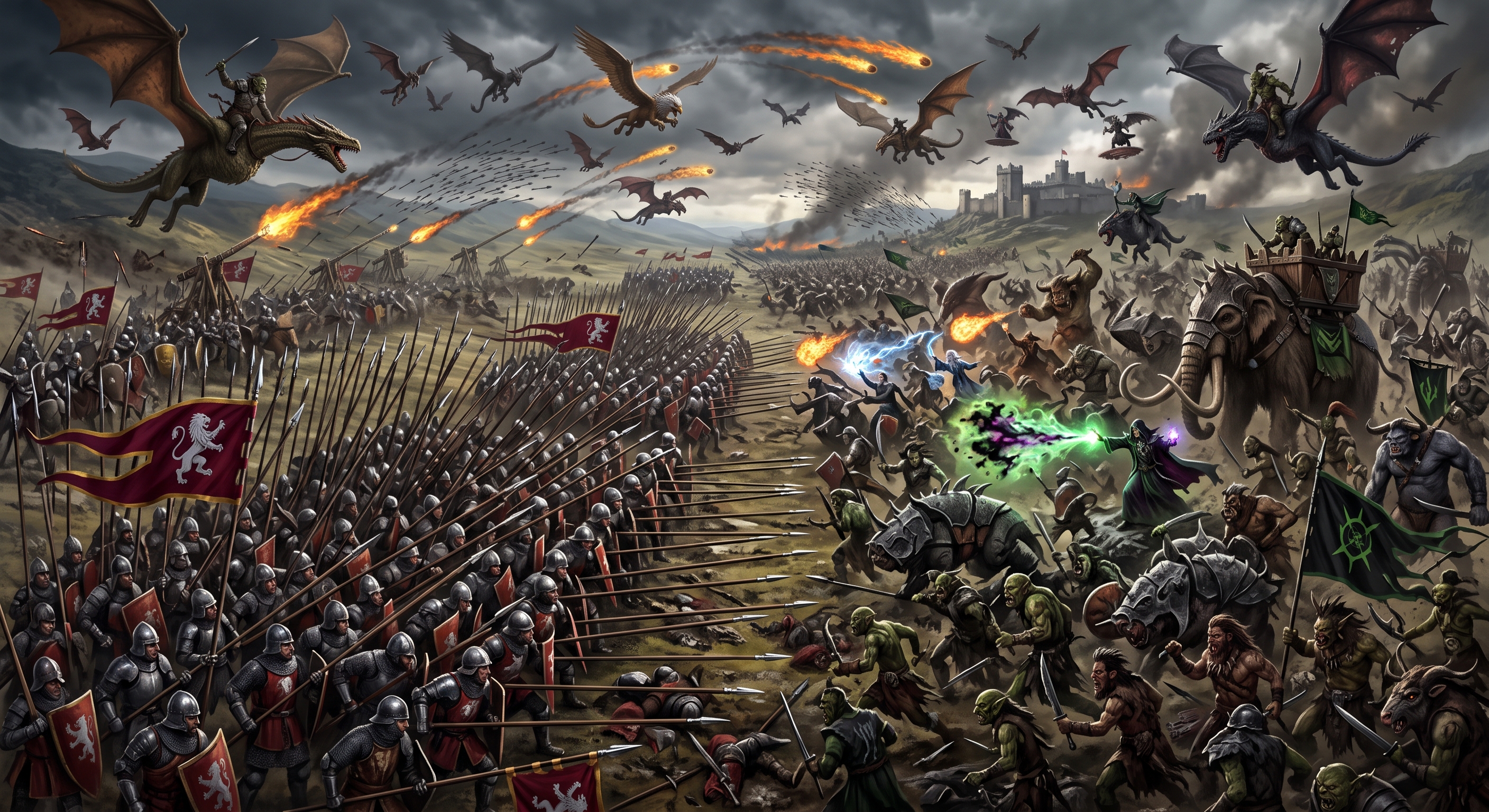
You are the founder. Somewhere at the edge of the map — a woodland clearing, a river bend, a mountain pass — a handful of people look to you to decide what this place becomes. This is a game about growing that settlement from a camp of a few souls into something the region has to reckon with, and about the people, bargains, and crises you meet along the way.
It plays like a grand strategy game run as a conversation. You do not track numbers on paper; you tell the GM what you want to do, and the world answers — with harvests, visitors, rumors, disasters, and the occasional bill.
The Settlement HUD
Everything your settlement is lives on one sheet, the Settlement HUD. It is the single record of truth — not your memory, not a character sheet, not last session's notes. It tracks:
- Resources — food, water, gold, wood, stone, and everything else the settlement has in store.
- Population and housing — how many people live here, how many rooms they fill.
- Morale — how the settlement feels, from
Broken at the bottom to Devoted at the top.
- Safety — how protected it is, from
Very Low to Untouchable.
- Rank — where the settlement stands on the ladder from a stranded camp to a sovereign realm.
- Season, weather, current objective, and notices.
You can ask to see the HUD at any time. When something on it changes, it is because something actually happened — the GM applies consequences to this sheet, never just to the story.
What you actually do
A session is a sequence of days. Each day the GM presents the world — an event, a visitor, a finished wall, a rumor of wolves — and you decide what the day is for. Typical threads:
- Build. Obtain blueprints, gather materials, raise structures. Buildings produce food, water, coin, faith — and unlock what the next rank demands.
- Explore. Send scouts into the surrounding areas. Each one has terrain, resources, and one strange dilemma that will not resolve itself.
- Welcome people. Travelers arrive with needs and offers. Satisfied, some stay — and the right ones change what the settlement can do.
- Govern. Set the tax rate, call the levy, choose an identity path, accept quests, negotiate with factions.
- Survive. Threats develop in stages, from rumor to crisis. There is almost always a way to end one without a battle — if you find it in time.
The one rule that matters most
The GM never chooses for you. Rank-ups, names, doctrines, treaties, identity paths — anything that shapes the settlement's future is presented with options and waits for your explicit choice. Nothing is granted just because you sounded interested, and nothing is taken away just because a day was bad. Consequences follow confirmed results.
Starting out
The campaign begins at The Founding: you are the founder of a settlement in a wilderness frontier. Your first decisions are humble and immediate — where to camp, what to gather, which of the nearby areas to walk first. The early game is about a reliable food supply, the first real buildings, and learning what the land offers. The endgame is a settlement with a name, a doctrine, and a place in the region's politics. Every step between those two is a choice you get to make.