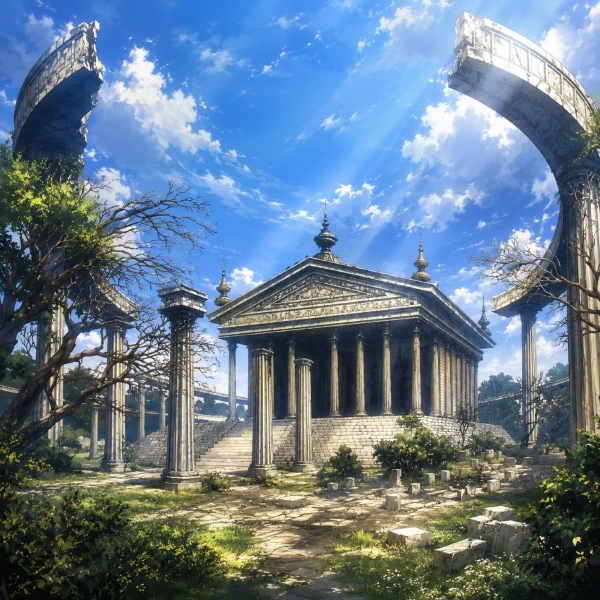
Choose one opening and one character. Your first job is to decide what that character wants now; the rest can be learned through play.
Three entrances
| Opening | Choose it for | Prepared characters |
|---|
| @Missing file | An unwitnessed arrival, a new identity and an open horizon | Celeste, Pavel or Victoria |
| @Missing file | The hierarchy, intrigue and extraordinary power of Nazarick | Albedo, Demiurge or Shalltear |
| @Missing file | A personal mystery tied to the world's distant past | Arahast Gunther |
Other openings remain available, including native adventurers and Gazer's beastman route. Choose Custom Character for a character of your own, or use the guided creation wizard. Starting characters are alternatives, not a party you must take together.
First minute
- Pick the opening and character that fit each other.
- Read the sheet's resources and abilities. The sheet displays effective capacities, including equipped bonuses. Permanent capacities remain separate; equipping does not refill spent points.
- Review the template’s recorded starting loadout; its selected equipment is already marked equipped. Change that choice before INIT. On an existing campaign an equipment change never refills spent points.
- Give an immediate intent: “Victoria studies the road for traffic before deciding whether to approach the city,” or “Albedo requests the details of the assignment.”
- Act on the result. Nothing requires accepting a quest, joining the guild or following the original plot.
The rhythm of play
Describe an intention and approach. The GM establishes the visible stakes and costs, resolves the action, and records the consequence. Safe ordinary tasks need no roll. For uncertain checks, the actual roll is d100 plus half the relevant skill, half the relevant attribute, one applicable ability bonus and stated modifiers; halves round down separately. Names, relationships, items spent and places discovered persist.
Ask naturally, or use /status, /inventory, /spells, /quests, /map or /build. These are out-of-character requests, not spoken dialogue. One focused question is enough; you do not need command syntax to play. A recap and current goal in World State help resume after a break.
World foundations and expansions
This is the Overlord New World. Its original people, places, abilities and stories remain the foundation. Craft Expansion equipment adds new practical choices; find it through merchants, crafting and exploration. New items are not automatically added to a starting inventory. Established capabilities and recorded campaign rulings take priority over outside canon or an old archival paragraph. If a desired full-power interpretation differs from a sheet's authored numbers, settle that choice before the first action that depends on it.
New discoveries
Browse @Missing file for 132 additional items and 100 spells. Choose something to seek, craft or learn; owning it follows the character’s actual discoveries and powers.
Explore the world
The world map uses the supplied Overlord illustration with 58 city and destination pins. Click a pin for its location record. There is one map layer; interiors and minor districts remain available through search. Unlabeled locations use approximate campaign positions.
A character of your own
Choose Custom Character among the prepared options to build through conversation without generating a portrait. In your first message give the exact name, body, intended level or power, abilities and equipment, or ask to choose the details together. The GM checks and saves the completed build before the opening begins. The guided wizard remains available; its new portrait step depends on the account’s portrait allowance.
Release rule profile
New games use Ultimate multiclass; source_packages is an explicitly chosen legacy option, not a second default. A retained-power template can know powers its present resource pool cannot afford. Its Start Profile explains this distinction; existing levels and powers are not secretly rewritten.