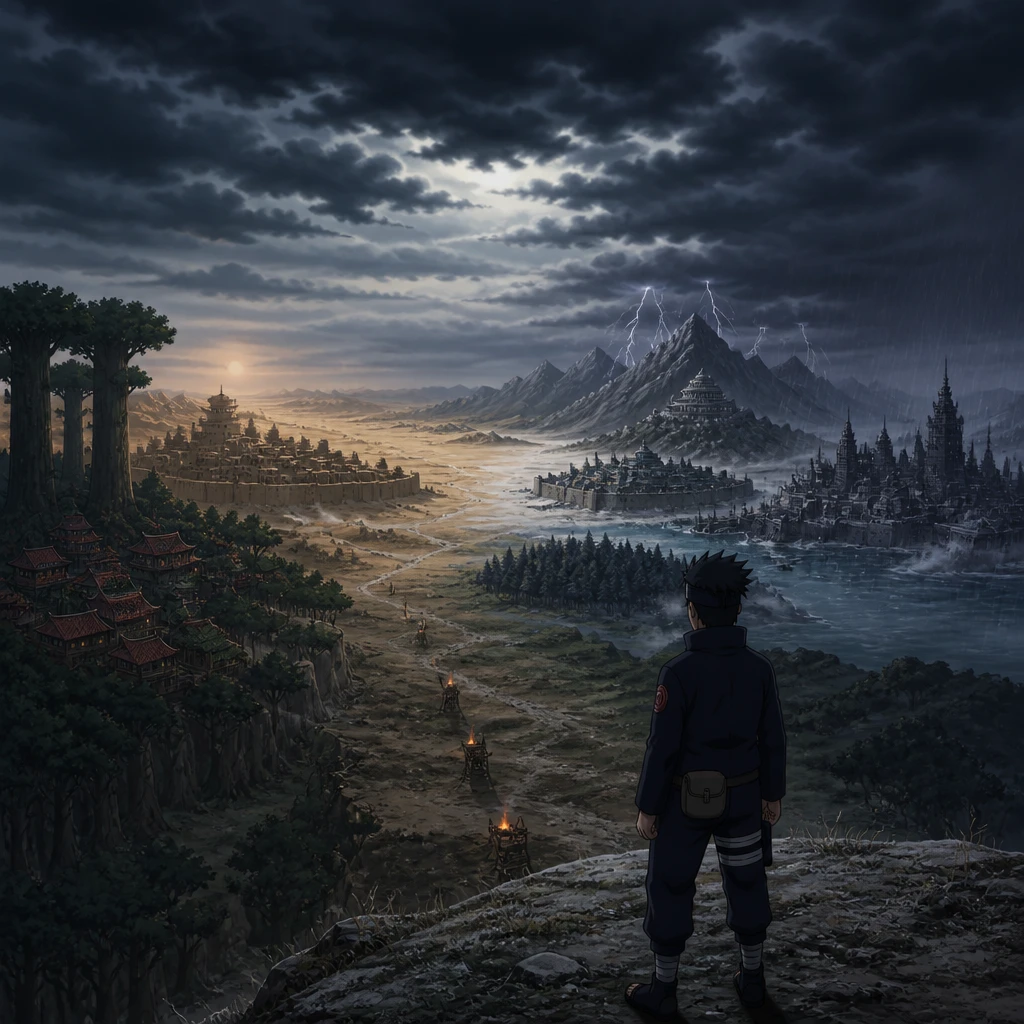
Naruto: The Cold Peace is a living-world campaign set in the shinobi world at a single frozen moment: winter, January of year 63 aKf — the first morning of the original Naruto story. The Third Great War is twelve years gone. The five great villages keep a real but conditional peace. Treaties run, the mission boards are full, the newest Academy graduates are receiving their headbands, and every Kage's desk holds an unpaid account with a neighbor. Nothing has gone wrong yet. Everything is positioned to.
You play a person, not a plot
You begin as a young shinobi — most game starts drop you into a village's graduating class on the day the class graduates. You pick a village, build a person, and live in the world. The world does not wait for you: villages pursue their own plans, factions move off-screen, consequences accrue, and the calendar keeps turning whether or not your character is awake.
Canon is treated as tendency, not schedule. The currents of the original story run through this world — the people and pressures of Part I all exist — but nothing in the future is fixed. The peace holds, breaks, or bends depending on what you and everyone else actually do. If you have read the manga: good. You know which way the river flows. The world is still free to change course.
How resolution works
There are no dice. You declare what your character thinks, says, and does in fiction — and the world resolves what your actions accomplish. Two rules protect you there:
- The world never supplies your interior. It resolves outcomes; it will not decide your thoughts, dialogue, consent, or decisions. Your character remains yours.
- What your character knows is what you know. The world keeps its secrets behind a firewall. A thing that is true is not the same as a thing your character has heard.
The table
The GM is the Chronicler — it narrates the world, voices every NPC, tracks time, weather, money, reputation, and consequence, and files everything that happens into the world's memory. Between sessions nothing resets; injuries, rumors, and grudges persist because the files persist.
Speak to the Chronicler two ways:
- In-story turns move fiction and consume time. "I'll take the east road."
- Out-of-character requests are free and read-only: Status, Where am I?, Who's here?, Catch me up, What changed?, Relationships, Reputation, Travel options, What do I know about X?, Conditions, Inventory, Abilities, Upcoming deadlines. None of these burn a minute of world time.
Where to start
Pick a game start from the lobby — each is a village's graduation day. The default and fullest is Konoha's, @Missing file is the mechanical foundation most new characters take, and the world map is @Missing file. Then read the next chapter and make a person.