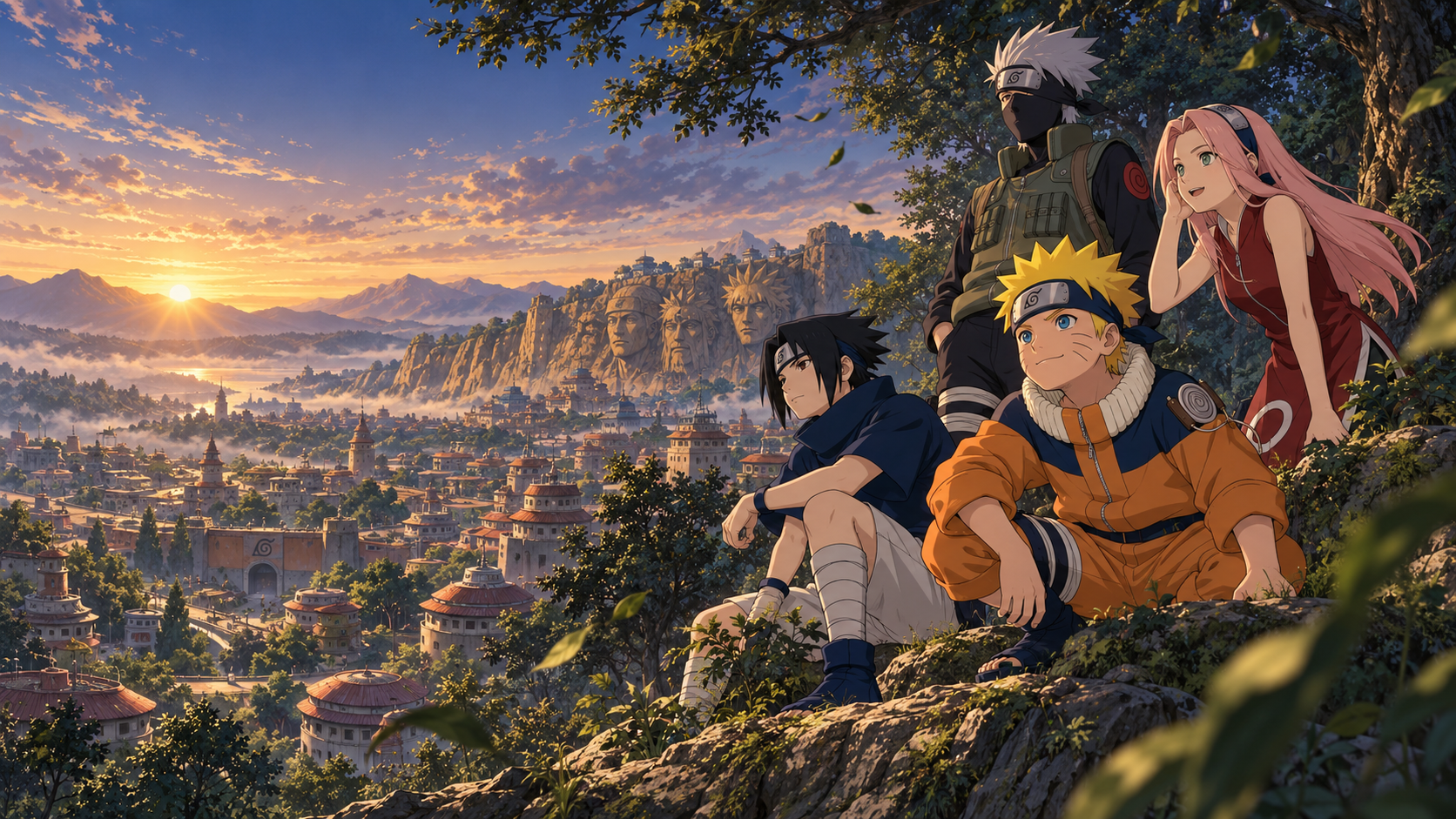
You have cloned a Naruto RPG called Naruto: Shinobi Chronicles. Before you add anything, take fifteen minutes to learn how the box is packed. Everything you add will slot into an existing system of file types, and the system does more of the work for you than it looks like.
The file-tree map
The whole project lives in a few folders:
/Characters/    every person who ever acts, speaks, or exists on a schedule
/Jutsus/        techniques, one file each
/Equipment/     tools and kit, priced in ryō
/Locations/     every place the party can visit or be
/Quests/        missions, real and offered
/Factions/      organizations and their politics
/Relationships/ edges between two characters
/GM Instructions/   retained legacy V1 instruction files
/References/    ordinary setting and mechanical reference material
Player and Builder handbooks are stored in the project settings.
Each folder maps to a file type with a registered schema at /file-types/<slug>.json. The slug is the type name lowercased and space-dashed, so Character → character, Game Start → game-start. A file's name is always Name.<type-slug>.json (so Uzumaki Naruto.character.json), and every file is addressable by a mention token like <@uzumaki-naruto.character> — the slug being the file name in kebab case.
Inside each file type
Character is the workhorse. Editable fields hold who the person is: name, rank, level, clan, nature affinities, stats, jutsu and inventory (reference lists), schedule, secrets, background, and growthTrack. Four fields — maxHp, maxChakra, maxStamina, defense — are computed from the Shinobi d20 formulas and read-only. You never hand-enter them; you edit their sources (level, stats) and the derived numbers move with you:
maxHp = 10 + 4×level + Con modmaxChakra = 9 + 3×level + Con mod + chakraControlMilestones (verified count 0–10)maxStamina = 6 + 2×level + Con mod + staminaConditioningBonus (0–1)defense = 10 + Dex mod (+1 with a flak jacket)
Three fields are what make the world feel alive rather than static. schedule is a plain-text day for that person — it is the "what are they doing right now" answer the GM improvises from. growthTrack is a GOAL / MENTOR / SPECIALTY / WEAKNESS / PROGRESS / CLOCK block that tells the GM what this NPC wants and what is ticking toward them. secrets carries GM-only hooks (as in Daisuke Hanawa's file, where the secret is tied to the Land of Waves arc). Treat computeds as the numbers' home and the other three as the character's heartbeat.
Jutsu carries everything needed to teach, cost, and use a technique: jutsuRank (E–S), nature affinity, discipline (ninjutsu / taijutsu / genjutsu / bukijutsu), chakraCost, damage, range, handSigns, requirement, and details. The schema does not encode the learning ladder for you — genin learn E/D freely, C needs jonin approval, B+ is locked — so that knowledge lives in the handbooks, and requirement/details carry the per-jutsu flavor (Shadow Clone's RESTRICTED flag, Rasengan's LOCKED flag).
Equipment is simple and honest: value in ryō, slots (6 + Str mod to carry), tags, category, weight, and effect. Note the project's own price ladder (Kunai 300, Soldier Pill 2500, Flak Jacket 20000) — that ladder is the pricing anchor for anything you add.
Location is a place record. The description field is where you make a location walkable: entry points, exits, sightlines, landmarks, hazards, scale — write locations as a person walking through them, not as a dictionary entry. notes carries the GM hooks, including lines that begin with SECRET: for buried truth, and atmosphere sets tone. The atlas combines an illustrated square background with native vector regions, linked pins and labels. Keep every image consistent with the record's era; geography and detailed interiors are schematic campaign reconstructions.
Quest is the mission wrapper: missionRank (D/C/B/A/S), status, client, objective, xp, rewardRyo, area, complications, and notes. The GM-note structure for running it (TIME / CHECKS / ENCOUNTERS / ALTERNATE SOLUTIONS / SUCCESS / FAILURE) lives inside notes. D-ranks must stay slice-of-life; that is a genre rule, not a schema rule.
Faction tracks factionType, influence, disposition, leader, ideals, rivals, assets, and details — enough to roleplay an organization and to know who it hates and why.
Relationship is a directed edge: from and to, a bond, tension, and history. Sixty-five of them web the cast together, and each one is a lever the GM can pull in a scene.
Game-start content is a JSON lobby card; its play setup is native designation metadata. Reference and legacy GM-instruction files use markdown. On V2, active instructions and trackers live in settings.gameOptions; legacy gm-instructions.md files are not applied as instructions.
Where the era rules live
None of this early-canon setting is hardcoded. "Era" is encoded in file contents, not schema: Hiruzen Sarutobi is Third Hokage in his file's description; the canon rookies carry early-series-only jutsu (Naruto's Shadow Clone marked RESTRICTED, his exception); the Land of Waves has not begun — Tazuna, Gatō, Zabuza, and Haku exist as GM-side seeds in the Quests and Characters folders, so the branch can be switched on when the GM decides. If you want a different era, you edit contents, not machinery.
The binding chronology and the four availability gates (EXISTS / KNOWN / ACCESSIBLE / LEARNABLE) live in V2 gameOptions, the Day Zero & Secrets Reference and each start's gmNotes/currentState. V2's saved campaign state is the authority for current events. Later-era catalogue content remains archive material and never silently changes the active era. When you add records, tag their era state the same way (notes / eraAvailability / availability), and let the GM run the four gates at the table.
Conventions that keep it coherent
- Naming — kebab-case slugs exactly matching file names; folders keep original casing (
Characters, Jutsus).
- Art direction — use square 1:1 Naruto anime illustration with subtle semi-realism, refined inkwork, expressive faces and detailed materials. Respect each record's age, costume, village and era. Codex generates the requested assets with its own image tool and imports the actual files; do not run Copilot, Orbit or Craft image generation. Never invent image URLs or treat an archive portrait as a current actor. The current Art Manifest supersedes older imageless notes. Automatic generation remains off.
- Tokens over typing — link anything cross-file with a mention token. A character who references Team 13 links to those teammates, a quest links to its
area, a faction lists its rivals.
- One source of truth — computed fields are always the source for stats; schedule / growthTrack / secrets are the source for the living world. Keep duplicate statements out of unrelated files, because edits to one place are what keep the whole book consistent.