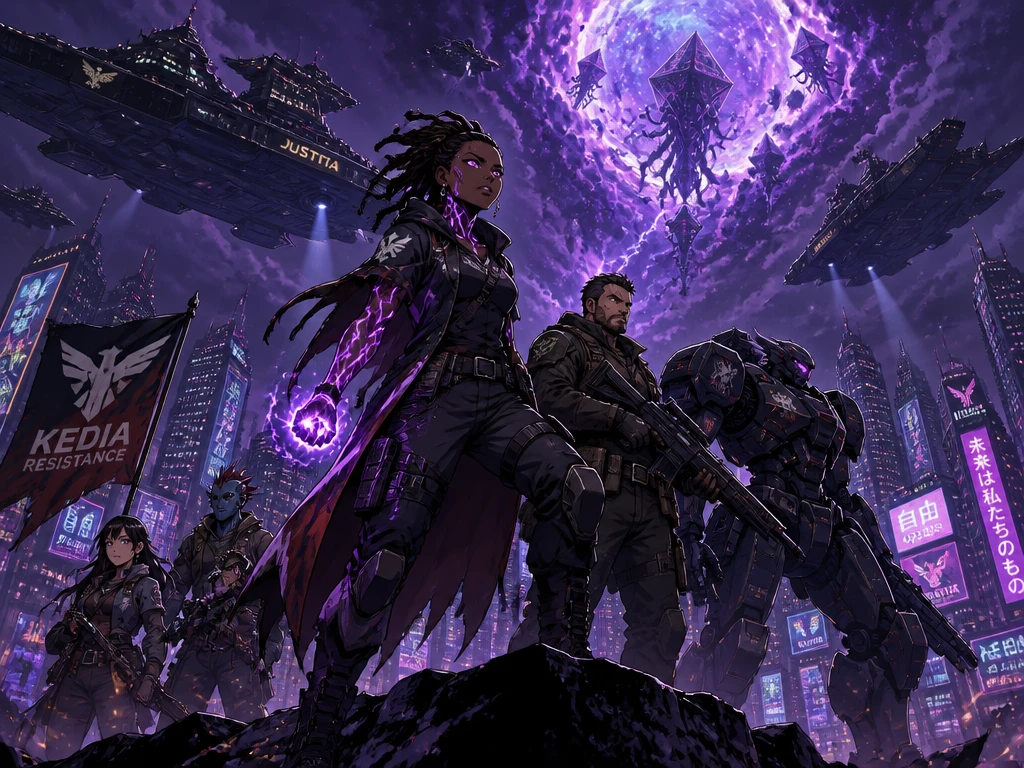
Nephibis System
Kedia
A dark but hopeful sci-fi world set in the Kedia Galaxy — where immortal elites oppress mutant evolution, government experiments unlock dimensional horrors, and the resistance fights for humanity's soul.
Versionv45
CreatedMay 25, 2026
UpdatedOct 24, 2026
Mutant Freedom
They thought they could hide behind their machines.
The rich used their money to implant themselves with nanomachines and cybernetics, while using robots to control the world. The poor were left to struggle and under the oppression their bodies began to evolve. They awakened mutant powers to fight back against those who oppressed them.
World Map
The Universe
Drag to pan, scroll to zoom. Click a marker to open it — places with maps of their own take you deeper.
Inside the World
1,626 entries · 25 types
Abilities
556 total
Bloodlines
3 total
Characters
134 total
Creatures
9 total
Dimensions
6 total
Equipment
395 total
Factions
71 total
Game Starts
19 total