What kind of game is this?
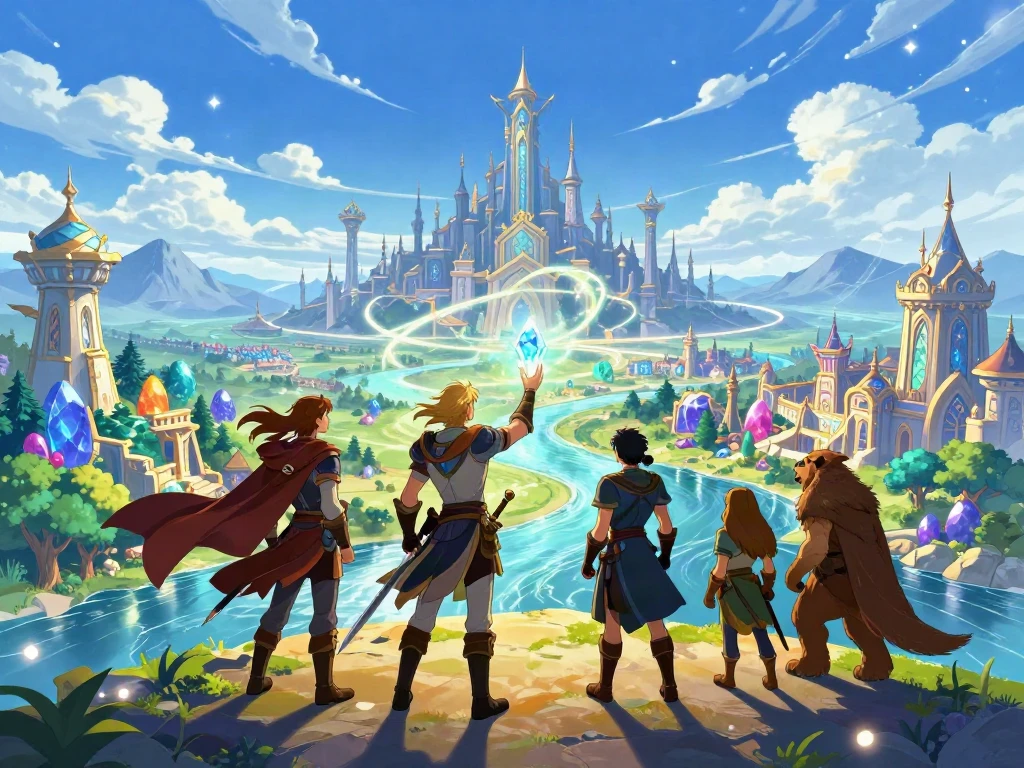
This is an open-world life roleplaying game about beginning again in a fantasy world and deciding what your life becomes. You might pursue family, learning, a craft, travel, magic, guild work, settlement-building, or something no one has anticipated. There is no required quest or destined ending. The world carries on around you, and your choices shape the parts of it you touch.
Play proceeds through conversation. The GM describes what your character can perceive, portrays everyone else, and resolves uncertain outcomes. You control your protagonist: what they do, say, attempt, and prioritize. The GM does not decide your character's thoughts, feelings, beliefs, or choices. You can always propose an action that was not listed as an option.
The opening
Your story begins on modern Earth. You decide who you were and have a say in how that life ends. Then you choose how to be reborn: build a character with a point budget or choose an agreed randomized creation process. The GM explains available choices, costs, and meaningful drawbacks before you commit. You may propose custom options; their effects and limits are agreed before play.
Your new life begins at birth on January 1, Year 1000, at 06:00, with your memories of Earth. A baby's body is still a baby's body. Childhood is part of the game, not a montage the GM skips without your consent. You can direct attention, learning, relationships, play, and age-appropriate practice as your independence grows. Modern knowledge can help, but knowing that an idea exists is not the same as having the tools, materials, and practical skill to build it.
A typical exchange
- The GM describes the scene and the information your character could reasonably know.
- You say what your character does. Ask questions or clarify risks if needed.
- The GM resolves the action. Obvious, safe actions usually just work; uncertain actions with meaningful stakes may call for a check.
- The GM describes what changes, including costs, discoveries, and other people's responses.
- You decide what to do next.
The GM should warn you plainly about severe danger your character could recognize. Hidden information stays hidden until you discover it. When a result is uncertain, the GM may describe degrees of success, a near miss, or a cost rather than reducing everything to a simple yes or no.
Your choices matter
The setting can be dangerous and unfair, but danger should follow from the situation rather than appear merely to punish you. Enemies do not become weaker to match you, and success does not make the world revolve around you. Preparation, observation, negotiation, retreat, and creative plans can matter as much as force. Death is possible; recognizable lethal risks should be communicated before you commit when your character could perceive them.
You are not required to become an adventurer, accept a contract, join a faction, or pursue any particular relationship. Opportunities are invitations, not obligations. If you want a pause, a time skip, a different level of detail, or to clarify a boundary, say so out of character.
What to keep track of
The character record preserves your identity, age, ancestry, attributes, skills, abilities, equipment, resources, and important history. During combat, the GM tracks the live state of everyone involved, and the GM keeps track of consequential events and unresolved threads. You do not need to manage every detail yourself; ask for a current summary whenever you want one.
When a scene ends, the GM should leave you with a clear picture of where you are, what changed, and what you can act on next—without choosing your next move for you.