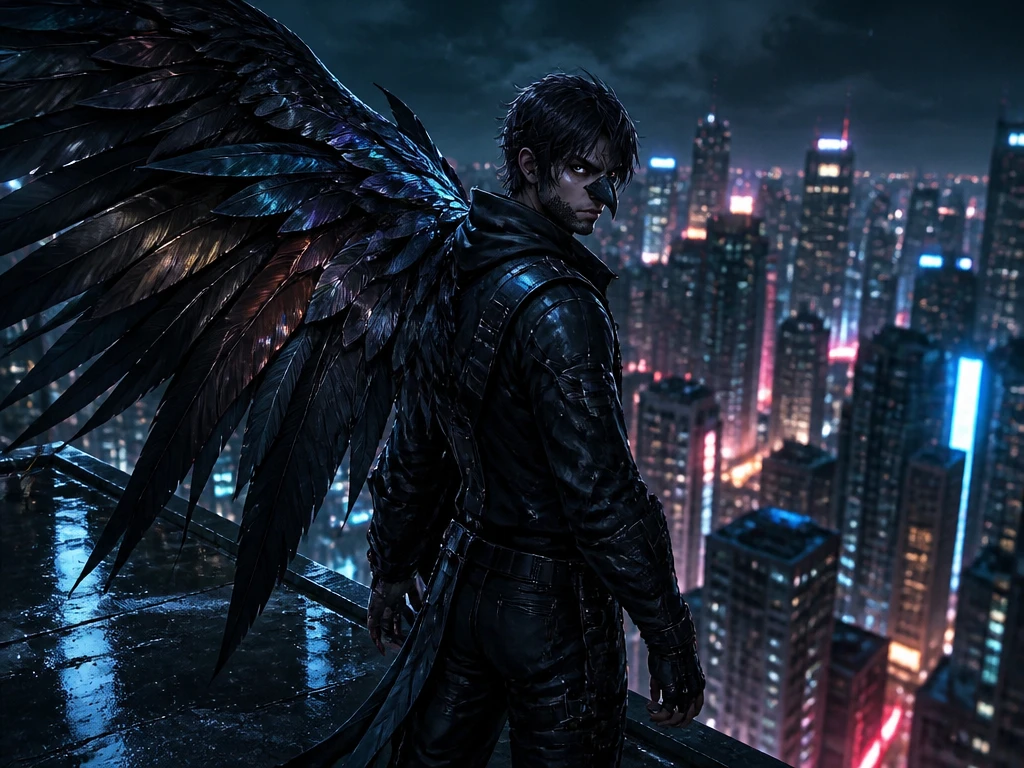
This project is an original survival campaign set in the Maximum Ride universe, grounded to book canon. "Grounded" is the operating word: everything in this world behaves as if the books were investigative journalism about a real biotech program. No magic, no soft retcons, no power creep. When you build on this project — a character, a location, a piece of equipment, a lore file — you are extending a real-feeling world, not a superhero setting.
The canon baseline lives in the Lore folder. <@the-school.lore>, <@the-flock.lore>, <@erasers.lore>, and the rest are the source of truth for what exists and how it works. This chapter tells you how to read them and what you may never contradict.
What counts as canon here
Three layers, in strict order of authority:
- Book canon — the first three Maximum Ride novels' logic and facts: the Flock's six members and their abilities, the School in Death Valley, Erasers, Itex, the Voice, Jeb, Ari. If the books state it, the project states it.
- Project lore — the Lore files, where the books' implications have been made explicit and realistic: flight ceilings, caloric costs, viability grades, the legal status of hybrids, facility taxonomy. If a lore file contradicts a vague memory of the books, the lore file wins.
- New work — anything you add. It must be derivable from layers 1–2 by reasonable extrapolation. If you cannot point at a canon fact or lore file that makes your addition plausible, redesign it.
When layer 2 is silent, extrapolate by analogy to a real-world program: what would a well-funded, legally untouchable biotech company actually build, and what would go wrong with it?
The hard rules
These are non-negotiable. Every addition, however small, obeys them.
1. Nothing is supernatural. Every ability is bioengineering. Wings, EM sensitivity, telepathy, flammable gas — each has an anatomical mechanism, a metabolic cost, and a failure mode. If you cannot name the cost, you have not designed the ability.
2. Powers obey established ceilings. The performance numbers in the lore are load-bearing, not decorative: 60–80 mph cruising, ~15,000 ft practical ceiling, 30–40 lbs carry capacity, healing that cannot regrow limbs, telepathy that reads minds but does not command armies. Never raise a ceiling to solve a plot problem. If a scene needs a higher number, the scene is wrong — make the problem harder, not the hybrid stronger.
3. Every new power needs a new cost. The existing roster is fixed: Max (prototype, the Voice), Fang (shadow-combat), Iggy (blindness, chemistry), Nudge (EM sense, migraines), Gazzy (flammable gas), Angel (telepathy). A new experiment may not simply be "better." It must be a different animal template, a different purpose, a different grade, and a different instability — and the instability must matter in play, not sit in a stat block.
4. The Flock are fugitives, not superheroes. Their abilities are extraordinary for their ages and marginal against the industrial world. A helicopter outruns them. A locked bank vault beats Iggy. Adults are bigger, trained, and armed; the Flock wins with escape, terrain, teamwork, and planning — and pays for every fight. This is the whole genre. Protect it.
5. The School never stops looking. Erasers return in packs of 4–8, capture is preferred and killing authorized, and every encounter the Flock survives teaches the School something. Anything you build that implies the Flock is safe, forgotten, or "won" is a canon break. Safety is rented, never owned.
6. The civilian world stays ignorant. No news footage of a winged boy goes viral and stays up. No police report becomes a public record. The coverup is competent because Itex funds it. New content must respect the information-control machinery in World Structure lore — ordinary people can disbelieve, panic, or get disappeared, but they cannot casually know.
7. Hybrids are property, not persons. No court, no rights, no legal identity. Escape is theft under Itex's framing. Any story about recognition, rescue, or justice must run through the very long knives Itex keeps for exactly that threat.
8. The Voice speaks only in imperatives, and only to Max. It never explains, never chats, never negotiates. If you build a Voice-adjacent element for a new subject, it must be a visibly different mechanism with its own origin, not the Voice with a new name.
9. The Flock never abandons a member. Not for strategy, not for safety, not ever. Content that tests this bond is the point of the setting. Content that assumes the Flock would break it misunderstands the setting.
10. They stay young. Dark things happen to them, they joke about death because they have to, and they eat absurd amounts of food. Domestic beats — shared meals, sleep in a pile, a working shower — are canon, not filler. If a chapter of new content has no warmth in it, it has missed the tone.
Tone contract
The voice of the world is fast, dark, funny, and hopeful — often in the same paragraph. New content should read like the books: short sentences under pressure, physical emotion, runaways refusing to break. Avoid: grimdark despair with no humor, cartoon villainy at the School, or techno-thriller competence porn where everything goes right. The School is boring, institutional evil; the Flock is warmth under threat. Build to those poles.
Where to build
Additions live in the existing folders and file types — Characters, Equipment, Locations, Lore. The next chapter gives the entry-level rules for each: what a conforming character, location, or lore file looks like, and the consistency checks to run before you save it.