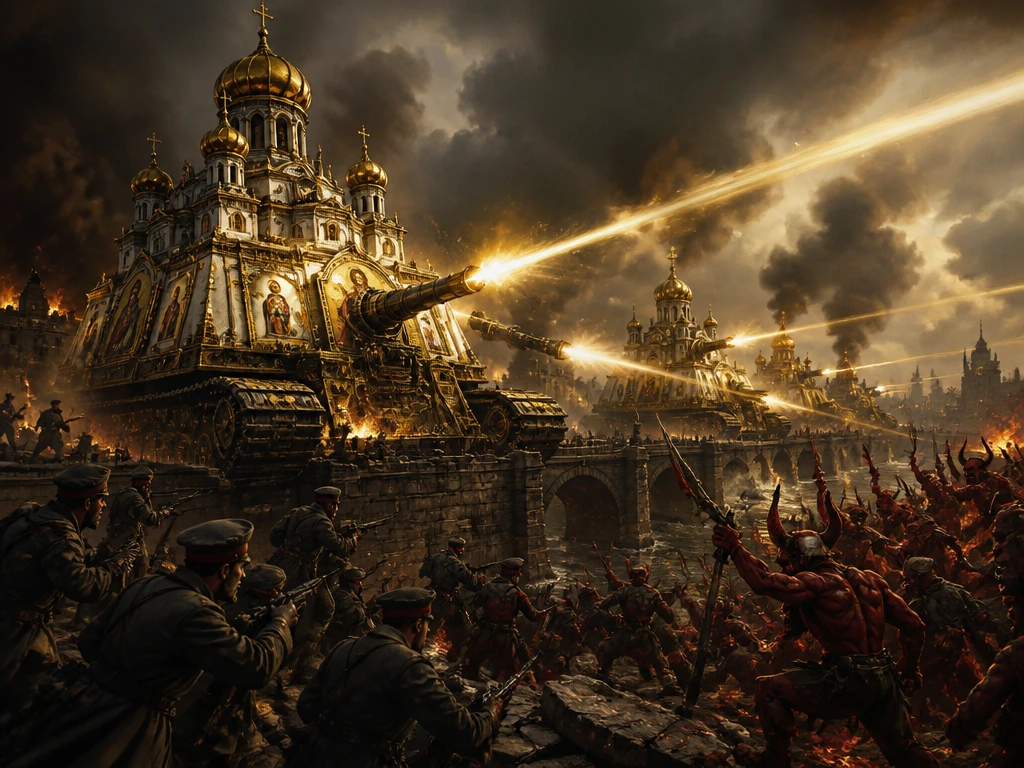
The Ashes Engine
A custom d6 dice-pool system designed for the trenches, horrors, and desperate last stands of Ashes of the Tsar.
Core Mechanic
When a character attempts an action with an uncertain outcome, they roll a pool of d6s equal to their training in that action.
- Each die that shows 5 or 6 is a hit.
- 0 hits: Failure. Things go wrong.
- 1 hit: Marginal success. You succeed, but at a cost — the situation worsens, you take strain, or you lose something.
- 2 hits: Clean success. You accomplish what you set out to do.
- 3+ hits: Exceptional success. You succeed and gain an advantage — bonus position, extra information, or tactical edge.
This is the Ashes Check.
Pushing Your Roll
After rolling, you may choose to push — reroll any or all dice that did not show 5 or 6. Pushing represents gritting your teeth, taking a risk, doubling down.
The cost: When you push, you take 1 point of Strain.
Strain is not damage. It is the accumulation of exhaustion, horror, and trauma. It never heals on its own — only through downtime, medical care, or extraordinary circumstances.
Training Levels
A character's training in an action determines how many dice they roll. Training is measured in ranks:
| Rank | Dice | Represents |
|---|
| Untrained | 0 (roll 1 die) | Desperate improvisation |
| Novice | 1 | Basic instruction |
| Competent | 2 | Solid military training |
| Expert | 3 | Veteran or specialist |
| Master | 4 | The best in the world |
Characters begin with a small number of competencies and expand through play. No character starts as a master at anything.
Difficulty
The GM sets difficulty by choosing how many hits are needed for success:
| Difficulty | Hits Required | Examples |
|---|
| Routine | 0 (auto-succeed) | Loading a rifle, marching |
| Easy | 1 | Hitting a man-sized target at range |
| Challenging | 2 | Hitting a target under fire |
| Hard | 3 | Hitting a sniper in a clockwork tower |
| Nearly Impossible | 4 | Holding a trench against a demon charge alone |
Most combat and dangerous actions are Challenging (2 hits). The world of Ashes of the Tsar is not forgiving.
Three Resource Tracks
Every character tracks three resources that deplete during play. These are the mechanical heart of the setting — they model what makes trench warfare different from dungeon crawling.
Ammunition
Ammunition represents bullets, shells, and expendable ordnance.
- Characters start each engagement with an Ammo pool (typically 6-12 depending on loadout).
- Ranged attacks cost 1 Ammo per roll. If you have 0 Ammo, you cannot fire — you fight with bayonet, blade, or fists.
- Some abilities cost extra Ammo — suppressive fire (costs 2), calling in artillery (costs 3), firing a flamethrower (costs 3).
- Ammo is replenished during downtime or by scavenging in the field (an Easy check).
Ammunition scarcity defines the setting. A rifleman with 0 Ammo is a man with a club. Plan accordingly.
Supply
Supply represents food, medicine, tools, fuel, and the material ability to keep fighting.
- Supply is rated 1-6, degrading by 1 at the end of each scene (or per day of sustained combat).
- At Supply 4-6: No penalty.
- At Supply 3: Healing takes twice as long. Tool checks require 1 extra hit.
- At Supply 2: No healing without medical care. Movement is slowed. Morale suffers.
- At Supply 1: Desperation. Characters must scavenge or forage to survive. Equipment begins to fail.
- At Supply 0: Crisis. Characters are starving, out of medicine, and running on fumes. Every Ashes Check is made at -1 hit (minimum 0).
Supply is restored during downtime — resupply missions, supply lines, or looting enemy positions.
Resolve
Resolve represents willpower, sanity, and the ability to keep functioning in the face of horror.
- Resolve starts equal to Willpower (a derived stat, typically 4-8 for most characters).
- Resolve is spent to resist supernatural terror, maintain composure under extreme stress, or use certain powerful abilities.
- Resolve is lost when you witness horrors, fail critical moments, or push yourself too far.
- When Resolve hits 0, you Break (see below).
Resolve is the most important resource in the game. A character with 0 Ammo can pick up a bayonet. A character with 0 Resolve is a liability to everyone around them.
Breaking
When a character's Resolve drops to 0, they Break. Roll 1d6 on the Break Table:
| Roll | Break Type | Effect |
|---|
| 1 | Freeze | You cannot act on your next turn. You stand, sit, or lie still, unresponsive. |
| 2 | Flight | You flee. You must move away from the source of horror each turn until you are safe or restrained. |
| 3 | Rage | You attack the nearest thing — friend or foe — until it drops or you are restrained. |
| 4 | Despair | You collapse. You are incapacitated and must be helped to your feet. You cannot act until someone spends a action to rally you. |
| 5 | Reckless | You act with total disregard for safety. +2 dice to your next check, but you take harm equal to the difficulty. |
| 6 | Dissociate | You are present but not here. You act mechanically, without emotion or tactical awareness. You cannot use abilities, but you can perform basic actions. |
After a Break, Restore 1 Resolve. You also gain the Shaken condition until you complete a Long Rest — all Ashes Checks are made with one fewer die (minimum 1 die).
Combat
Combat in Ashes of the Tsar is fast, lethal, and desperate.
Structure
Each round, every character acts once. On your turn, you take one action and may move up to your Sprint value (typically 1-2 zones or 30-60 feet).
Initiative
At the start of combat, every character rolls 1d6. The highest acts first. Ties go to the side with higher Tactics (a group stat or GM call). Initiative is re-rolled each round — chaos is the only constant.
Attacks
To attack, make an Ashes Check using your Combat Training (a stat determined by class). The difficulty depends on the target:
| Target | Difficulty |
|---|
| Unaware, stationary, or exposed | Easy (1 hit) |
| Aware, in cover, or fighting back | Challenging (2 hits) |
| Heavily armored, supernatural, or in fortified position | Hard (3 hits) |
On a hit, deal damage with your weapon (see Weapons).
Taking Harm
Characters have Harm equal to their Grit (typically 5-10 depending on class). When you take damage, mark Harm boxes.
| Harm Level | Effect |
|---|
| 0-3 | No penalty |
| 4-5 | Wounded: -1 die on all checks |
| 6-7 | Badly Wounded: -2 dice on all checks. Bleeding — lose 1 Harm per round unless stabilized. |
| 8-9 | Dying: Unconscious. Roll 1d6 at end of each round. On 1-2, you die. On 3-6, you stabilize at 0 Harm but are Incapacitated until healed. |
| 10+ | Dead. |
There is no healing magic in the traditional sense. Stabilizing a dying character requires a Medical Check (Competent training, Easy difficulty) and costs Supply.
Cover and Position
The battlefield is divided into zones — rough areas of 30-60 feet. Position matters more than precise measurement.
- In Cover: -1 difficulty to attacks against you (minimum Easy).
- Exposed: Attacks against you are one difficulty easier.
- Flanked: No cover bonus. Attacks against you are +1 die.
- Horrific: Near a supernatural source. Costs Resolve to remain in the zone.
Supernatural
Magic, curses, pacts, and eldritch horrors are real. They do not follow the same rules as mundane actions.
Rites and Operations
Supernatural abilities (called Rites for occult characters and Operations for tech-mage hybrids) work like special attacks or effects. They are defined per-class and cost Resolve to use, not Ammo or spell slots.
Example cost structure:
- Minor Rite (shield ward, detect undead): 1 Resolve
- Major Rite (raise the dead, call fire): 2 Resolve
- Grand Rite (summon a demon, collapse a building): 3 Resolve
Using a Rite when your Resolve is at 0 is possible — but the GM may impose a Break roll.
Facing Horror
When a character encounters something genuinely supernatural — seeing an undead horde rise, witnessing a demon manifest, reading a forbidden text — they must make a Fear Check:
Roll Willpower dice (their Resolve pool) against the Terror Rating of the horror:
| Terror Rating | Examples |
|---|
| 1 | Undead foot soldiers, cursed objects, minor supernatural phenomena |
| 2 | Greater undead, demons, active blood magic |
| 3 | Ancient horrors, reality-warping entities, mass resurrection |
| 4 | Eldritch abominations, gods, the end of the world |
Each miss costs 1 Resolve. A clean success (2+ hits) means you steel yourself. An exceptional success (3+) means you can act normally this turn with no Resolve cost.
Downtime
Between engagements, characters can Recover and Resupply:
- Recover Harm: Each day of rest removes 2-3 Harm (with medical care) or 1 Harm (without).
- Restore Resolve: A full day of safety with no supernatural threats restores 1-3 Resolve (GM discretion based on circumstances).
- Resupply: Restores Ammo and Supply to full or near-full, depending on available resources.
- Shaken Recovery: A Long Rest (8+ hours of safety) removes the Shaken condition.
Character Creation Summary
- Choose a Class (playbook) — determines training levels, Grit, Willpower, and signature abilities.
- Choose a Background — origin story, provides one extra training rank and a narrative hook.
- Assign Training — distribute ranks across actions based on class and background.
- Determine Grit and Willpower — from class.
- Gear Up — select weapons, ammunition, and supplies from your class loadout.
- Choose a Faction Allegiance — determines narrative connections and certain mechanical bonuses.
- Write Your Name and Story — who you were before the war, and why you're still fighting.
Design Principles
- Lethality over heroism. A single bullet can kill. Cover is sacred. Charging across open ground is suicide.
- Resources define tactics. Running out of Ammo means picking up a bayonet. Running out of Supply means starving. Running out of Resolve means breaking.
- The horror is mechanical. Fear is not flavor text — it costs Resolve, causes Breaks, and shapes play.
- Push your luck. The push mechanic creates dramatic moments. Every push is a choice: "Is this worth the strain?"
- Simple math, hard choices. No modifiers stacking. No proficiency bonuses. Just "how many dice do I roll" and "what does it cost me."