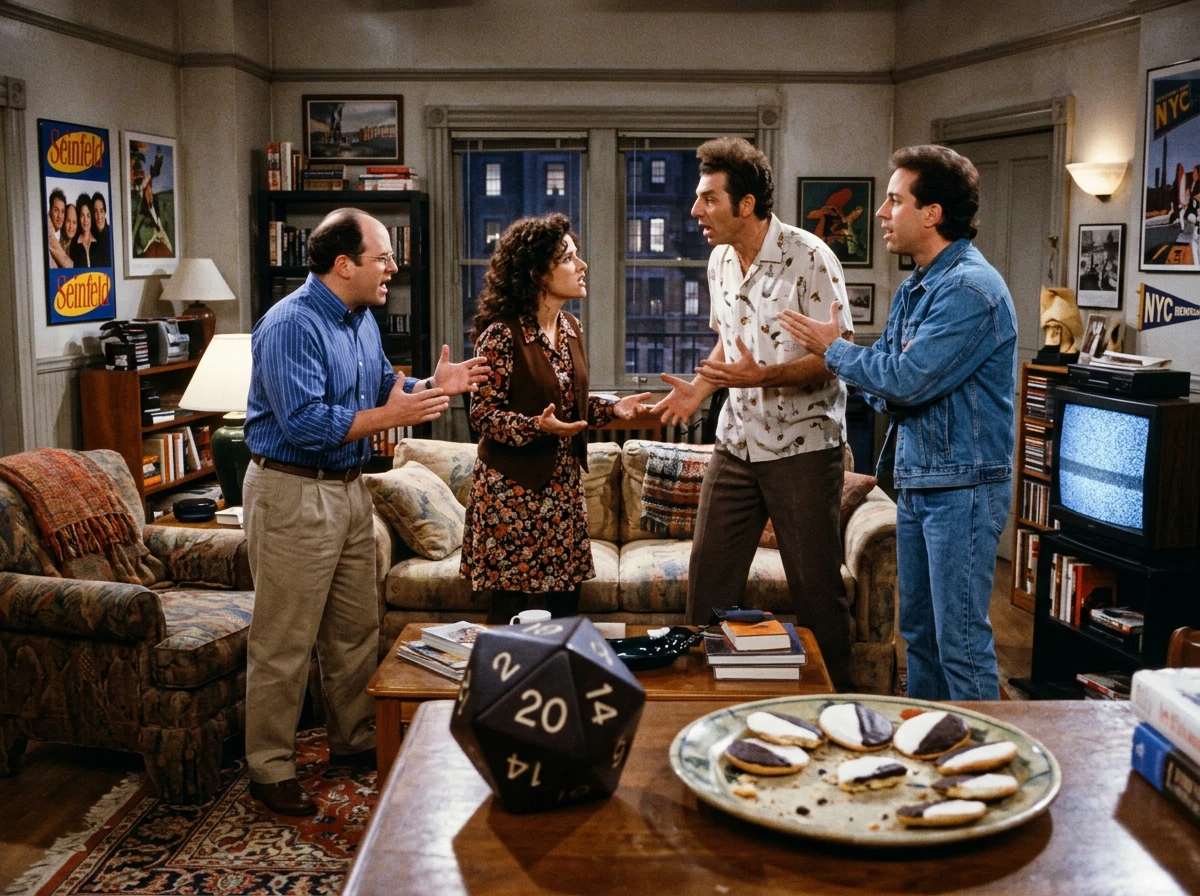
A playable 1996 New York 'Seinfeld' sitcom sandbox: original New Yorkers, familiar comedic friction, and one die for plans that are bound to backfire.
Versionv5
CreatedAug 12, 2026
UpdatedAug 17, 2026
Original Leads. Familiar Chaos.
A 1996 New York Comedy Sandbox
It’s 1996 on the Upper West Side. Coffee is cooling at Monk’s, somebody has the wrong coat, and a harmless lie is already three scenes from becoming public. Play original New Yorkers whose routines collide with familiar neighborhood chaos. Improvise first; roll one comedy die only when a plan is built to backfire.
Author's note
Just a fun little project I'm messing with, not meant to be taken too seriously! :)
Inside the World
146 entries · 6 types
Characters
15 total
Game Starts
2 total
GM Instructions
2 total
Items
36 total
Locations
52 total
Relationships
39 total