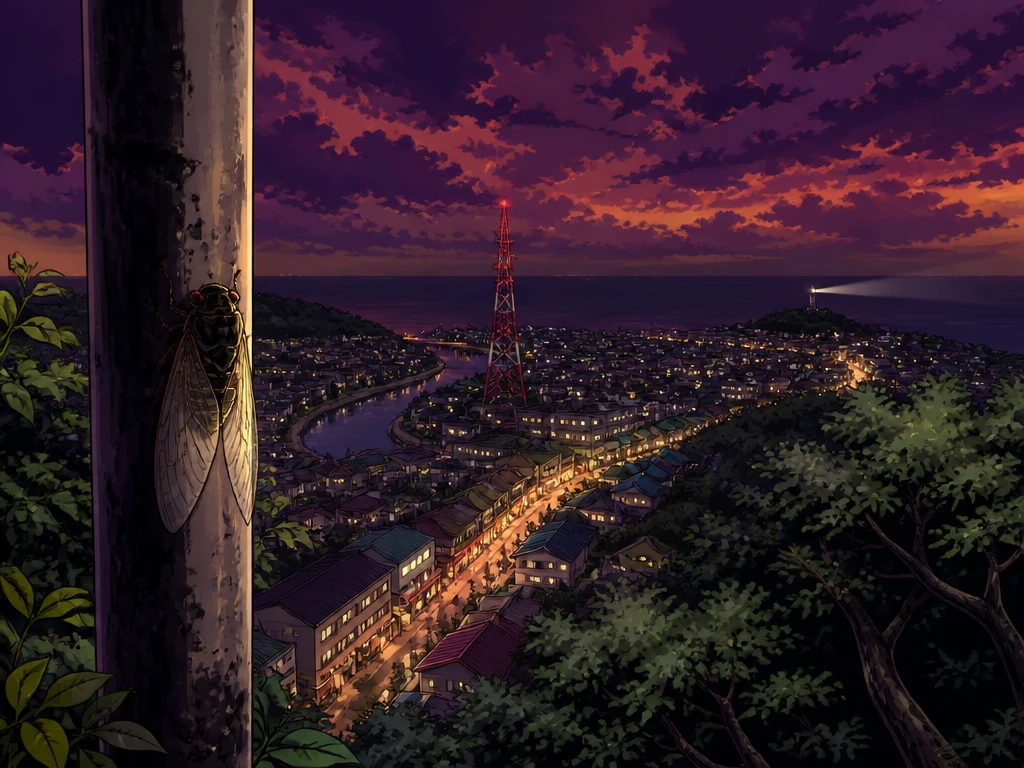
Morioh, 1999 is not a single narrative — it is a living sandbox built from fourteen interconnected file types. Understanding how they fit together is the first step toward extending it.
The Big Picture
The project models a small Japanese town in the summer of 1999, populated by Stand users, ordinary citizens, and things stranger than either. Every file type serves one of three roles:
- Actors — Characters and their Stands. These are the people who do things, fight things, and change things.
- Places — Locations and Districts. Where things happen, arranged in a geographic hierarchy.
- Systems — The Sandbox State, Campaign Log, Campaign Events, Campaign Chapters, Character Memories, Equipment, GM Instructions, Rules, and Lore. These track what happened, what is happening, and what might happen next.
Game Starts exist at the boundary — they are the entry points that wire actors to places and set the initial conditions.
The Flow of Play
A session begins with a Game Start, which places characters at a location and sets the opening scene. During play, the GM creates Campaign Events for every major scene — Stand battles, revelations, investigations, social breakthroughs. These events accumulate in the Campaign Log's live window. When the window fills (five events), they are archived into a Campaign Chapter, and a new volume begins.
Behind the scenes, the Sandbox State tracks everything the GM needs to run Morioh as a living world: who holds the Arrow, Kira's current identity, active plot threads, Stand encounter rosters, player hooks, threat level, and every major decision point. It is the single source of truth for the campaign's trajectory.
Between sessions, downtime advances clocks, rumors spread, Kira claims victims, and the Arrow creates new Stand users. The town does not wait for the players. It is always in motion.
The File Type Ecosystem
| Type | Designation | Role |
|---|
| Character | character | Playable characters and NPCs — the people of Morioh |
| Stand | — | The soul made manifest — linked bidirectionally to Characters |
| Location | location | Specific places: shops, schools, shrines, alleys |
| District | location | Five regions of Morioh; each contains many Locations |
| Equipment | — | Weapons, tools, protective gear, Stand artifacts |
| Sandbox State | — | Central campaign tracking — the GM's dashboard |
| Campaign Event | — | One recorded scene with date, tags, and prose |
| Campaign Log | — | The live window of current events + archive index |
| Campaign Chapter | — | Archived volume of five events |
| Character Memories | — | What one character remembers — subjective and unreliable |
| Game Start | game_start | Entry point: starting location, playable characters, opening scene |
| GM Instructions | gm_instructions | Procedures the GM agent follows during play |
| Rules | — | Reference documents for the game system |
| Lore | — | World-building reference — canon facts, history, philosophy |
Key Connections
A Character links to a Stand (bidirectional), to Equipment (inventory), to Character Memories, to a current Location or District, and to other Characters through relationships. A Location links to its parent District. A Campaign Event links to a Location and carries tags that reference Characters, Stands, and themes. The Campaign Log links to Campaign Events and Campaign Chapters. The Sandbox State references Characters, Stands, Locations, and Districts throughout its hooks, encounters, and decision points.
Everything connects. Change one file and the web adjusts — a Character's death ripples through relationships, the Sandbox State's active threads, the Campaign Log's tag index, and every NPC whose motives involved them. Build with the web in mind.
Where to Start Extending
- Add characters and Stands — the most common extension. Create both files, link them, add the character to the Sandbox State's hooks or encounter roster if they should appear in play.
- Add locations — flesh out a district. Every new location is a potential scene, a place where a Stand battle can break out, a witness who saw something.
- Add equipment — new weapons, tools, or artifacts. Link them to characters' inventories or make them discoverable through downtime actions.
- Extend the Sandbox State — new plot threads, decision points, encounter types. The Sandbox State's schema is deliberately broad; its fields are prompts for the GM, not constraints.
- Write new rules or lore — these are markdown files. No schema to learn; just match the existing tone and cross-reference accurately.