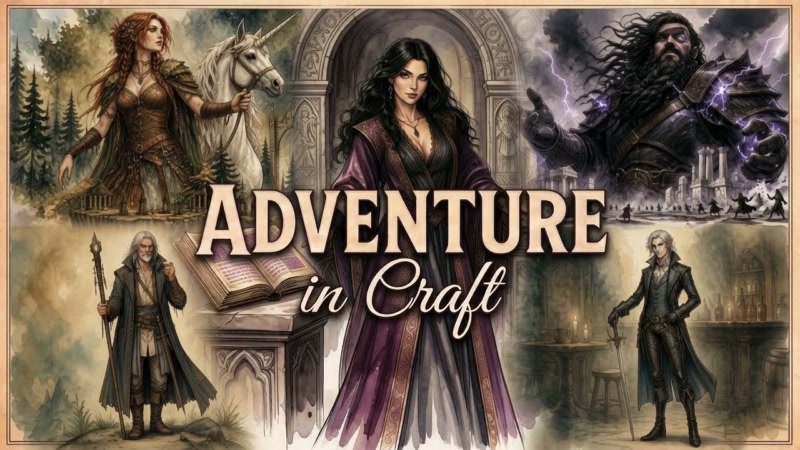
The Honey Queen
The Shrine of Tempus
The Shrine of Tempus — Hammer 1, 1450 DR — freezing dawn on Redwaters
The old lintel still reads Shrine of the Flaming Sword, cut deep into the dark pine though no one has called it that aloud in two generations. Beyond the door, winter air stinks of cold lake water and warm mead-mash, and the boards of the piers flex and groan under working boots.
The Hearth of Blades crackles at the building's heart, trophies of survival crowded on the stone mantle — a shattered oar from a repelled Targos skiff, a snapped smuggler's axe, the yellowed fangs of some tundra thing. Fishers in worn oilskin huddle close to it, sharing a skin of mead before they brave the lake.
Through the doorway toward the barricaded docks, the town's little fishing fleet is being readied for the morning launch, the Stingers standing guard at the palisade while skiffs are hauled down to the freezing shallows.
Near the fire, motionless as a wall, stands the commander of the Amber Guard, chain mail bright in the flame-light. Torsten watches the room the way a man watches a gate — he is not here to talk.
Outside, at the dock's edge where the palisade meets the water, a tall figure in a tailored winter coat embroidered with amber stands with his back to the wind. Soren Amberhill lifts a spyglass to one cold grey eye, scanning the grey horizon.
Torsten: Mossworth. You're out early.
Torsten doesn't turn fully. The statement hangs there like a man sighting you in his scope — an observation, not quite a greeting.
From the dock, Soren lowers the spyglass and folds it with a click, not so much noticing you as deciding you are worth a moment of his ledger.
Soren Amberhill: The Blessing of the Boats is three mornings off. The whole fleet launches before the deep freeze, the priest blesses every hull. Except — the sacred brazier that feeds the rite went missing from the shrine two nights ago. Stolen, they say, by men from Caer-Dineval.
He lets the silence travel, his meaning plain: no brazier, no blessing, and a town already braced for Targos sails will feel the cold of an unguarded season.
A group of fishers pushes past toward the door, and one of them mutters to a companion about tracks on the ice heading west. The shrine hums with it — everybody knows the rite hangs in the balance, and everybody is waiting for someone to do something.
Lyra Mossworth: "Dang it soldier, townie. Whatch doin' bout it?"
Torsten's jaw works once, the only crack in a face of stone. He doesn't answer the 'soldier' part — his eyes slide past you toward the dark pine rafters, as if your question landed on the other side of a locked gate.
Torsten: My work is the Hall and the docks. If they slip past the buoys in the dark, I hold the line. Chasing a firepot across the ice after night raiders—that's not soldier's work. That's somebody else's.
He plants a boot on the hearth stone, and a flicker of the fire catches the grey in his cropped hair. 'The Council posted a purse for it,' he adds, quieter, almost conversational for him. 'Silver, and a cask of Mossworth if it's found whole. Nobody's claimed it yet.'
Beyond the doorway, Soren has been listening with the patient attention of a man tallying an invoice. He turns his coat collar up against the wind before he speaks.
Soren Amberhill: What I'm doing about it is exactly this, girl—standing here, watching the horizon, and waiting to see who has the spine for the work. The rite is in three mornings. The town wants its blessing. Nobody's walked to the west gate with a blade and a plan.
He lets that settle, then lifts the spyglass toward the treeline beyond the palisade — west, toward the ice roads. 'The fishers say the tracks go that way,' he says, 'toward Caer-Dineval. But the ice is thin past the third marker, and the men I'd send are the men I need standing here when the Targos hulls come.'
He lowers the glass and looks at you properly for the first time. Cold grey eyes, weighing. 'You're Mossworth's daughter. You know the woods and the hives better than half the Council. So I'll ask it plain, since you asked it blunt.'
Soren Amberhill: Are you asking because you're curious — or because you're offering?
Lyra Mossworth: "First off man. I helped make that brew. So, no. That's a lure fur some'one else. And second. My bees are no bizness of yours." Lyra stomps off.
Soren's mouth thins into a smile that does not reach his grey eyes — a man filing away a debt he intends to collect later, and enjoying the coin's weight.
Soren Amberhill: Is that right? Mossworth mead, brewed by Mossworth hands. Pity then that the cask I'm offering is sitting in a barn I already own the rights to. You'd be chasing a prize that never leaves my ledger, girl.
Your boots crack over the frozen planks as you turn. The Stingers at the palisade part to let you through, none quite meeting your eye. Behind you, Torsten speaks once more, not raising his voice but pitching it to carry.
Torsten: The third marker's where the ice thins. If a Mossworth goes west, keep to the wheel rut from the hunting trail. And if you find that brazier, the Hall will still pay — my word, not his.
The words land at your back like a rock dropped in cold water. Soren's spyglass clicks shut behind you. The town of Good Mead lies ahead down the frozen road — the Mead Hall's chimney smoke, the apiary sheds, the low winter sun throwing long shadows across the snow. The morning is still yours.
Lyra Mossworth: Lyra checks the frames. The bees doin the work, filling new frames, making ready like they always do. Even after a frame is pulled for spinnin' and bottlin'.
The shrine's fire-scent and Soren's voice slot behind you like a door shut. The pine forest swallows the cold light, and the hum of the homestead hives lifts to meet you — a low, steady drone pressed between the trees like a pulse you've known since before you could set a frame.
Your fingers know the work before your mind does. Cracker slides between box and brood frame; you draw one free, and the weight of it says honey — capped, heavy, ready. Knucklehead trout is what the fleet brings in, but here, in the amber light beneath the fall, it is sweetness that is multiplied.
The bees work exactly as they always have — implacable, unbothered by the pulled frame, spinning fresh comb into the empty spaces like the winter that's coming is a promise they've already answered. Even the pulled frame, stripped for spinning and bottling, leaves the colony hardly missing a beat.
You slide the frame home and stand a moment, cracker in hand, listening. The world smells of wax and pine and woodsmoke from the homestead hearth beyond the trees. Far off, a Chwinga darts between two trunks, half-seen, keeping its own watch over the swarm.
Lyra Mossworth: "Ma, tell me again. How'd we become beekeeper?"
Your mother answers from the half-dark of the Herbalist's Solarium before you've even finished turning, the pestle in her fist setting a steady rhythm against the mortar like a heartbeat.
She smells of crushed pine and dried honey, sleeves rolled past her elbows, a jar of Chwinga-blessed honey tucked like a talisman under one arm. Her hands never stop — they barely ever stop — but her eyes lift, warm and needle-sharp, and find you across the frames.
Rowan Mossworth: We became beekeepers, girl, because your father nearly got himself killed saving a swarm nobody else would touch. Now sit that cracker down and listen — since you're asking after the same story like you're hungry for it.
She sets the mortar aside and leans back against the workbench, wiping her hands on her apron. Somewhere behind you, deeper in the pines, the steady knock of garden-gloved work on a hive frame says Bramwell is at his own task and listening all the same.
Rowan Mossworth: Twenty-odd winters back, the frost came in hard and early — harder than even this one means to. The honey-flow quit overnight, like somebody pinched the whole Dale's heart. A wild swarm that had wintered in the old hollow oak took to the ice road. Half of Good Mead was set to let them freeze. Bees were pests to them then. Meant honey you had to fight for, and no profit in the fighting.
She shakes her head slowly, as if she still can't quite believe it.
Rowan Mossworth: But your father—he said a swarm doesn't leave a healthy oak. He said a swarm leaving is a swarm telling you the land's gone wrong somewhere. So he went out in that blow, wrapped in every rag we owned, and he walked the ice after them for the better part of a day. Found them clinging to a dead huckleberry, near gone. And he didn't come back angry at the cold. He came back talking to the bees.
Through the treeline, the gentle knock of wooden mallet on frame stops. Bramwell's voice carries, low and warm like the hearth inside.
Bramwell Mossworth: They taught me more that season than I'd learned in all the years before. A hive is a whole country under a single roof — every one of them working for the same sweetness, asking nothing back but the chance to do the work. I came home and said to Rowan: if we're to keep bees in the Dale, we keep them like they're kin. Not to take, but to share with.
Rowan crosses her arms, a fond, fierce look taking over her face as she watches you. The Chwinga that was shadowing the hives darts in close, skitters across the lintel of the solarium, and is gone.
Rowan Mossworth: The swarm's children have wintered here ever since. Chwingas keep the hives healthy out of respect for a man who honored a swarm. And I keep the honey moving into poultices and medicines instead of just coin — because a Mossworth who hoards sweetness isn't a Mossworth at all. That's how we became beekeepers, girl.
She nods once, decisively, and picks her pestle back up. 'And you,' she adds, quieter, 'were born with honey on your lips. That's their gift to you, and to me.' The solarium settles back into its soft, patient rhythm of work.
Lyra Mossworth: "Town's worried. Missing brazier. Not missing bees I told 'em."
Rowan's pestle stops mid-stroke. She looks up at you across the frames with that particular look — the one she wears when a patient says something more important than they know.
Rowan Mossworth: No. They wouldn't be. A brazier's a thing you can point at. It's a shape a body can feel righteous about chasing across the ice. But a hive can't be carried off, so it doesn't frighten them — and what doesn't frighten a person, they'll let slide right past their notice.
She sets the pestle across the mortar and tucks her hands into her apron, studying you. Beyond the glass, the hives hum their endless, unconcerned song.
Bramwell Mossworth: Them worrying over a stolen brazier is them worrying over hope. You said it right, Lyra. The bees aren't missing, and they never miss. But folk can't walk up to a hive and have it bless them when they're afraid. That's what the fire's for. It's not the same work as ours — it's just older.
Rowan's mouth quirks. 'Your father reads them charitable. I read them scared. When a town goes hungry and cold, it looks for someone to blame before it looks for a way forward. The brazier went missing, and now everyone's got a man from Caer-Dineval to hate at suppertime. Gives 'em something to hold.'
Rowan Mossworth: It ain't the bees you'll be asked to save, girl. It never is. But you stood your ground with Soren at the dock — and part of me is proud, and part of me says that man keeps his ledgers long. You best have a reason to be at those hives come evening, one way or another.
The frost-bright silence of the forest settles around the three of you. Bramwell returns to his hives with the slow, patient cadence of a man listening. Rowan watches you a beat longer, then turns back to her herbs. The work waits, and so does the morning.
Lyra Mossworth: You know Pa, Ma. I love them bees. An the wee'uns out there in the woods. Ya think I can learn to speak to 'em too?"
The knock on the far hive frame goes quiet. For a long moment there's only the low hum and the creak of cold wood, and then Bramwell's shape straightens among the trees — a gentle giant in his wax-stained wool, wiping his hands on his thighs as he comes closer.
Bramwell Mossworth: The wee'uns? Watching us right now, they are. That one that skittered past the solarium lintel — she's stood there since your cradle. Chwingas don't take to folks they don't trust, Lyra. She's been waiting for you to ask.
He crouches at the edge of the treeline, patient as the frost. The Chwinga — a thumb-sized darting green of moss and twig and bright, curious eyes — peeks at him from behind a pine, then at you, head tilted.
Bramwell Mossworth: You've the gift already, whether you've named it or no. You can read a hive by sound — you've told me so since you were small. The wee'uns are just hives that never settled in one tree. Same tongue, slower ears. You speak the older words right? The fey ones?
From the solarium, Rowan chuckles soft, dry as old straw. 'She's had Sylvan on her tongue since her twelfth winter, Pa. Ain't heard you ask that question of nobody. You askin' like you already know the answer.'
Bramwell Mossworth: Then you've half the road walked. The rest isn't the words — it's the kneeling. You don't tell a Chwinga what it ought to do. You offer, and you wait, and you let it come to you. That one's been circling for years. I'd say she's tired of circling.
He holds out a great, calloused hand, palm up, empty, and after a heartbeat the Chwinga darts forward — not to him. It skitters up and stops on the rim of your lifted frame, a finger's-width from your knuckles, watching you with all the gravity a thumb-length thing can hold.
Bramwell Mossworth: Go on. Say hello to her proper. You've the words for it already.
Lyra Mossworth: Lyra looks closely, smiling, a warm spread across her whole face. "Ah. ,..." and it happens.
The Chwinga holds your gaze, and the word comes off your tongue unbidden and easy as breath — an old Sylvan greeting, offered low and soft, the way you'd speak to a nervous queen on a cold morning.
It tilts its whole body, bright-eyed, and then it laughs — a sound like water dropped on hot stone — and dances. A tight, rapid jig of pure, unguarded joy along the rim of your frame, moss-knuckles scattering little motes of frozen dew that catch the winter sun like flung gold.
It stops, leans in, and lightly touches the back of your hand — a benediction barely felt, cold and warm at once. And in the same breath, all around you, the hives seem to draw together in their hum, settling, contented. Bramwell watches with a slow, deep smile he doesn't try to hide.
From the solarium, Rowan's voice comes soft so as not to break the moment: 'Well, Pa. Reckon she's got it.' And the little Chwinga, having given its gift, scampers up your sleeve, perches a heartbeat on your shoulder like a crown, and is gone into the pines.
The cold air settles around you, warmer somehow. Somewhere far deeper in the forest, the hidden hive waits — and for the first time, the wee'uns might come along when you go to it.
This is a quietly significant, memory-worthy personal moment — her first real communion with a Chwinga, her father witnessing it. I'll create a Memory and link it to Lyra, and note it. Let me create the memory file.
Let me check the memory schema
Lyra Mossworth: "I got go see this," she calls over her shoulder, following the Chingwa's flight into the trees.
Deep in the Pine Forest
Deep in the Pine Forest — The trees close in — mid-morning, low grey light
You leave the hum of the hives behind and press in after the dart of green. The forest closes around you — birch and pine, their branches lacing overhead until the white winter light comes down in shards and you're grateful for the tree line you know by heart.
The Chwinga leads you on a winding path that isn't one you'd call a road: over a fallen log slick with melt, through a hollow where the snow lies unmarked, past a glade where the air suddenly smells of honey instead of frost.
You've gone this way a hundred times, but never with a guide. The trees grow darker and more patient here, their branches bent, their trunks thick — the quiet, isolated part of the forest where you tend the secret hive. The one nobody else knows about.
The Chwinga lands on a branch ahead and waits for you, bright-eyed and satisfied, as if to say it knew all along where you were going. Just beyond, through the screen of brush, you can smell the sweet, heady tang of the hidden medicinal hive — and hear, faint, the murmur of someone who has already arrived at it before you.
Lyra Mossworth: Deep into the pine forest Lyra goes. Past birch, ash, spruce, and ice oak.
Past birch, past ash, past spruce, you push deeper — and then the trees change, and you know you're truly past the town's reach now. The ice oaks, their broad black limbs sheathed in frost, stand in patient rings, their roots thick with snow gone blue in the shadow. Few folk have ever come this far. You have, a hundred times.
The Chwinga flits ahead, pausing on a branch of ice oak to look back at you, then scurries down and into a hollow at the base of the tree that no footpath reaches. You know this hollow. The hidden medicinal hive hangs there in the quiet, its amber hum a comfort that sits under your ribs.
The low murmur you heard resolves at last. There's a figure by the hive, back bent to a frame, fingers moving with practiced care — and the Chwinga, having delivered you, darts up and perches on their shoulder like it's claiming kin. He looks up, startled, and you see Finn Amberhill's face go soft with recognition before he hides it behind a crooked, careful smile.
Finn Amberhill: Lyra. I— you've a Chwinga tame to you now? Wonders don't stop, do they. I was just checking the girls. They're run ragged, poor things. The Amberhill hives are. This one's the only hive in the whole Dale that ain't being worked to death. That's why I keep coming back here.
He gestures at the frame with the easy guilt of someone caught-fond rather than caught-wrong. Around you the ice oaks hold their breath. The hive hums on, indifferent to the trouble of men.
Finn and Lyra met at the secret hive — a meaningful relationship interaction (secret love bond deepens/affirms). Update the relationship on both. Let me check Finn's character file relationships.
Lyra Mossworth: What you say 'bout hives work'd to death?"
Finn Amberhill: I mean what I said, and I'd say it louder if there was anyone worth saying it to. Father's got the Amberhill hives out there taking more than they got left to give. You strip a hive past what it can rebuild and it don't crash sudden—it just gets a little thinner, a little emptier, a little more tired every season. Till one day you go to find the queen and she's gone.
He turns the frame he's holding, and you see what his hands have been doing all morning — gentle, painstaking repairs to a comb the bees themselves have worn thin, not the work of a boy who treats them as property.
Finn Amberhill: The orders call for more than the swarms can carry. The Amber Guard shakes the hives twice, three times a season and takes every last comb 'cause Soren's promised the merchants what he can't back with honey that ain't there yet. The girls here? They're the only ones in the whole Dale still doing real work — because nobody's bleeding 'em dry.
He rubs a thumb along a cracked cell, the gesture almost apologetic. 'You've seen the stress marks, Lyra. You'd hear it in the drone if you listened. I just... I can't be the one to say it to him. He'd hear it as betrayal. But I can't stand and watch 'em die for somebody's ledger neither.'
Finn Amberhill: They're not bees to him. They're a column of copper on the page. But they're mine—I mean, they're not mine, they're his—" He stops, flushes, looks down at the frame. "They're alive. That ought to count for more than it does.
Lyra Mossworth: "There boy," she kisses him. "Show me these bees."
The kiss lands soft, half-surprised from Finn's own mouth — and for a moment the only sound is the patient hum of the hive and the creak of ice oak. He lets out a shaky breath against your cheek.
Finn Amberhill: If my father could see me now. Hiding deep in the pines kissing his rival's daughter while his bees go to ruin under his own orders.
He sets the repaired frame back into the hive with care, then turns, finally a real smile cracking through. 'You want to see 'em, then see 'em. But we can't go the back way — the Amber Guard's got the gate watched, and my father's got a standing order that no Mossworth sets foot on his land.' He tilts his head, already slipping into the familiar shape of mischief. 'There's a river cut. Pa never watches it — thinks it's too shallow to bother with. You have to wade a little. You don't mind cold feet, do you, princess of the hives?'
Lyra Mossworth: Can we run up the crek, then over or 'round, and down? No wet feet!"
Finn Amberhill: Creek it is, then.
He leads you back along a running thread of shallows that cuts uphill through the birches — cold enough to flash white over the stones, but narrow, with banks you can hop between. Finn goes first, springing from boulder to root to dry hummock with long, easy strides, glancing back to make sure you're with him.
The water talks to itself around the rocks as you work your way up the cut, keeping to the dry lip of the bank, boots barely kissing the melt. Far ahead, the pines break and the ground opens into cleared slopes — the amberhill lands, pale with overcast. Already you can make out the hive yards, dark boxes lined in rows.
Finn Amberhill: The river cut's just along this ridge. Quick over, then down into the tall grass, and we're behind the top yard before anyone's the wiser. Keep low through the last stretch — the Guard walks the fence line, but they're looking at the gate, not the trees.
He drops to a crouch at the treeline, all easy mischief gone from his face, and gestures you down beside him. The river cut lies ahead, shallow and still between its banks. Beyond it, the first hive yard waits — and now silence is the whole game.
Lyra Mossworth: "Aye. How many queens, you say?"
Finn Amberhill: Twelve yards, ten queens left alive that I count for certain. Two empty, and one that's got a failing queen too weak to hold her own swarm — she'll be superseded by spring, if she lasts to spring. That'll be three down by the thaw, and my father'll claim it's the cold.
He keeps his voice a murmur, eyes on the fence line as he talks. 'Used to be all twelve yards were thick with bees, so loud you'd feel it in your teeth walking past. Now there's whole frames you can hold up to the light and see clear through. Ten queens. A Mossworth girl asks, and I got to tell her a number that would break her father's heart.'
Finn Amberhill: You'll see 'em. Just... steel yourself. It ain't like your hidden hive, princess. Out here's where honey goes to become copper.
Lyra Mossworth: Lyra clutches the amulet hanging on a chain at her neck. "Cold can kill 'em. Hive has to have enuff in it. Food enuff. Then they huddle up. Kinda like we done, that night. To keep the queen warm all winter long."
At your words Finn goes quiet, the joke and the careful watch both dropping away from his face. He looks at you — really looks — fingers frozen halfway to a branch he meant to catch. The cold, the queens, the ledgers, all of it falls to nothing behind the thing you've just given voice to.
Finn Amberhill: Kinda like we done, that night.
He says it soft, like a thing he's been holding so careful he's afraid to set it down. Somehow in the dawn you were covered in ice and alive, sharing heat under a dead tree, and you'd never told him what that meant. Now he knows.
His throat works. When he speaks again his voice is a little rough, aimed at the snow between his boots. 'That's what they do. Every last one of 'em in that dark, keeping the queen alive 'cause she's the whole hive. Huddle in tight, trade their own warmth, eat together or not at all. And my father's out there shaking the food right out of their bodies and calling it wisdom.' He lifts his eyes to the river cut, then back to you, fierce.
Finn Amberhill: Come on. Let's go see what ten queens are really fighting for. And Lyra —" he reaches, and his hand finds yours, cold and sure — "if it comes to it, we keep 'em warm. Together. Like that night. Whatever it takes.
And with that, he turns toward the river cut, your hand held fast in his, and leads you down out of the treeline onto the amberhill lands.
Lyra Mossworth: "ready
The word hangs on your breath, white in the cold. Finn gives your hand one final squeeze — a question, an answer, a promise all in the grip — and lets it go so you can move quiet.
Finn Amberhill: Then mind your step and stay low. The cut's shallow but the stones are slick as sin. Cross it fast, up the far bank, and into the tall grass 'fore the Guard makes their circuit.
He goes first, boots finding the dry hummocks with the practiced ease of a boy who's done this a hundred times. Then it's your turn — the cold water flashing past your ankles, the world holding its breath while the far bank comes up beneath you.
You're across. Wet to the knee, breath fogging, crouched in the tall grass at the edge of the top hive yard. The hives stand in their close rows ahead of you — dark, still, wrong in a way you can't yet name — and somewhere beyond them, ten queens wait to be counted.
Finn Amberhill: There. First yard. Twelve boxes, and you can count the empty ones from here by how quiet they are.
We've now arrived at the Amberhill hive yards — Lyra's location has changed her current position. But I shouldn't set up a new location file (Location Reuse). Let me check if there's an Amberhill apiary/hive yard location that exists already. Let me search.
You move low and quick behind him, grass hissing past your calves, every sense strung tight. The cold air tastes of woodsmoke and something sweeter underneath — old honey, faint and wrong, like a memory of plenty that's already gone.
You reach the first hive in the row. It should buzz this close. Instead a few listless workers crawl the entrance, their wings slow and dragging. Finn stops beside you, and the two of you crouch in the long grass, reading the sickness written across the front of the box.
Finn Amberhill: See the entrance? No guards. No cluster. A healthy hive's got bees jammed in that lip day and night. Look at 'em — half the workers can't even fly straight. That's the top yard, and it's the best one.
He reaches up and, with the reverence of a boy tending something he loves, lifts the outer lid just a hair. Frost hisses off the inner cover, and in the gap you catch it: a thin, thready hum, the smell of chilled wax, and — faintly — the reek of something sour where honey's been left to ferment and freeze.
To your left, the long shadow of the Amberhill Estate sprawls dark across the snow. To your right, the second and third yards stretch silent down the slope. And somewhere far off, a dog barks — then quiet. The Guard makes its circuit somewhere out of sight.
No persistent state changed; still in transition across the Amberhill lands. Complete.
Lyra Mossworth: Lemme see. Lyra looks down into the frame.
You lean in close, breath smoking off the cold box, and lift the inner cover the rest of the way. The weight of another man's failing hive settles its hand on your shoulder as you look down into the frame.
The comb tells the story in its own crooked script. Rows of capped brood — but the caps are sunken, some punctured and dark, a foul, sour wine-smell rising off the surface. Here and there the wax is riddled with tiny pinholes, and a crust of dull, fermented honey gleams sticky where it's wept and refrozen into ruin. The temperature inside is colder than any living hive has a right to be.
Finn watches you read it — deferring to the one person he trusts to understand what the box is saying. Whatever your eyes find in this frame, it's the truth of a hundred such frames across the whole sad valley.
She's inspecting a hive frame — a diagnosis within her Medicine expertise. I'll ask her to roll Medicine.
Your hands move of their own accord — old habit, your mother's teaching humming in your fingers. You press the sunken caps, lift a dark one, catch the faint ropy pull of what lies beneath, and bring the smear to your nose. The world narrows to what the box is trying to tell you, and it tells you everything.
It's not one thing. It's four, stacked atop each other like a house of cards someone keeps kicking. Here — sound as a bell — is American foulbrood, the bacterial rot, the kind that swamps a weak hive and reeks of a dead thing in the honey. And foulbrood does not take a strong, warm, well-fed hive. It's a scavenger's disease, and something's left these bees too cold and too hungry to fight it off. The weeping, frozen honey and the pinholed wax — the frost and the mites — they're just the vultures picking at the same corpse.
The truth of it settles on you cold and certain: the robbing of the stores didn't just starve the bees — it broke their bodies so the older, uglier things could move in. Ten queens, dying of a disease that thrives only in a hive already drained. The revelation hangs in the frozen air, heavier than the box in your hands.
Finn Amberhill: What'd you find?
Lyra Mossworth: Op'por-tun-ists moved in. See--foulbrood, a rot. An frost, 'an mites. 'An, worse. Mistreatment- no food fur warmth, strength, gaudin'" she says pointing to the strays at the entry lip.
Finn goes very still at the word, the color draining from his face faster than the cold could do it. He knows what foulbrood means — every beekeeper in the Dale was raised on the old stories of quarantined yards and hives burned where they stood.
Finn Amberhill: Foulbrood. If that spreads yard to yard — if my father finds it, or the Council finds it first — they'll burn the lot. Twelve yards, every queen, torched for the good of the Dale. And you're standing here telling me he caused it.
His jaw works. He looks down at the hive, then at you, then back out across the ranks of silent boxes stretching dark down the slope — each one a small kingdom dying the same slow way. When he speaks, his voice has gone ragged and low.
Finn Amberhill: If the Council burns these hives, they'll point at the Mossworth forest as the source. They always do. 'Course they will. And your father's the one man who stood against the seizures. This could end worse than ten empty hives, Lyra. This could burn you out the same way they're burning mine.
He's not wrong, and the cold weight of it fills the quiet between you. The sour reek of the dying frame hangs in the air like a verdict. Somewhere a dog barks again — closer this time. The Guard's circuit is tightening, and whatever's going to be done about these hives, it has to happen before the sun tracks much higher.
Finn Amberhill: What do we do?
Lyra Mossworth: "Dang it. Come with me." She stomps past, and past the surprised guard all the way to the Council's hut.
🍯 The Mead Hall
🍯 The Mead Hall — Out of the cold, into the cartel's hive
You don't slow down. Finn has to half-jog to keep your heel-print in the snow, and the cold bite of the yard falls away as you hit the packed road into Good Mead proper. The Mead Hall looms ahead, woodsmoke and yeast steam curling off its shingled roof, its heavy timber doors hauled shut against the morning — locked, as always, to anyone who isn't cartel.
The guard at the door — Yrsa Tallwick, hand straight to her axe, mouth already opening to demand where in the Nine Hells you think you're going — sees the look on your face and the Amberhill heir trailing behind you, and her protest dies half-formed. You're through before she can decide whether to stop you. The warm reek of honey and grain and cask-wax swallows you whole.
Inside, half a dozen heads turn. Old Eirikr looks up from a ledger near the great hearth, pipe smoke curling around his grey beard. Your father is there too — Bramwell, mid-word across the table, frozen in the act of arguing with the cartel the way he always is. The room that was all murmur and ledger-scratch goes as still and heavy as a slammed hive lid.
Eirikr: Mossworth girl. Your father's already had his say this morning. Falter'd twice, climbed out the gate, is what I heard. Now you're trackin' snow across a floor that costs more than your homestead. State your business fast, before I have Yrsa haul you back to the trees.
Lyra Mossworth: "Yep, I dun talked to him. He's working. Your sittin'. Not workin'." She tells it like she sees it. Direct. Then to the council. "You best move out. Grab yur stuff and start walkin'. It's over for us all. " Then she holds out a possibility.
For half a breath the hall holds its laughter. Then it comes. A few of the ledger-men snort and shake their heads, but they stop short of full mockery because of what's in your voice — no anger, just certainty, the flat weight of a young beekeeper who has stood in the cold and watched a hundred hives die.
Eirikr: Move out. Grab our things. You walk into the cartel's own hall, a Mossworth girl half your father's age, and you tell the men who feed this town to flee like the harbor's come in? That's rich as a queen's comb. What's the 'us all' that's over, girl? Spell it plain.
Before you can answer, the side door to the hearth room swings open, and the warmth of the taproom shifts around a colder presence. Soren Amberhill stands in the frame, ledger tucked under one arm, eyes flat and unhurried as frost. The whole hall straightens.
Soren Amberhill: Finn. Why is the Mossworth girl tracking snow across my floor, and why are you standing behind her like a servant?
Finn's jaw tightens, but before he can answer, Soren's gaze slides to you — and there is something in the way he looks at you, quiet and appraising, that says he is not as surprised to see you as the rest of the room. He waits. They all wait, the fire crackling in the heavy silence.
Soren Amberhill: You said it's over for us all. That's a bold toll of a bell for a girl who hasn't yet named the funeral. You've got the room's ear now, Lyra. Keep it, or lose it. What's over — and what are you offering in its place?
Lyra Mossworth: "Man." she says lacquadaisically, almost dismissively. "You been harping at me for way to long. And no more, understand. Those ledgers ain't gonna help you keep your hives alive. The honey's been pulled, sucked up into your ledger." Then she turns to the room, with a sweep of her arm to include the town, the village, the all, but the man. Starvin' that's what's happenin. But they don't know where to look for the early sign. I do. And it is the foulrot in your hives man, from bleedin their comb. Not mine. My Mossworth hive is fine. Not bled, not weak, not rotted. These folk aren't gonna make a winter. Nor stand poorer to you, in your Ledger, if'n they do make it. And of course, you want the only one who see it, maybe even fix it, to walk the weak ice yonder looking for brazier that's been checked off on your ledger. Here, open it up. Show them!" She barks a command at him. And to the crowd, "Read it.. it's all there. Just none of us saw all the pieces and the plan, each holdin' a false corner to a puzzle. READ IT." she commands the room.
Your voice rings off the rafters, and for a long moment the fire is the loudest thing in the hall. Every ledger-man has gone still. Soren Amberhill watches you the way a man watches a blade come out — not startled, but measuring the distance. He doesn't open the ledger. He sets it down on the table like a judge placing a gavel, and folds his arms.
Soren Amberhill: Let me be sure I heard the Mossworth girl correctly. You want the Apiarist Council of Good Mead to open its books on your say-so, because you read a dying hive and found rot — in MY yards, bled by MY hand. And then you want to connect that rot to a stolen temple brazier, which I told you about as a courtesy, as if I charged you with some task to be rid of you.
He takes half a step toward you, and the room tightens like a cord. His voice drops low, almost kind, which is somehow worse.
Soren Amberhill: That's a pretty story, girl. Shame about the hole in it. The Council collects what the town owes. We take our pound from our own first — because a cartel that doesn't bleed stands to lose everything. You'd have us give and give and give, and when the hives go empty from that charity you'd have my men answer for it.
Soren Amberhill: And say I believe you. Say the rot is real and it's in my yards. Whose wild swarms drift cross-country and seed disease in good hives? Whose bees are 'fine' — untouched, unbled, unrotted — while every cartel yard around them dies? You've just named the two hives an honest man would burn first, Mossworth. And one of them isn't mine.
The shift in the room is physical. Eyes slide from Soren to you, suspicion blooming where your accusation stood a moment ago. He's turned it — handed the rot to your forest, to your door, in the space of two sentences. Bramwell's hand finds your shoulder, gentle but warning.
Bramwell Mossworth: Lyra. Quiet now. This isn't the way. Not here, not with words in the air like this. Come home.
Soren Amberhill: Yrsa. See the Mossworths to the gate. And Finn — the estate. Now.
Lyra Mossworth: Lyra goes berserk, striking Soren. Then in the momentary shock of the moment, lets "Smoke and Calm" take her place as she exits the room at a run.
The strike lands before anyone can stop it. The hall erupts around you.
You don't think. You swing. Your fist catches Soren Amberhill square across the jaw — a hare's-wit crack of knuckle on bone that snaps his head back and sends his precious ledger skittering off the table onto the floor. For one perfect heartbeat, no one moves. No one breathes. The cartel king of Good Mead staggers a half-step, hand going to his face, blood already beading at his lip.
Then the room's shock is your only ally. You yank the cool brass of your beekeeper's smoker free and pump the bellows once, twice — a rolling grey billow of pine-smoke and calm pours out, stinging eyes and filling the space between the fires and the door. Through the haze you see Yrsa's hand go for her axe, Soren's hiss cut off in a red-cough, your father's voice calling out your name too slow.
The smoke rolls thick and stinging between the fires. Through it you catch your father's face — Bramwell's alarm snapping him forward, reaching not to stop you but to shield you, to put himself between his girl and the Council's fury. His voice carries through the grey: a raw, desperate 'Lyra — run!' He wasn't expecting this any more than the guards, but he doesn't hesitate where his loyalty lies.
Behind him, through the haze, you see Finn stagger sideways as if the smoke's gotten his eyes — and the bench at his knee shoves hard into Yrsa's path. Whether it's accident or loyalty, it buys you the two steps you need. You're through the inner door, across the taproom, and the heavy timber portal swings wide under your hand as you burst out into the blinding cold.
Soren Amberhill: Don't you dare let that Mossworth whelp cross my threshold! Yrsa — Halvard — after her! Raise the alarm!
The shout shreds the morning. Behind you the hall spills open, boots pounding on pine plank, Yrsa's voice snapping orders as she clears the door at a run — the fleet-footed guard surging into the snow, Halvard a lunging weight behind her. Good Mead's main road stretches before you, packed ice and barrel-shadows, and the tree line of the Pine Forest looms dark at the edge of town. If you can reach it, the forest can swallow you.
Your boots hit the packed ice and you're gone. Whatever Yrsa expected of a beekeeper's girl, it wasn't a hare running the cobbles like the frost was chasing her — she skids as you cut between the ale-barrels stacked at the chandler's, her blade whistling out a foot behind your heel and finding only air. Behind her, Halvard charges in with all the grace of a stampeding ox, and the same ice that let you dance brings him down flat, cursing into the snow.
The treeline is close now, dark and breathing, the pines thick enough to swallow a girl whole. Behind you, Soren's voice tears the morning apart — orders, threats, promises of ruin — but the distance is growing. You've made it. Now you need to make them lose you. The pine forest is your country; you were raised among these trees.
You vanish into the pines the way a fox does — soft, quick, reading the ground as you go, doubling over a streambed and stepping stone to stone so no footprint marks the snow. Behind you, Yrsa's pursuit stumbles and dies among the trunks. The forest holds its breath. You let the shadow of a twisted old pine swallow you, and you breathe, thinking it's done.
Then you hear it. Not Yrsa. A slower, heavier tread that doesn't hurry — and that's what freezes your blood. Halvard. The ox-faced guard who marked these woods with his own two boots for years. He doesn't chase. He reads. At one spot you crossed the stream, he stops, turns his head slowly, and follows your stone-step like reading a page. He's good. Better than Yrsa. And at his belt hangs a horn he hasn't yet raised to his lips.
You've lost the woman. You have not lost the man. The silence of the pines feels very thin now, and the way to your hidden hive — your bolt-hole, your medicine — is close, but it's not a door that hides you so much as a place you must not be seen entering.
Lyra Mossworth: Lyra's dash slows. She circles back to the creek, away from the hidden hive. Keeping to hard ground, avoiding places where her foot might leave a print. There might be boulders she could step stone up the creek. She decides to lead Halvard to it, then break away perpendicular. Come to ground, find a log, a break up under a hanging spruce. Hide.
You give him a trail worth following. Not away from the town — away from everything you love. You drift back toward the creek, feet landing only on stone and frozen bank, and pick your way up the watercourse stepping boulder to boulder, where no boot will ever leave a mark. When you reach the choke of tumbled stones where the creek bends, you don't cross. You stop, wait a beat to let him commit, and then you cut sideways off the water and away — perpendicular, angle sharp, hard ground and fallen needles underfoot that holds no print.
Finally you come to ground. A great fallen spruce lies long and dark, its trunk half-buried in drifts, its roots a cave of shadow where the snow hasn't reached. You wriggle in beneath the hanging boughs, press yourself against the cold bark, and go still as a trapped animal. The forest closes over you. You can hear your own heart and not much else.
You wait. In the hush, Halvard's track your misdirection drew fades toward the boulders upstream — and then it stops being steady, and becomes uncertain, the sound of a man who has lost his page and is turning back, working his way down the creek, coming nearer to where you lie hidden.
He comes close. Close enough that you hear the crunch of his boots settling, the ragged breath of a man who's hurt and ashamed to be out of breath. Under the hanging spruce you stop breathing entirely. His gaze sweeps the snowfield in front of him — past you, past your shadow-mouth under the roots — and finds nothing. For one long moment he simply stares at the boulders upstream where your trail died on the stone.
Then he spits, mutters something foul about a 'Mossworth rabbit,' and turns. His boots recede back down the creek, out of the pines, toward the roof-smoke and the shouting town. He never blows the horn. A man who lost the scent of a beekeeper's daughter isn't eager to explain it to Soren Amberhill.
The forest goes profoundly quiet. You are alone, hidden in the lee of the fallen spruce, cold creeping in at your joints, the winter sun thin through the needled crowns. Somewhere behind you, in the direction of the town, you can just hear the alarm carrying — horns, distant voices, a town waking to the rumor that an Amberhill has been bloodied. Your hidden hive, your medicines, your bolt-hole, lies not far through the trees. No one followed you there.
Lyra Mossworth: Lyra leaves her den, heading to the hill, overlooking the west to east road, the Eastway, from Skylarbran to Easthaven and the offshoot that runs northeast to southwest from East Haven to Good Mead. The hill at the intersection is said to be visited by and elven druid. Lyra wants to inform her circle there.
The Green Cairn
The Green Cairn — Midday, frozen wind off the Eastway
You slip out of the den at first light, the frost-bees in your armor stirring to the rhythm of your stride. You keep to the drip-line of the pines, never once offering your silhouette to the open road toward town, reading the blown snow the way your mother taught you to read a hive — patient, watchful, unhurried. Behind you, Good Mead's roofs smoke under a low grey sky, and somewhere in there a horn is still calling.
Two hard miles of treeline and tumbled stone bring you up onto the frozen shoulder of the high ground. The Eastway unrolls below you, glittering white, a furred merchant sled crawling slow toward Easthaven with its driver hunched against the wind; the rutted track south-west drops away toward Good Mead, empty for now. This is the place. The Green Cairn.
It isn't much to look at — a glacial erratic the size of a longhouse, split down one face by an old frost-crack, hoarfrost furred over its moss in a lacy white coat. But against the sheltered southern side a spiral is cut deep into the living stone, and at its foot the snow has been recently brushed clear in a small circle, the ash of last night's fire still faintly warm. Whatever else is hunting you, you are not unwatched here.
A voice, quiet as settle-snow, drifts down from the top of the boulder where she must have been sitting before you crested the rise.
Aerindel: You come up the hill like a struck hive, little warden. What did you do, that Good Mead has to shout about it before you've even reached my doorstep?
Lyra Mossworth: Soren bled his hives. Lost two and the others are about to collapse from foulrot and scavenger mites.
Aerindel comes down off the cairn in no hurry, and the settled way she moves is answer enough — she heard you. She kneels by the cold fire ring, feeds a twist of pine from her pouch onto last night's ash, and in a breath of frost-smoke and a whispered word the little branch kindles, a low blue flame that throws no heat but holds. She sits back on her heels and looks at you over the small, quiet fire.
Aerindel: Lost two, and the rest dying of what they already were. Foulbrood and scavengers are scavengers, little warden — they only finish what's already starving. You saw it the moment you walked the yards, and so did I, the first time I ever smelled Soren's hives and found nothing dead but what was already too weak to matter.
She turns a fallen twig over in her fingers, letting the blue flame catch at it, speaking more to the fire than to you.
Aerindel: The cold didn't kill Soren's bees, child. The Council's greed did — strip the comb, weaken the cluster, and then blame the winter and the rot. And now you've gone and bloodied the man who runs it and set a whole town howling after a Mossworth. That isn't a bee he's lost now. That's a war. So tell me, since you've come all this way with your hive in a fury: what do you mean to save? The bees, the boy, or the town that would hang you for all three?
The circle has heard the diagnosis. Recording that Lyra has now informed Aerindel of Soren's collapsing hives, advancing the wanted thread's first beat.
Lyra Mossworth: I'd have him help his hives if he could. His son and daughter have an interest in beekeeping. Mistress Green Cairn, what would you have me do? Why does no one talk across family feuds?
Aerindel's eyes gleam in the blue firelight, and for a moment the ghost of a smile touches the corner of her mouth — the first warmth you've seen there since you crested the hill. She pokes the little branch, watching sparks wheel.
Aerindel: There's the girl I raised. 'Twould be an easier world if you two could sit at one table and mend his hives together. His children love the bees — the boy surely does, and the lass keeps the swarms calm in a way her father never could, though he'd sooner choke than admit his own blood understands them better than his ledger does. That's your opening, if you want one. Not the man. The children.
She lets the silence sit a moment, and when she speaks again the wryness is gone, worn down to something earth-deep.
Aerindel: What would I have you do? I'd have you not throw yourself at his gates while the blood's still wet and the horns are still calling — a man who's just been bloodied in front of his own guard hears a Mossworth's truth as a threat, not a gift. Let the fury of the hunt wear its boots out on the empty forest first. But what I'd have you do, child, is not what you'll do. Ask me instead what the hives would have you do, and I'll answer: the rot doesn't wait for feuds to be polite.
Aerindel: Why does no one talk across family feuds? Because the first man to lay his pride down on the table looks to his kin like he's losing. And in a town where honey is coin and coin is esteem, losing is the one thing colder than the winter. Folk would rather watch bees die — has it always been so
Lyra Mossworth: Aye, you're right. You see, while the fey-touch in me flies with savage fury instead of wisdom. I can't see the way then.
The words hang in the cold air between you. Aerindel studies you a long moment — not with pity, but the way she'd study an injured wing, checking whether the bone can be made right. When she speaks, her voice is gentler than you've earned.
Aerindel: And there it is — the truth you carry in you like a strange, burning bee. Don't curse it, little warden. The fey-touch isn't a flaw that slipped past the wax of your making. It's the heat of your hive, the same fire that lets you command a swarm and love the smallest creatures of this frozen land. Used ungentled it burns. Used well, it's the warmth that keeps the whole cluster alive through a whiteout.
Aerindel: A warden doesn't kill her fire to be wise. She learns to smoke it. You gentle a savage hive, you don't smother it — you set a little smoke at the entrance so the bees slow, settle, and remember their work. Your rage is the same. Let it fly blind and it will sting you as surely as the ones you'd wound. Learn to smoke yourself a moment before you act, and the fury turns from blindness into the very thing that keeps you warm.
She reaches out and, for the barest instant, touches the back of your hand — a gesture like brushing frost off a bloom. Then she is standing, the burned twig dropped to the blue fire, looking down the long white road toward the smoke of Good Mead and the cartel that waits there.
Aerindel: Stay here the night, girl. Let the hunt wear its boots out on snow it cannot follow. The hive won't tell you to hurry — it only asks that you come back whole. And when morning comes, you'll see the way with your own two eyes, not the fury's.
Lyra Mossworth: Lyra spends the night at the Green Cairn, worrying about bees, and a boy and a girl, and ledgers.
The Green Cairn
The Green Cairn — Dawn, Hammer 2, thin sunlight over the white Eastway
The night at the cairn passes without alarm — only wind, and the small blue fire Aerindel tended, and your thoughts, which kept circling the same three shapes: the bees dying in their hives, the boy who stood between you and a guard, and the girl with the swarm-calm hands who loves a craft her father is bleeding dry. You sleep as you must, and the warmth of your Winter Cluster settles the struggle of your mind for a few hours at least.
Dawn breaks thin and grey. You wake to the smell of the small fire and something warm in a horn cup beside you. The cairn is empty of its warden — and then, from the treeline at the bottom of the hill, a grey wolf pads out, shakes the frost from its fur, and walks up to the fire. Its shape blurs and settles into Aerindel, who has clearly been gone down the road while you slept. She crouches, warming her hands.
Aerindel: Good, you obey better than you fight. Drink. Then hear what I went to learn. The hunt turned outward in the night — riders on the forest road, torches watched from the ridge, but they combed the pines and found nothing of you. You're safe here a while yet.
Aerindel: But I watched Soren's yards from behind a drift before dawn, and it's worse than you dreamed, girl. He's ordered the good hives worked double to 'make good the loss,' as he tells it — as if loss were a barrel of mead to be refilled. The young lass, Sigrid, stood against him in the yard — told him plain the bees can't take it, that the rot will finish what he starts. And Soren had her dragged away from her own hives and shut in the house for her trouble.
Aerindel meets your eyes, and for a long moment there is nothing wry about her at all — only the plain weight of what she found, and what it means.
Aerindel: The bees don't wait for feuds to go polite, little warden. And a girl who loves them just got silenced for the crime of telling the truth to a man who owns the ledger. If any road lies through those gates, it runs past his children — not through him. The question you came here asking hasn't changed. It's just heavier now, and the wax grows thin while you decide.
Lyra rested overnight at the cairn (long rest complete). Morning brings Aerindel's scouting report — the hunt turned outward, and Soren has doubled down on his dying hives while silencing his daughter Sigrid, who shares Lyra's concern. Recording the new day and the tightened stakes.
Lyra Mossworth: I know how to fix the hives, but it'll take time. I wanna burn down his house, like a careless lumberjack heading into a forest to gut it.
Most of the morning, Aerindel lets it stand in the open — your bare, honest want, spoken into the cold air like breath. She doesn't flinch, doesn't chide, doesn't rake coals. She feeds the fire a stick and lets the silence do its work. When she finally answers, it's more to the flame than to you.
Aerindel: A careless lumberjack doesn't gut the forest, child. He guts himself — axes the branch he stands on and calls it logging. And a burned house feeds no one and warms no village and answers no ledger; it just makes ashes where children slept, and more men to come asking whose fire it was. Fire is Soren's tongue, not yours. You'd be shouting at him in his own language.
Aerindel: And I'll not pretend the smoke in your chest isn't earned. It is. He bloodied the hives, he silenced a girl who loves them, he hunts you for telling the truth. Any warden would want to burn him down. The question was never whether your fury is just, little one — it's whether you'll let it pick your course for you, or pick the course yourself and make the fury carry you there with your eyes open.
Aerindel rises, stamps out the little blue fire's spirit (it gutters and smokes and relents), and turns the full weight of her pale-grey eyes on you.
Aerindel: You said you know how to save the hives. That's a gift not one man in ten towns carries, and it's a weight the fire in your belly can't lift alone. The wax won't wait, and neither will a house that still stands while a girl is shut inside it. So name what you'll do with the morning, warden — burn with him, or build against him. It's yours to say. I'll walk it with you either road.
Lyra Mossworth: "Oi, Wolf of the Green Cairn. I best build by fixin' hives."
For a long heartbeat Aerindel just looks at you — and then the moon elf's weather-worn face cracks into a real, warm grin, the first you've seen on her in a day. She says nothing, only reaches into her pouch and tosses you a small round of smoked honeycomb wrapped in leather, the last of a winter store. It is sweet and dark, and tastes like a promise kept.
Aerindel: There's the warden I trained. Build it is, then — and here's the ground truth you build on, from my morning among the drifts. The apiary sits in the walled cartel yard behind the longhouse, six frames, two hives half-collapsed, one gone bone-empty, and the good ones worked ragged till their bellies can't feed the brood. That's your enemy, and it doesn't wait for feuds.
Aerindel: The gate's watched — one of Bramwell's boys, moody, underpaid, stamping his feet by the postern. And here's the thing that matters most: Sigrid's shut in the longhouse, but her chamber window looks straight down onto the yard. A girl who calms swarms by voice won't raise a cry at the sight of you unless she thinks you've come to harm the bees. She might buy you a moment, or she might be the very rope Soren uses to hang you.
Aerindel folds her arms, gaze going to the road that dips down toward the smoke of Good Mead. She doesn't press; she sets the pieces on the stone before you and waits for you to see your own move in them.
Aerindel: Your fix needs time and dark to work — time to lift frames, calm the swarm, cut the rot out and re-house the queen where she can brood safe. A night under the moon can do the worst-healing part of it. So the road's yours, warden: slip into that yard alone under cover of dark and trust your own hands with the bees, or find your way to the girl and let two of you work the yard while I keep the watch. I don't tell you how — I only ask what you need of the Wolf of the Green Cairn when you go.
Lyra Mossworth: "Oi, I'll slip in at dark. Feed the hungry bees. Cut out the rot and let the queens feel the moon's restoring. Best not to get the girl, and boy, in more trouble. I best prepare, some Royal Jelly Goodberries right away. " She casts the hive saving food.
You cast Goodberry in the bowl of your palm — and it is no simple green fruit. The magic deepens into ten small drops of pale, luminous royal jelly, each one a bead of enchanted winter honey, potent and warm as a bee's winter breath. The Winter Cluster nesting in your armor stirs in recognition, a low approving thrum against your ribs.
Aerindel watches you seal the drops into a waxed pouch, and nods once — a nod of plain respect. "Ten drops for starving colonies," she says. "The best medicine you carry into that yard, warden. More than any blade." She will hold the cairn and the watch; the road is yours.
The Amber Cartel Yard
The Amber Cartel Yard — Night, cold and clear, Good Mead
Night falls cold and still. You travel the frozen rut-road by moonshadow, the Winter Cluster quiet and warm in your armor, the waxed pouch of royal jelly taps against your hip with each careful step. Good Mead's lights gutter below you — and then the wall of the cartel yard rises out of the dark, palisade-topped, patched with hoarfrost shadow.
The open yard beyond it is all you hoped: the apiary frames huddle in the lee of the longhouse, dark and still, the two collapsed hives and one bone-empty stood apart. A single guard stamps his feet by the postern braziers, collar up, back half-turned to you, paying more heed to the cold than to the wall. Sigrid's window is dark — you meant it to be; no one will look out and no one will cry for help. It is only you, the wall, and the bees.
Your heart hammers in the quiet. This is the bad moment, the one all your planning has been for — getting over that palisade and into the yard without a shout carrying to the longhouse. Everything else is craft you were born to. This part is nerve.
Casting Goodberry (1st-level slot — 1 first-level slot remaining).
You find the footholds in the palisade's frost-cracked grain as if the wall had been built for your boot. Up, over the pitch-dark rail — the guard never turns, lost in his collar and his brazier — and you drop into the cold shadow beside the apiary like a falling feather. The Winter Cluster reads the landing before your feet do and stays dead quiet. You're in.
The yard is yours in the dark. The frames huddle in the longhouse's lee, and up close you can read the ruin in every lit crack of their boxes. The two collapsed hives have gone hollow and candle-smelling — brood chambers torn out, wax melting into rotten striations, honey leached grey and bitter. The 'good' ones are worse in a quieter way: thin, frantic, the workers crawling listless on the cold combs, too starved to cluster right. And the queens — the queens you know are in there somewhere, dwindling, waiting for warmth they can no longer hold.
Royal jelly sits warm in your waxed pouch. Rot waits to be cut. And the moon is up and clear over the yard — restoring light, if you know how to read it. Your hands are steady now; this is the only part of the night that never frightened you. It is delicate, dark work: opening frames without chilling the brood, cutting the rot out clean, feeding the starving, keeping the workers calm while you do it.
The work goes wrong in the dark the way you always feared it might when you can't see your own hands. Your first cut into the best of the 'good' hives rides too deep, the frame shifts, and the brood chamber yawns open to the cold for a beat too long. The colony does not wait to forgive.
A boiling, furious hum erupts — the workers pour off the combs and hit you in a stinging cloud, cold-defensive and past reason. Your arm and your neck light up with fire-injecting stings, three then five then more, and you bite back a cry as the whole yard seems to ring with the alarm of it. The Winter Cluster against your ribs wants to swarm out and scatter them — you hold them still.
Aerindel: (A rustle of her voice, half-remembered, from the cairn fire — “Smoke it, don't smother it.”)
You fight your own flinch, exhale slow, and let the swarm read calm instead of threat. The furious bees begin to settle — fed, at least, by the royal jelly beaded out on the torn comb, the drops working like a balm through the starved cluster. Your salvage is real, if thin: the survivors will ride the drop through the night.
But your first cut told you the true rot, and it isn't the rot you came for. Beneath the bad comb the foundation is ruined clean — gutted frames, empty where whole seasons of brood should sit. This isn't a sickness. It's a hive shaken twice and thrice a season for a merchant's ledger, worked past what a swarm can ever rebuild. You fed the living, and you cut one queen free to rest — but you cannot re-house what the ledger already took. That damage is years deep.
And the yard has heard you. Beyond the apiary the guard's boots crunch to a halt on the frost, then turn — unhurried, coming to look at whatever's making that sound in the dark. You have the sting of a whole colony in your skin and a wall behind you and, one count of heartbeats at best, before a torch swings round the corner of the longhouse.
You move like the craft was born into your hands — and it was. The fine smoke-blower comes out of your kit, and you feed the colony a slow, cool wreath of smoke, walking it gentle over the boiling combs. Smoke is the oldest word in beekeeping, and the furious workers read it true: it is not a threat, it is a quieting. The boiling hum breaks apart, thins, settles into a low, puzzled murmur as the cloud sleeps around them.
In the stillness you go hive to hive — two collapsed, one hollow, three thin but living — and into each you slide one worn drop of royal jelly, cool and golden, into the empty honey-cells where the cluster can find it. You can feel the change under your fingers: the starved bodies drawing to the warmth of it, the queens' slow, deep vibration steadying as the moon's light comes full and white into the open frames. It is the truest thing you have done all night, and it works.
The last drop is placed as the torchlight rounds the corner of the longhouse. You drop flat into the deep shadow of the collapsed hives, breath held, smoke already gone to nothing in the cold air. The guard's torch swings across the yard once, twice — over still combs and quiet, fed bees, nothing moving, nothing alive to find. He grunts at the night, stamps the frost off his boot, and turns back toward his brazier, muttering about the wind.
The yard goes still around you. The colonies sleep warm on your royal jelly, the moon rides clear overhead, and for a handful of heartbeats you are safer than you have any right to be. The wall is behind you and open. The longhouse is ahead of you and closed — a girl shut inside it, a ledger in its dark, a man who did this to bees dreaming over the ruin you came to mend.
The hives are calmed and fed — they'll ride out the night under your smoke and moon-balm. The guard has moved off and the yard is quiet. What now?
The smoke-calmed hives are fed with royal jelly and will survive the night. Lyra is still hidden in the yard; the guard has returned to his brazier. Recording the successful salvage and the quiet moment.
Lyra Mossworth: Lyra pulls an insulating velvet pouches to keep biological samples from freezing from her herbalism kit, and fills it with the remaining royal jelly goodberries. She places it on the upper frame lid of the central hive. "Hope she sees this in the morning before anyone else," Lyra thinks to herself. Next, she casts Misty step, looking to appear on the other side of the fence, away from the gaurd, where she can slip into the woods.
Before you leave, you do one last, quiet thing. You draw the insulating velvet pouch from your kit — the one you keep samples in so they can't freeze — and you fill it with the remaining royal jelly goodberries, warm and shimmering. You set it high on the upper frame lid of the central hive, tucked under the exposed comb where the frost can't reach and a careful hand will find it. Hope she sees this in the morning, before anyone else.
Then you breathe in — and the night takes you apart.
Misty Step. Your body dissolves into a roaring, glowing swarm of frost-bees — wings flashing silver in the moonshadow, a hive of light briefly alive in the dark — and you reform on the far side of the palisade, thirty feet out in the frost-dusted verge, well away from the guard's brazier. Your boots meet the snow and you are already moving, silent as a falling mote of pollen, into the black timber of the forest.
The pines close around you. The cartel yard's single torch fades to a distant smudge behind you and then to nothing. Your Winter Cluster hums a low, satisfied note against your ribs — the work is done, the living are fed, and you are free on the cold road back to the cairn. Your stings burn under your armor like a brand, but your hands are still and your heart is quiet with the one thing the night gave you: proof that even under the ledger's shadow, the bees can be made whole.
Lyra placed a velvet pouch of remaining royal jelly goodberries on the central hive's lid for Sigrid, then cast Misty Step via her Fey-Touched blessing (free cast, 1/long rest, no slot), escaping the yard, and slipped into the forest toward the cairn.
Lyra Mossworth: Lyra makes her way into the forest, this time, away from home, away from her hive, away from the Green Cairn. Yet careful she doesn't pop out onto the road to Dougan's Hold.
You turn your back on every place you love, and the forest takes you in. Not toward the cairn — you will not bring this hunt down on Aerindel's circle. Not toward your hidden hive — you will not lead them to the one colony in the Dale that still thrives. Not anywhere a road or a known track can find you. You strike out between the pines, deeper and darker and off every map you know.
The snow swallows your steps. The moon cuts through black branches at angles that stop meaning north or south. Somewhere off your shoulder, you keep a dim sense of where the road to Dougan's Hold must run — and you will not pop out onto it. You want trackless, sheltering dark where the Amber Guard's torches will never find you, and a place to lie low until your stings stop burning.
The forest answers you like it owes you a kindness, and a 22 in the dark buys a great deal of mercy. You read the waste correctly — the snow-drift on the leeward side of a fallen giant pine, the way the root-plate's torn socket cups wind and shadow both. A hollows out under the lifted roots, wide enough to curl into, hidden from every approach by a wall of frozen deadfall.
You are not careless. Before you enter you double back in a long, slow loop, stepping in your own tracks and then off them again until the snow reads as one unbroken sheet and no one could follow your line even if they found the yard's edge. Only then do you crawl in, roof the opening with a slab of birch bark and a drift of snow, and let the dark close over you like a blanket.
Your Winter Cluster hums a deep, satisfied note as the hollow warms around you — thousands of wings flexing in perfect unison, running a circle of living heat up the inside of your armor. Outside, the Pine Forest is silent and empty of torch-light and boot-prints. The Dougan's Hold road runs somewhere beyond the ridge, unseen. No patrol passes. No hound finds you.
In the last of the moonlight you ease off your shoulder-plate and look at the welts the colony left you — angry red seams up your forearm and neck, already going cool and painless with the cluster's ministrations. You are alone, unmarked, and hidden, with nothing but the hum of ten thousand bees and the weight of the night's work to keep you company. Dawn is hours off, and for the first time in two days, no one is hunting you in this moment.
You're safe, trackless, hidden well off every road — your trail broken cleanly behind you. The night is yours. What do you do?
The hollow holds its warmth through the long dark. You seal the crawl-hole with birch bark and drifted snow, strip the worst of the frost from your armor, and lie back into the root-socket with the Winter Cluster humming against your ribs — a patient, perfect warmth like being held inside a sleeping choir. The stings on your neck and arm fade to a dull throb, then to nothing, as the bees work their balm over your skin.
Sleep takes you whole and dreamless — no council, no torches, no hunt. The forest hushes itself around your burrow and the hours turn over in silence, cold and indifferent to you and to everyone who might be looking for you. You are simply a small, hidden warmth in the dark, and for eight hours that is more than enough.
You wake to grey. A winter light, thin and pearl-colored, threads through the bark seam — the third day of Hammer, pale over the rim of the world. Your body is whole again, the welts gone to faint pink scars, your breath easy, your hive bright and ready along your spine. The storm of last night's work has passed, and you are alive and unseen at the cold heart of the Pine Forest, with a whole day ahead of you and no one in the whole Dale who knows where you are.
The night passes and you rise healed — Hammer 3, just past dawn. All your spells and Fey-touched blessing are ready again, and your wounds are closed. What do you do?
The Frostborn Kennels
The Frostborn Kennels — Hammer 3, mid-morning
You leave the hollow and walk the line of the road to Dougan's Hole without ever touching it — a long, quiet parallel through the treeline, your trail already snowed over behind you. The morning is bright and brutal-cold, and ahead the town's low roofs and the smell of woodsmoke lie under the bare shoulder of the hills. At the edge of it, set back where the pines give way to hard-packed snow, sits the Frostborn place — sled dogs on chains by the kennel rows, barking welcome at the only sound they decide to trust.
You know this yard. You know the deep-blue cloak draped over the kennel fence and the ice-axe driven into the gatepost. You know the pair of them — your two friends from down the road — better than anyone in the Dale knows the two of them.
Luka Frostborn: Lyra? By the frozen lake— you're the talk of every hearth from here to Bryn Shander. They're saying you struck Soren Amberhill and burned the meadow down behind you.
Lumi Frostborn: Luka. Mind your tongue. — Are you all right? Is the hunt on the road, or did you come in clean?
Lumi steps between the kennel posts and puts herself where a passerby on the road wouldn't see you. The sled dogs settle at her quiet word, dropping and going still. Her eyes are bright and careful. Luka leans on the fence, easy as ever, one eye already glancing down the road behind you like he's counting how much of a head start you've got.
Luka Frostborn: Whatever you've walked into, Mossworth — you came to the right lean-to. What do you need?
The Frostborn twins — Luka, easy and reckless, and Lumi, quiet and protective — are both before you at the edge of their yard. You can hear the sled dogs settling, and the road back to Good Mead lying cold and hostile behind you. What do you ask of them?
Lyra Mossworth: I left some Goodberries for Finns sister, Astrid to find. Their hives are failing. I cut some rot out, but Astrid is going to have to feed the starving hives. I need to lay low a while and supply her with goodberries. Can you take them to her? Give me a sec to make more.." She casts goodberries and fills a second insulated pouch. "Swap pouches, gonna need them again. Oh, and tell Finn to stay away until this blows over. "
You go still for a moment, reach into your spell-component pouch, and speak the word of growth. Pale-green sparks bead on your fingertips and swell into ten plump berries, each one glowing faintly and warm to the touch — a full meal and a day's kindness in your palm. You tip them into the insulated pouch, draw the cord, and hold it out.
Lyra Mossworth: These are for her hives. She'll know what to do with them. And tell Finn to keep his head down until this blows over — I won't have him dragged into my mess.
Luka takes the pouch without hesitation, weighing it once in his hand like a fish he means to keep, then tucks it inside his coat. Lumi watches him, and then you, and the calculation moves behind her bright eyes — not whether, but how.
Lumi Frostborn: You know who you're asking us to slip past. Soren's got her shut in the house, and he's got a man on the yard now — one of Halvard's kind. They'd love to catch someone carrying goodberries in for the Mossworth.
Luka Frostborn: Then we don't carry them in. We leave them where she already found them before — on the central hive lid, at first light, before any of Soren's folk are up. She'll come for them. And we scout the treeline first to make sure no one's staking it out, waiting for you to come back.
Lumi Frostborn: We can do it. And we can tell Finn the same — keep away until it's quiet. He's not a fool; he'll listen if it comes from us. But this makes us crosswise with Soren and his Guard, Lyra. Are you certain about the cost?
Lyra Mossworth: Look, you know I ask you both because I care about you. And Dougans Hole is even further out and isolated on the road. More at risk than even Good Mead. With no bees, the Ten-Towns's food supply is crippled. The balance is not just upset. It is overturned. Only hunters on the tundra have a chance because the Ledgers can't reach them. "
Your words fall into the cold like a stone into still water, and Lumi goes very quiet. The sled dogs, unsettled, watch her — they know her cadence, and Lumi Frostborn is a woman who thinks in webs and balances, in what feeds and what starves. She has grown up in a town that lives on what the ice and the lake give, and she understands, better than most anyone in this yard, exactly what a dying hive-chain means for the food that reaches every table in the Dale.
Lumi Frostborn: You're right. It isn't just one family's honey. No bees and the whole Ten-Towns larder shakes — Good Mead, Easthaven, down to Targos and beyond. The Ledgers think they can tally their way out of a starving winter, and they can't reach the tundra, and they can't reach the ice for the hunters who still feed themselves without them.
She looks at the pouch in Luka's hand, then back at you, and something settles in her — a quiet decision. She rises from the kennel post and brushes snow from her coat.
Lumi Frostborn: Then you won't be doing this alone. We leave the pouch where she found it before. And for the supply line — we set a dead-drop so no one has to be seen and no one trails anyone home. The old twin pine at the west fork. You leave a fresh pouch in the hollow knot; we leave the empties and a red thread when hers is running thin. Neither of us crosses the other's path unless we mean it.
Luka Frostborn: And Finn gets the word — keep clear until it's cold. He'll hear it from us tonight. You've got your hive-keepers, Mossworth. Go find somewhere safe to rest warm, and leave the rest to the Frostborns.
Luka tucks the pouch deep in his coat and offers you his hand, palm up on the cold — a hunter's grip, no tricks. Behind him the kennel dogs have gone quiet, watching you like they already know whose smell they're meant to keep to themselves. The deal is struck: a dead-drop under a knot of the twin pine, a red thread for signals, and two friends now standing square in the path of Soren Amberhill and his Guard for the sake of a dying hive-chain.
The dead-drop is set: red thread when Sigrid's pouch runs low, empties and refills left in the hollow knot of the twin pine, no one crossing paths in the open. Finn gets the warning tonight. The Frostborns are yours.
Lyra Mossworth: "Lumi, my mother has something special she wanted you to see in her greenhouse. A gift she said but wouldn't tell me more."
The offer lands somewhere soft in Lumi. She goes still, one hand absently stroking a sled dog's head, and looks at you the way she looks at a thing too precious to take quickly. The Mossworth name carries weight in Good Mead — and the Mossworth woman's hand with living things is the stuff the kennel-folk speak of in quiet, envious tones.
Lumi Frostborn: I've never even met your mother. And she's... she'd give me something from her own greenhouse, without me ever having earned it? Lyra, that's — that's her private place. I didn't know she even knew my name.
Luka Frostborn: Then it's settled. We're bound for Good Mead at first light anyway — the hive, and Finn. I'll keep watch on the road and the yard while Lumi slips the back way to your mother's. If the Guard's staked out the Mossworth homestead waiting for you, we'll know it before she knocks on the door.
Lumi Frostborn: She'd want me to see it, you said — but she wouldn't tell you more. A secret between your mother and me, sight unseen." She almost smiles, a rare and genuine thing. "Then I'll go see it. And I'll tell her her daughter's still breathing, and that the hives have a chance. That's a fair thing to carry through a door on her behalf.
Luka shoulders into his coat, checking the pouch rides snug against his chest. Lumi finishes knotting a red thread around her wrist — the signal, already worn, so she doesn't forget it. The whole errand is set: the pouch to the hive lid, the warning to Finn, and a new errand — Lumi, to your mother's greenhouse, to be shown a gift that even you have never seen. All of it under a town's worth of eyes that must not see them.
Luka Frostborn: One thing before we go, Mossworth — we need to know where to find you when we come back through. The twin pine's the dead-drop, but if we need you fast, or you need us... where do we look? You're the one who has to be unhuntable. Pick the place.
Lumi will carry the secret errand to your mother's greenhouse at first light, while Luka minds the pouch and Finn. Before they leave, though, they need to know where you'll be laying low—so the red-thread line can reach you when they come back. The errand to the mother's greenhouse was added this turn. State to note: Lumi will visit the Mossworth Homestead greenhouse at first light; campaign note of this hook. Let me record it in the campaign state gmnotes, then complete. The hideout choice is pending the player's decision, so the errand itself isn't executed yet.
Lyra Mossworth: Chingwa bless you both. The Speakers House. It has a flagpole. They fly flags. Knucklehead, Pine Forest, Mead, Amber Guard, Apiary Guild. Fly a Dougans Dog. I will be in back of the Speakers dawn, the next morning.
Luka Frostborn: The Speaker's flagpole — of course. Knucklehead, Pine, Mead, the Guard, the Guild. And the Dougan's Dog goes up when we're back. Dawn, the back of the house. We'll raise it the moment we're clear, and you come round the rear.
Lumi Frostborn: But hear me on this, Lyra — that house has a Council man in it. A Guard 'liaison' who never leaves the porch, watching who comes and goes. Don't show your face anywhere near the front door. Pack into the trees behind it, watch the flag, and come around the back only when the Dog's flying and the sky's gone grey.
Luka Frostborn: And mind the frost-fever rabble supplicating on the porch through the night — they'll be huddled there till dawn. They'll see you if you're careless, and what they don't sell to the Guard they'll sell for a meal. Stay off the yard entirely till the flag's up.
Luka raps the pouch where it rides over his heart, a hunter's salute. Lumi knots the red thread tighter around her wrist and presses your joined fists — warm, brief, deliberate. And then they are moving, two grey shapes cutting back along the treeline toward the road to Good Mead, already reading the wind and the snow for tracks before they've gone ten paces.
Lumi Frostborn: Chingwa keep you, Mossworth. Dawn at the flag pole — or your mother will want to know why I came all that way for a gift and came home without you.
The Road to Good Mead
The Road to Good Mead — Hammer 3, toward dusk — a wanted woman walks into the town that wants her
The Frostborns fade into the pines to the east, and you are alone with the long, cold arithmetic of the rest of the day. By dusk you are threading the southern tree-line that fringes Good Mead, the smell of its fires and its mead reaching you through the snow long before its roofs do. Somewhere ahead, beyond the sleeping yard of the Speaker's House, the flagpole waits — and at first light a sled-dog banner will be the only sign in the whole Dale that your friends made it through. The town is hunting you, the Amber Guard walks its streets, and you have chosen to spend the night hidden at the very edge of it all.
So the plan is set and the twins are away. You're now slipping south toward the fringe of Good Mead, to find a hiding place in the pines behind the Speaker's House and wait out the night for the sled-dog flag. Getting there unseen — past a town's worth of eyes, a Guard liaison on the porch, and refugees huddled in the yard — takes a quiet hand.
The Fringe of Good Mead
The Fringe of Good Mead — Dusk — the trees behind the Speaker's House
The light fails fast, grey bleeding to indigo over the frozen yard. You work your way south through the fringe pines in a long, patient arc, holding to the cover, reading the snow for hard crust and the gaps where your boots would crack it. Near the rear of the house you pause at the edge of an outbuilding — and there ahead of you squats the real obstacle: the porch, packed shoulder to shoulder with shivering frost-fever refugees, and standing in the open doorway in full mail, the Council's liaison, arms folded, eyes sweeping the yard in slow, practiced passes.
You time your crossing of the last open gap between the woodpile and the pines to a breath when the liaison turns north. For two steps you're in the open, then three, and the dark swallows you — nearly. But a soft crunch of a shoe in the hollow where the crust breaks betrays you, and a sentry you hadn't seen — a Guard patrolman braced against the far corner of the house precisely to watch this treeline — turns his head at the sound.
He goes still. His hand finds the shaft of his spear, and he steps down off the corner of the house, one slow boot at a time, heading not toward the porch or the road but straight down the yard toward the dark line of trees you've vanished into. His eyes are fixed on the spot where the snow was disturbed.
Amber Guard patrolman: Ho. You in the trees. Come out where I can see you — hands where I can see 'em.
The patrolman is coming toward the treeline, spear in hand, and he's looking right at where your trail meets the dark. You could bolt deeper into the pines, hold perfectly still and trust the night to hide you, or step out and bluff — the yard is crawling with Dougan's Hole refugees, and one more ragged figure begging for warmth might pass unseen if you play it right.
The Fringe of Good Mead
The Fringe of Good Mead — Dusk — the treeline behind the Speaker's House
The patrolman takes one more crunching step toward the trees — and you let go. The world lurches and narrows; the heavy coat of your druid's form falls away like a shed skin, and where a woman stood, a tiny white ermine crouches in the snow, a flicker of winter-white fur that is already part of the dark. The great warm weight of the Winter Cluster in your armor is gone — now it is only your own small heart, beating fast and quiet.
You slip between the roots and the drift like water finding its level, leaving no more sign than a hare's passing — and the patrolman reaches the spot and stops, spear low, frowning. He squats, brushes the snow, finds only a small animal's trail leading deeper into the dark. He grunts, straightens, and trudges back toward the corner of the house, muttering something about the cold addling his eyes.
High in the snow-furred boughs of a low pine at the yard's edge — a scrap of white against white, invisible to anyone below — you settle in to watch. The porch lights glitter off the liaison's mail as he paces his post. The refugees huddle and shiver and trade what warmth they have. And the flagpole stands bare against the stars, waiting for the morning — waiting for a sled-dog banner to go up and tell you your friends are through. You have one wild-shape left in you, and the whole long night to hold this vigil.
A Long Night in the Snow
A Long Night in the Snow — Good Mead under frost — an eye in the pines
From your scrap of white in the pine boughs the whole of Good Mead unrolls below you like a smuggler's map. Southwest squats the Speaker's House, its porch packed to the eaves with shivering supplicants; now and again a lamp moves behind a curtained window as Eldrin Vance paces a sleepless study. The Council's liaison stays planted on the steps, breath a steady plume, eyes never resting.
To the north, the Mead Hall burns like a hearth in the dark — windows a warm, indecent gold, the smells of honey-wine and roasting tallow drifting downwind on the freeze. Amber Guard turn in steady loops around its gilded door, torches cutting arcs in the snow. You count them without meaning to. You know the route of every patrol by the second hour.
And the palisade — the heavy timber wall thrown up around the town's back — is alive with its own slow clock: sentries walking the catwalk, heads bowed into the wind, stamping boots, glancing out at the black treeline where the hunters say the Mossworth girl stole away. Not once do any of them raise their eyes to the low pine at the yard's edge, where winter-white fur hides a beating heart.
The night wears on in an endless toll of cold. The supplicants stop shivering one by one and simply huddle, too tired for it. The liaison trades his post with a yawning relief. The Mead Hall's windows dim to candle stubs. Then, at the edge of it all, the black of the sky begins to soften — grey creeping up the east, first over Redwaters. First light. The treeline at the south road stirs with emptiness that is not quite empty. The Frostborns are due — and the flagpole still flies no banner.
The sun edges up over the ice, and the Speaker's flagpole stands bare against the grey. The liaison stretches by the door; the refugees stir toward what thin charity the new day might bring. Somewhere to the south, on the frozen road, the twins are coming.
Out of the Treeline
Out of the Treeline — Hammer 4, first light — Good Mead waking, and a wanted woman walking toward its heart
The grey light widens, and the ermine's small form is a lie you shed with the cold. You are yourself again, hunched at the treeline, breath fogging, the Winter Cluster humming back to life inside your coat — and you mean to cross the whole waking town to the Mead Hall.
You step out of the pines onto the frozen shoulder of the yard, and the town's morning opens around you like a trap you've chosen to walk through. To your left, the Speaker's porch stirs with refugees beginning their day — and the Council's liaison, Eirikr, is up and planted at the top of the steps, arms folded, methodically checking every face that moves. Beyond, the market gap lies bare and white in the dawn, and further north the Mead Hall's gilded door glows under its torch — two Amber Guard posted at it, and Soren's hunters somewhere between.
Speaker's liaison (Eirikr): Ho — you there. Out of the trees. Step where I can see you, hands clear of your coat.
Eirikr has straightened, watching the exact gap of open ground you've stepped into. The refugees nearest the porch edge turn their heads, curious and tired. You've left the safety of the dark, and the whole bright, cold town is between you and the Mead Hall door.
You've stepped into the open at first light, and Eirikr the Council's liaison is already pinning you with a slow, careful regard from the Speaker's steps — a sentry with an eye that misses no one. Crossing to the Mead Hall means passing this porch and a good stretch of bare yard and street, under eyes that are all starting to settle on you.
Lyra Mossworth: I am townfolk. I can enter the Mead Hall freely. Do not dare.
Good Mead, First Light
Good Mead, First Light — A local among her own — for now
You are townfolk. This is the truth of it — and you lean into it hard. You let the hunched, wary posture fall away, square your shoulders the way a woman headed to early cartel business does, and walk out of the treeline like you've never hidden a day in your life. The Winter Cluster stays quiet and warm against your skin, and your face is just a face among a town full of them.
Eirikr's hand has come off his belt, but you don't stop and you don't hurry and you don't flinch. You give him the glance a born local gives a Council man who's overstepped — mild, faintly annoyed, entirely unremarkable — and you keep walking north, shoulders square, boots crunching the frost with the easy confidence of someone who has trodden these streets a thousand times and owes no one an explanation. His stare follows you a long way, but it is the stare of a man trying to decide, not a man certain.
The market gap opens ahead of you, empty and bright, and beyond it the Mead Hall's gilded torch flames dance in the thawing air. Two posted guards flank the wide door, warming their hands and grumbling, and the truth of your gamble is this: the town is yours to walk, but the last ten yards to that door belong to Soren Amberhill — and somewhere between here and the entrance, a pair of trained eyes may put a face to the girl the hunters were sent for.
You've chosen the bold road: not hiding, not slinking — walking through your own town like you belong in it, because you do. Eirikr's uncertainty buys you the crossing. But the posted guards at the Mead Hall door are the last gauntlet, and how they read your face decides everything.
The Gilded Door
The Gilded Door — First light — and a face the town was told to watch for
You near the gilded door with your chin high and your story ready, and for a breath it almost works. The nearer guard barely glances up. But the second guard — older, a man with frost in his grey beard and a lantern jaw — squints at you, and the squint hardens into a slow, widening recognition. He's seen a charcoal sketch pinned in the Mead Hall common room this very week. The face is yours.
Amber Guard captain: Easy now — easy. You. The little Mossworth girl. Soren's been looking for you since you bloodied his nose.
The torch reflects off the ice in his eyes as he steps forward, blocking the door. His hand drifts toward the horn at his belt, and behind him, through the warm gold of the Hall's windows, heads begin to turn. The alarm is one ragged breath away from going up, the whole town about to pour onto the street with you cornered against the cartel's own door.
Amber Guard captain: Stand where you are, girl. Maker knows we'll get a fat favor out of the Council for you.
The bluff is spent. This old guard has your face — the one sketched and pinned on the very wall he stands before — and he's decided what you're worth. The horn is at his belt, his hand closing on it, and a heartbeat of stillness hangs in the cold air between you and the gilded door.
Lyra Mossworth: "Oi, your lot is to bar the doorway from strangers. I have every right to enter. Stand aside."
Amber Guard captain: Right to enter. Aye, lads like you've a right to the bar and the business, I don't deny it. But the girl Soren's sketch is nailed up for — her rights run out at his threshold. You've told me who you think you are by proving it on your face.
He says it almost gently, which is somehow worse — the way a man reasons with a trapped thing before the horn. His thumb is already rolling the curve of the horn at his belt, but he hasn't lifted it yet. He's giving you a moment, the way a hunter gives a cornered animal a moment, because there is no hurry. Behind the gold-glass, the warm heads of the Hall turn toward the commotion at the door.
Amber Guard captain: So you can talk your way back down the street, or you can lift that door-ring and come in and be Soren's fat favor. But you're not stepping past me as any townswoman. That road's closed.
He plants himself square in the lintel, arms loose, jaw set, the whole weight of the cartel's gate between you and the warm dark inside. His eyes invite you to try. The horn waits at his belt. Every word from here is a gamble against a man who has already named you.
The captain has already named you a Mossworth and told you the door is closed — but he's still listening, still not yet lifted the horn. Your local's privilege is a weak hand against a man who's already decided, but he's giving you the chance to talk him off the cliff of calling the whole town down on you.
Lyra Mossworth: Lyra does not offer that deal. Instead she calls into Hall. "Call off Soren's dog. Above your heads is the last, and only, healthy hive in Good Mead. It will soon be corrupted by the Ledgers and the rot and disease they leave in their wake. Is that what you want, the town's life blood? Ruined?"
The Mead Hall, Rafters Above
The Mead Hall, Rafters Above — A wanted woman, and the town's last healthy hive humming overhead
Your voice cuts across the warm, yeasty roar, and the Hall's morning hubbub dies by thirds. The merchant emissaries by the taproom go still, cups half-lowered. Yrsa Tallwick's quill halts above her ledger. Near the far hearth, your father Bramwell turns — and the look on his face is a thing you can't quite meet yet. The guards at the walls put hands to hilt, but they are waiting, not moving, because everyone in this room knows the truth ticking in the beams above their heads.
Yrsa Tallwick: The ledgers don't leave rot in their wake, girl — they pay your father's hearth-fees and your neighbors' wages and the fuel for that very hive you're shaking a fist at. You come into our hall, a fugitive who struck the Council head, and lecture us on the bees we've kept for three generations?
Yrsa's voice is clipped and exact, the ledger-woman to her bones — but behind it, you catch it: she does not say the hives are fine. She says the ledgers pay for them. That is not the same thing, and everybody in the Hall knows it. A low hum fills the silence — the rafters above, thousands of wings, a sound a beekeeper can read the way a mother reads a child's sleep.
Then the guards part, and Soren Amberhill walks out of the warmth of the back chamber. He is dressed better than anyone in the room and moves like a man who has never needed to hurry. He stops a careful, unhurried distance from you, hands clasped behind his back, and regards you the way a merchant regards a broken thing that might still be traded.
Soren Amberhill: You bloodied my nose in front of my own Council and fled through a smoke of your own making, girl. Now you stroll into my hall and call my ledgers rot while you stand over the last healthy hive in Good Mead. You've made a speech. You have not yet told me what you want. So tell me — because my guards are impatient, and my patience is a thing I spend only on people worth my time.
Behind him, your father Bramwell steps half a pace forward and stops himself. Across the room, Finn Amberhill's knuckles are white on the bar rail. Soren has made you the center of the whole armed Hall — and given you the floor, just to see what you'll do with it. The hive hums on, patient as always, like it's holding its breath with the rest of them.
Lyra Mossworth: Lyra ignores Soren, passing him on her way to the column reaching to the roof. She looks up the rafter frames. Reaches high up the post, finds the pullups with her fingers and climbs the post.
Soren Amberhill: I asked you a question, girl—
You don't answer. You walk past him — past the merchant emissaries, past your father's stricken face, past the guards whose hands tighten on their hilts — straight to the great timber post that shoulders the whole roof of the Hall. The sound of thousands of wings is louder here, warmer, pouring down from the dark above. Your fingers find the pullups worn smooth by generations of beekeeper palms, familiar as prayer beads, and you begin to climb.
Soren's voice stops — not out of alarm, but interest. The nearest guards start forward, boots scuffing the boards, but a raised hand from Soren halts them where they stand. Let her climb, that small gesture says. Let's see what the Mossworth girl thinks she's proving up there. Your father Bramwell watches with his heart in his throat, and Finn has gone very still by the bar.
Bolts and beams slide past you, the warm current of the hall's heat funneling upward the way it was built to, thick with the smell of honey and wax and the living hum of the rafter apiary. Above you the dark resolves into stacked wooden hives on their cradles, breathing, alive — the town's lifeblood, hanging in the warm dark. But the climb is long, the handholds are old, and the whole armed Hall is watching you scale its holy of holies.
The whole Hall watches you climb the master beekeeper's post toward the rafter apiary — Soren letting you go out of cold curiosity, the guards frozen at his raised hand, your father and Finn holding their breath below. It's a long, high climb with old handholds.
Two-thirds of the way up, the old handhold gives way. It isn't your grip that fails — it's the wood, worn soft by a hundred winters — and you swing out from the post, one arm wrenching, the whole Hall gasping as one. For a heartbeat you hang over the merchant tables, over Soren's upturned face, over your father's outstretched hand that will not reach you. Your bees surge against your armor, a living warm weight. Then your free hand finds the next rung, jammed into the cradle-bolt, and you haul yourself up onto the beam — breath ragged, heart hammering, alive.
And there they are. The rafter apiary opens around you like a warm, humming cathedral of stacked hives on their cradles, dripping with golden propolis, alive in the funneled heat of the Hall's great hearth below. And among the beams, watching you with bright, curious eyes — the Chwingas. Small spirits of warmth and life, darting and still by turns, frozen in the middle of their quiet work. The beekeepers down below go very, very still, because no outsider has stood here among them for a generation.
You settle yourself on the beam, catch your breath, and address the stillness. In Sylvan — the tongue of the fey, woven into your mind since childhood on the hum of your family's Chingwa — you speak, low and true, offering service, not command, to the heart of this place.
Lyra Mossworth: Dearest Queen, how may I serve you?
The silence holds. Below, Soren's face is unreadable. And then — a shimmer of frost-light detaches itself from the deepest shadow of the hives, descending the beams with the unhurried poise of a queen who has seen everything and fears nothing. It comes to rest on the cradle before you, small and luminous, crowned faintly in gold, and regards you from a face that is older than this Hall and younger than the snow. It considers your offer in the long, patient way of things that live only for warmth and sweetness.
The Rafter Queen: A beekeeper who comes in Sylvan, and offers service, and does not reach for our gold or our wax. Many would claim the title and take. You ask what we need. That alone is service, little warden.
The Queen's small hand comes up, and at her touch the nearest hive hums louder — a sound that carries a meaning only a beekeeper can read: not alarm, not anger, but a patient, troubled note. She turns her bright eyes on you, and her voice drops, carrying only to your ears above the warmth.
The Rafter Queen: You smell it too, don't you? Under the honey. The rot the ledgers keep the accounts of and never name. Our hives are dying of the work they are given, little warden. Tell them what you see. Tell them we cannot keep the lifeblood flowing if they bleed us dry.
Lyra Mossworth: Lyra says, "I state this not as a warning, but, rather a statement from the Queen. "Tell them we cannot keep the lifeblood flowing if they bleed us dry."
Your voice carries down the warm dark of the Hall — not raised, not pleading, but with the plain weight of a thing simply reported. A statement of fact, the way a beekeeper names the weather. The words land like a heavy thing set down in the middle of the room. Near the hearth, the fire pops. No one moves.
Yrsa Tallwick's quill stops. She does not set it down — she simply stops, and stares at the column of figures on the page as if the ink has rearranged itself into accusation. The master beekeeper nearest the door turns and looks up at the rafters, then down at his own hands, callused and honey-stained, and says nothing.
Soren Amberhill is the only one who does not look up. He looks at you. His expression is unreadable — the mask of a man who has spent thirty years learning not to let a loss show on his face. But behind the mask, something is doing arithmetic. The Queen has spoken, through a Mossworth girl he has a price on, in front of every merchant and beekeeper in his Hall. He cannot unhear it. He cannot bury it without burying the thing that makes his mead worth its weight in gold.
Soren Amberhill: A statement from the Queen. Aye — that word carries weight with every beekeeper I employ, and it carries weight with me. So I'll hear it properly, girl. The Queen says we bleed the hives dry. Then tell me what you'd have us do to stop the bleeding — and what you want in return for naming it. Because a statement names the wound, but it doesn't close it. And I'll not have my town's lifeblood run out while we stand here trading words.
For the first time in this cold morning, Soren has offered you the floor without a blade behind it. The hunt is not yet called off — but it has, for one drawn breath, been set aside. Behind him, your father Bramwell stands very straight, eyes bright and unreadable, and Finn has let out a breath he was holding somewhere deep. The whole Hall waits, cups forgotten, hives humming,"a patient jury overhead.
Lyra Mossworth: "It's not about me. It's the bees. Cut the rot out. Set the ledgers down. These are creatures who wish to help us and live here, safe from bears and hive stealers. Feed them, warm them, wrap the hives for winter warmth. Be mindful of proper ventilation, rot is drawn to moisture. And, this is the rule they require if us. Only honey dip once before winter. Never," her words sharpen, "twice or more,". She hits him with the Queen's rule.
For a long moment the only sound in the Hall is the fire and the living hum of the rafters. Your words land one by one and settle. Cut the rot out. Set the ledgers down. And then the Queen's rule, delivered flat and sharp as a flint knife:
Lyra Mossworth: Only honey dip once before winter. Never twice or more.
You watch it hit. Every beekeeper in the room goes still — a stillness that is not fear, but recognition. Overharvesting is not a clever trick or an accounting figure; it is the one sin a beekeeper never commits, because it is the sin that kills the hive. And there, at the long table, Yrsa Tallwick finally sets down her quill.
Yrsa Tallwick: Two dippings a season, we've run these three years past. The southern merchants pay double for the second pull. We told ourselves the bees would winter out of it, that the warmth would see them through.
Yrsa's eyes are fixed on the ledger page, and her voice has gone thin, the voice of a woman reading her own reckoning. She does not look up at you — she looks at her own hand, the one that wrote the numbers.
Yrsa Tallwick: They never did. The warmth, the feeding — we thought the ledgers were the measure of the hive. They were the knife at its throat. The Queen's right. The rot came from us.
Silence. The Council's own keeper of numbers has publicly named the House's sin, and the words fall like a weight no one can lift away. Then Soren Amberhill rises from his chair, slowly, and walks until he stands beneath the beam where you crouch — looking up at you for the first time as an equal, not a quarry.
Soren Amberhill: Once before winter. That's half my yield, girl. The Bryn Shander merchants pay gold for the second pull, and I've got commitments writ in good ink that the second pull will come. You ask me to break my word to the south, set my ledgers down, and trust that a half-harvest this year feeds us all next.
He looks up at you, and there is something new in his face — not warmth, not submission, but the cold, respectful arithmetic of a man who has just been shown a better long game than his own.
Soren Amberhill: The Queen has spoken through you, and my own ledger-keeper has called it true. I won't set the hounds on the Queen's own speaker over an old grudge and a price I put on a name. So here's my offer, warden. Swear by your own hives — the ones you keep in the vents, the ones you healed under the moon — that you'll tend this rafter apiary as it must be tended, and see the once-before-winter kept true by whoever holds this Hall. Do that, and I call the hunt off and set the price aside. We find out together whether the whole hive lives or starves.
Soren has made his move. He has called the hunt off pending your answer — but his price is binding: swear by your own hives to tend the rafter apiary and see the Queen's once-before-winter rule kept true, whoever holds the Hall, and he'll set the price on your head aside for good. It's a real bargain: the warden's charge at the heart of the cartel you've been hunted by, in exchange for your freedom.
Do you take his oath of the warden of the rafter apiary?
Lyra Mossworth: Lyra addresses the hall, and indirectly Soren. "The Queen holds my service. I will ensure their welfare. I ask only that future trade be conducted mindful of the Rule."
Your words settle into the warm dark of the Hall, and for a breath it is as if the whole room takes the vow with you — the fire, the hives, the held silence of every beekeeper who has ever lost a colony to a greedy hand. Beneath you, Soren Amberhill looks up at the Queen's speaker and does something he has not done in years: he lets the mask slip, just once, to show the tired, canny man underneath.
Soren Amberhill: Then it's sealed. The Queen holds your service, and the Hall holds to the Rule — one dip before winter, and trade writ mindful of it. I keep my bargains, girl. The price on your head is gone, and the Amber Guard's hunting warrant dies with this hour.
He raises his voice so every pair of ears in the Hall hears it — merchant, guard, and beekeeper alike. A handful of the Amber Guard shift, shoulders loosening, spear-butts settling back to the boards. The warrant is gone. The hunt is over.
From the rafters, a soft, bright sound carries down — a note like struck glass, or a single drop of honeyfall. The Rafter Queen, approving. Around you the bees quiet, the hive settling easy and low, and there is warmth enough for a whole town's winter in the beams overhead.
Your father Bramwell is there when you finally swing down, steadying you by the shoulder with both hands and no words at all — just the fierce, quiet look of a man who has watched his daughter survive her own recklessness. Yrsa Tallwick is already reaching for a fresh sheet of parchment, and near the bar, Finn Amberhill finally lets himself breathe.
The hunt is over. Soren has kept his bargain — the price is off your head, the Amber Guard's warrant is dead, and the Hall is bound to the Queen's Rule: one honey dip before winter, and trade written mindful of it. The Rafter Queen has blessed it, the beekeepers have heard it, and your father is at your side.
Lyra Mossworth: Father, Soren, Finn. Let’s see to your hives.
There is no ceremony to it, no grand speech — just you and the three of them following the warm hum up the inner stair to the rafter apiary. The last healthy hive in Good Mead waits there in its own golden dark, fed by the hearth's rising heat, and for a long moment the four of you simply stand in the work, the way you must when the bees are the boss.
Your father moves first, the way he always has — low, respectful, his voice barely above the hum. He sets a shallow saucer of feed near the hive mouth and holds a slow breath, letting them scent home before any hand comes close.
Bramwell Mossworth: Warmth first, and then trust. Feed them before we touch them — the hive forgives a slow hand, never a quick one. You learned that at my knee, girl, and I see you've kept it.
Soren stands at the edge of his own dominion with his arms crossed, watching a Mossworth work his hives — the hives he bled for three seasons and called profit. The mask is still there, but there's a looseness in his shoulders that wasn't there an hour ago, a man learning to look at the thing he almost destroyed.
Soren Amberhill: We wrapped them in felt every winter and still lost three of five. Tell me what I did wrong, warden — so I don't do it again.
Beside you, Finn has shed his longbow and moved in close, quiet as he ever is around bees, and there is something in his eyes you have not let yourself look at for a long while — relief, and the warmth of a man who has spent days believing he might never see you stand in a hive-light again.
Finn Amberhill: We huddled up to keep the queen warm, you and I, once. Said it ourselves — we're like the bees. Whatever it takes to keep the ten queens alive, I swore it then. I'm still swearing it now.
The work has begun, and the Hall's air has gone from iron to honey. Your father feeds first and gentles the hive; Soren, humbled in his own rafters, asks you to teach him what his felt-wrapped winters got wrong; Finn stands at your side, steady and glad. The last healthy hive — and with it, the town's lifeblood — is in your hands now.
Lyra Mossworth: They mostly need two things. Food- sugar water. Proper ventilation- no moisture to frost'em or invite rot. The rest is to give them their space. She casts goodberries. These will feed them thru a 3 day blizzard.
Lyra Mossworth: They mostly need two things. Food- sugar water. Proper ventilation- no moisture to frost'em or invite rot. The rest is to give them their space. She casts goodberries. These will feed them thru a 3 day blizzard.
You hold your palm open over the hive mouth and speak, and the goodberry ripens into something neither berry nor drop — a dozen beads of enchanted winter honey, glowing faint gold, that land like slow snowfall on the comb frame. Their scent rolls over the box, and the bees know it the way a starving town knows a hearth.
They come forward for it in a quiet tide, taking the feed deep into the frames, and the vibration rising from the colony changes — from the thin, trembling buzz of a hive living on scraps to the low, thick hum of a hive that knows it will see the thaw. Enough fuel to keep ten thousand bodies shivering heat through a three-day whiteout.
Soren Amberhill: We fed 'em sugar water too, my way. Cane sugar, best we could buy. Never once thought to pour a little of the fey into it. You've been holding a better winter than the whole cartel, girl — and we were fool enough to hunt you for it.
Soren says it low, almost to himself, then reaches out and — for the first time you can remember — does not flinch from the Mossworth hand that offers him the smoker. The old enmity is not gone, but it has bowed, just a little, to something older than both their names.
Bramwell Mossworth: There's the warden speaking. Feed first, then trust, then space — and always know which of the three a hive is asking for. You've got the listening for it, my girl. You always did.
The feed is in, and the rafter hive settles into the deep, warm hum of a colony that will live to see the spring. Soren stands at your shoulder, learning at last; your father beams from the beam; and Finn keeps watch at the stair, quiet and glad.
Lyra Mossworth: Lyra steps outside. "Father, good sir (to Soren). You've got the way now." Then, singling him out, "Finn, can you help me? I think I sent Luka and Lumi off on a goose chase. "
The Hall doors swing shut behind you and the cold closes in like a second skin — that sharp Hammer dawn air that bites the inside of the nose. Your breath plumes. Bramwell rolls his shoulders, warm inside his coat, and gives Soren a look that has spent years saying what it means without a word. Soren grunts, tucks his hands under his arms, and stands a respectful few paces off, letting the two of you have your wall.
Finn Amberhill: A goose chase? No — hold on. Don't unsay it. Luka and Lumi didn't ride out into the cold on a fool's errand. They hauled goodberries to a dying hive because you couldn't show your face. That work kept the Rafter Queen's sisters alive while Soren's Guard had the roads.
Finn says it gently, not scolding — the way he always does, like he's shoring up the walls around your own idea. He waits for you, breath steaming in the cold, to say how you want to recall them.
Lyra Mossworth: "Perhaps we should just... look ourselves."
The Road by Redwaters
The Road by Redwaters — Hammer 4, morning — snowbound track east of Good Mead
Soren and Bramwell exchange a glance — one that says the hives are in good hands and they both know it — and Bramwell just nods you off with the sure, quiet confidence of a man who never had to learn to trust you.
The road out of Good Mead runs along the frozen shore of Redwaters, a wind-scoured ribbon of packed snow and rime. The sky is that pale, hard Hammer blue — cold enough to crack a boot sole, bright enough to hurt. Finn's steps come up even beside yours, and past the last houses the town falls away behind you until it's just the two of you and the white.
Finn Amberhill: Luka covers ground like he's got half the blizzard in his blood and Lumi reads weather before it happens. If they're on this road at all, they'll have cut cross-country the way you'd expect — and they won't have wanted to be found. We'll need the signs they left without meaning to.
Finn stops at a low stone crossing where the drifts have half-buried the way, and where the wind has been scrubbing the world clean all morning. If the twins passed through here on their secret errand — two sled-soft boots and a leather rations pack, heading north-east toward Dougan's Hole — the only trace left will be the faintest score across the snow. It will take a steady eye to read it.
Finn drops to a crouch at the crossing, waiting, leaving the reading to you.
Finn waits at the drift-scoured crossing for you to read the snow — two sets of footprints, wind-softened, angling toward Dougan's Hole. Finding the twins' trail in this blown-over white takes a sure eye.
You settle low over the crossing, and the white stops being empty. There — a long faint score where a boot's edge caught a ridge of hard snow before the wind came, and by it a second, lighter print half-buried in the drift. Two walkers, one heavier, both running north-east, into the wind. They passed before the last drifts settled — hours old, and pointing home.
Finn Amberhill: They're heading for Dougan's Hole. Not away from it — toward it. They think they've still got a pouch to run. If they've made the lake shore shelter they'll hole up to wait out the worst of the light. We can catch them before it turns.
And so you run — Lyra reading the trail ahead while it lasts, Finn pacing behind the wind-shadow so neither of you throws fresh sign across the old. The miles go by in the crunch of snow and the hard bright bite of the air. The morning bends toward noon.
At the top of a long wind-carved ridge the trail suddenly firms — two sets of prints close together, fresh enough to hold their shape, angling down toward a hummock of snow-sheltered boulders at the lake's edge. A thin wisp of smoke threads up from behind the rocks. They've made camp — and they have not heard you.
Below, two figures crouch close to a small fire, backs to the wind — Luka's broad shoulders in his sea-blue cloak, Lumi's pale hair escaping her hood. They're laughing about something, easy and unhurried, still believing the Hunt is out and the world is still the shape they left it.
Lyra Mossworth: Whistle, "Coming down!"