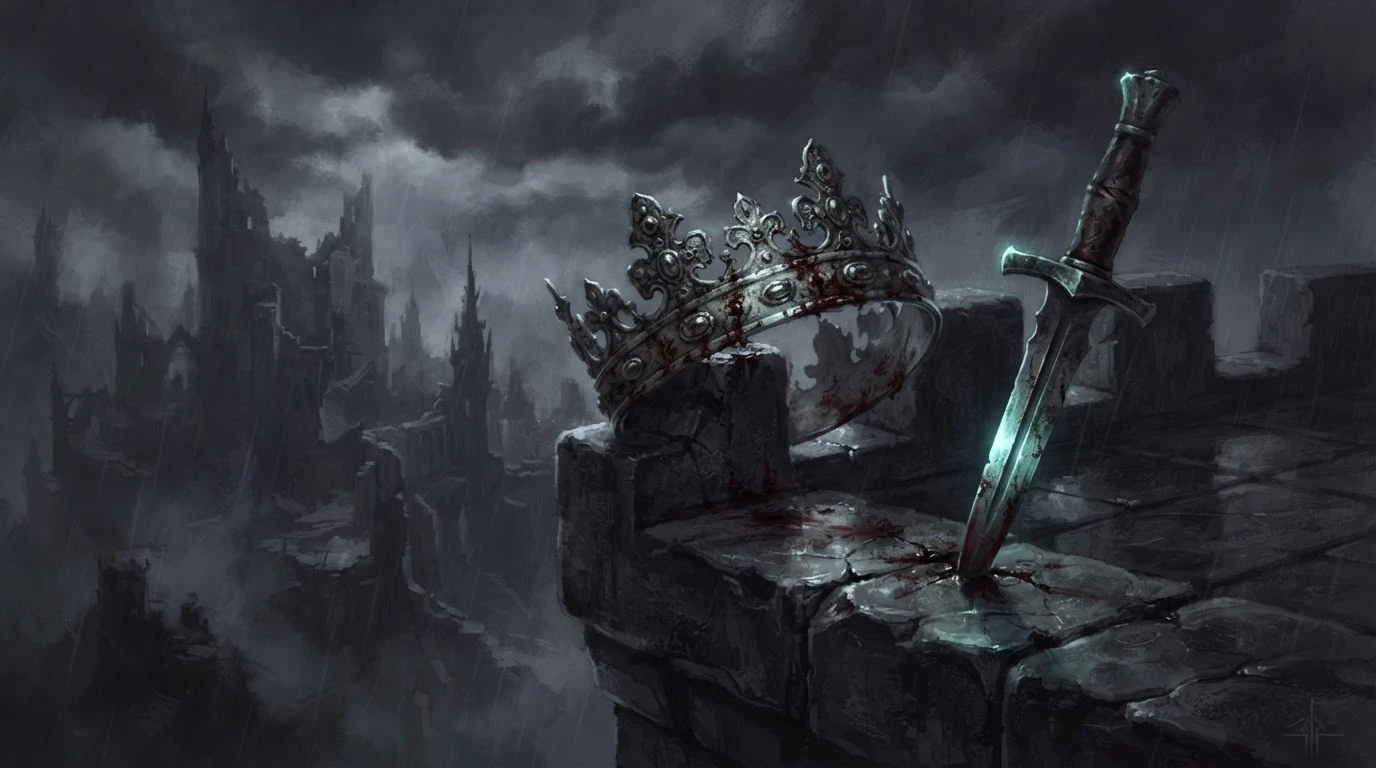
The Tragedy of Macbeth
Shakespeare's Scottish tragedy as a Fate Accelerated campaign. Original player thanes navigate a kingdom where the canonical tragedy unfolds around them as event beats with real inertia — deflectable at a price, breakable only at a terrible one.
Scotland, in the hour after the war. The witches have already spoken. You were not in the prophecy — that is your one advantage.
The rebellion is broken, the king is generous, and every road to Forres crosses the same fog-bound heath. You are a thane: lands, soldiers, an oath — and, as of tonight, a prophecy of your own.
The tragedy of Macbeth is going to happen around you. Duncan will ride to Inverness. Banquo will not come back from his evening ride. A wood will walk. These events run on clocks, and the clocks have inertia: stand in front of one and fate pushes back with everything the ladder holds. Push hard enough and a beat deflects — it re-forms later, changed. Pay dearly enough and a beat breaks for good. Every deflection is remembered. Everything is collected on.
The system is Fate Accelerated: six approaches, four actions, and an economy of temptation that pays you to make the tragic choice. Four pregenerated thanes hook the tragedy from four angles, or build your own and meet the sisters on the heath like everyone else.
Aspects quote or closely echo the play wherever the text allows; approach ratings and stunts for the canonical cast are interpretive adaptations, and each such file says so. Where the play is silent — Lady Macbeth's given name, geography beyond the named castles — the gap is noted rather than filled. The four player thanes and their prophecies are declared original additions built to orbit the canon, never to rewrite it.